
The state-run Oil and Natural Gas Corporation has walked away with bulk of the 21 oil and gas exploration blocks in the fourth round of new exploration licensing policy.

Global funds, according to Christopher Wood, global head of equity strategy at Jefferies, are now beginning to pay more attention to India with the market now offering 30 companies with a market capitalisation over $25 billion.
ONGC Chairman and Managing Director R S Sharma on July 30 wrote to Petroleum Secretary M S Srinivasan seeking immediate hike in price of gas it sells under regulated regime as it was incurring Rs 700 crore (Rs 7 billion) loss on the business.
State-run Oil and Natural Gas Corp will invest around $15 million in developing Chinnewala Tibba oil and gas discovery in Jaisalmer district of Rajasthan.
Oil and Natural Gas Corp on Tuesday said it will invest over Rs 6000 crore (Rs 60 billion) annually in acquiring oil properties abroad.
Ahead of its public offer to dilute 10 per cent government stake, state-owned Oil and Natural Gas Corp said on Wednesday that its net worth has risen to Rs 42,250 crore (Rs 422.5 billion) as on December 31

The 41 workers trapped in Uttarakhand's Silkyara tunnel for the last 11 days are likely to be rescued in the next few hours or by tomorrow, National Disaster Management Authority (NDMA) member Lt Gen (retd) Syed Ata Hasnain said on Thursday evening.
In an attempt to hold on to its exploration blocks in the Krishna-Godavari basin, Oil and Natural Gas Corporation is in talks with British Gas (BG) and British Petroleum (BP) for joint exploration in four offshore blocks in the region.

Indian Oil Corp is ranked highest at 161st in the Fortune 500 list.

The joint venture agreement is likely to be signed before the end of the current year and once that is done, tendering for the plant and machinery will follow, he said, adding this might take place before the end of the current fiscal.
Oil and Natural Gas Corporation, India's largest oil producer, will sign an agreement with global steel tycoon L N Mittal on Saturday for jointly hunting for overseas oil properties and energy business.

Capital expenditure (capex) by 54 large central public sector enterprises (CPSEs) and five departmental arms with an annual capex target of Rs 100 crore and above has reached around 42.5 per cent of their annual target of about Rs 7.33 trillion in this financial year so far, a senior official from the Ministry of Finance told Business Standard. "The Centre is pushing the big public undertakings in the infrastructure and refinery sector to achieve 90 per cent of their target by the end of the third quarter," he said. The capex by this group of CPSEs stands at around Rs 3.1 trillion in the April-August period so far.
While prices sustaining lower levels is crucial, Govt actions are also a key monitorable given the forthcoming elections in 2024.
Oil and Natural Gas Corporation (ONGC), the country's leading oil and gas exploration and production company, is entering the alternative energy segment with a Rs 1,200 crore-plus (Rs 12 billion) investment to generate 200 mw of wind power for captive use, within two years.

The last year has seen public sector undertakings (PSUs) outperforming the Nifty50, albeit by a small degree. But PSU valuations are still, on average, less than half of private sector peers at price-to-equity or PE 8.7x for the Nifty PSU Index versus 20.9x for the Nifty50. There are several reasons for lower valuation.
The windfall taxes on domestic crude oil production and fuel exports will generate close to $12 billion (Rs 94,800 crore) for the government in the remainder of the current fiscal while trimming profits of firms such as Reliance Industries Ltd and ONGC, Moody's Investors Service said Tuesday. On July 1, the government imposed windfall gain taxes on the export of petrol, diesel and aviation turbine fuel (ATF), and on the domestic production of crude oil. It has also mandated exporters to meet the requirements of the domestic market first.
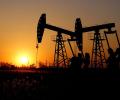
India's production of crude oil, which is refined to produce petrol and diesel, continued to decline in November, with lower output from state-owned firms leading to an over 2 per cent drop, official data released on Tuesday showed. Crude oil production in November was 2.43 million tonnes, down from 2.48 million tonnes a year back and 2.5 million tonnes in October 2021. Oil and Natural Gas Corporation (ONGC) produced 3 per cent less crude oil at 1.6 million tonnes in November due to delays in mobilising equipment at western offshore fields.

A six-inch pipe has been laid at the Silkyara tunnel through which nutritious food and medicines could be supplied to the 41 labourers, trapped for over a week after parts of the under-construction structure collapsed following a landslide.

Domestic quarterly earnings, global trends and foreign fund trading activity would dictate the movement in equity markets, which may face volatility amid the scheduled monthly derivatives expiry this week, analysts said. Equity markets took a breather last week. The BSE Sensex declined 298.22 points or 0.48 per cent and the Nifty dipped 111.4 points or 0.60 per cent.
The Oil and Natural Gas Corporation will invest Rs 33,000 crore (Rs 330 billion) in the next five years on oil and gas exploration, discovery and asset building, a top company official has said.
Reliance gets $4.215 per mmBtu for the gas it produces from KG-D6 fields off the Andhra coast. The price is fixed for the first five years of production. KG-D6 gas production began on April 2 and is slated to rise to 80 mmscmd by year-end, nearly doubling the nation's gas output.
Oil and Natural Gas Corporation and Mukesh Ambani-controlled Reliance Industries may tie up to build a common gas processing unit as the two firms have discovered huge reserves in the Krishna-Godavari basin

India's trade account could come under pressure and there could be an inflation push if crude oil prices remain above the $90 per barrel (Brent) for a prolonged period since India imports over 85 per cent of its oil and roughly 50 per cent of its gas. A rebound in economic activity is bound to lead to higher fuel demand. While India is the third-largest importer of crude, it is a net exporter of refined products, which helps to compensate to some degree.
ONGC's mega offer of its 10 percent stake was overbid by 4.24 times by investors, many of them overseas institutions
The Oil and Natural Gas Corporation made a net profit of Rs 12,500 crore (Rs 125 billion) in the last financial year and Rs 30,000 crore (Rs 300 billion) in last three years, chairman-cum-managing director Subir Raha said.

Christopher Wood, global head of equity strategy at Jefferies has rejigged his equity portfolios. In his Asia ex-Japan long-only portfolio, he has added Axis Bank (5 per cent weightage) and increased holding in Larsen & Toubro (L&T) by one percentage point. This, Wood said, will be paid for by removing the investment in ICICI Lombard General Insurance and reducing the investments in HDFC Bank and Reliance Industries (RIL) by one percentage point each.
State-run Oil and Natural Gas Corporation on Monday announced a net profit of Rs 6,636.33 crore (Rs 66.36 billion) in the first quarter ended June 30, a 43.94 per cent growth from that in the corresponding period a year-ago.
Notwithstanding the windfall tax placing a cap on profits, oil and gas producers like Oil India (OIL) and Oil and Natural Gas Corporation (ONGC) have done well in the October-December quarter (third quarter, or Q3) of 2022-23 (FY23). ONGC faces the drag of poor results from its subsidiary Hindustan Petroleum Corporation, and in comparative terms, OIL is better off. Standalone net sales in Q3FY23 stood at Rs 5,900 crore - up 57 per cent year-on-year (YoY), up 2 per cent quarter-on-quarter (QoQ).
State-run Oil and Natural Gas Corporation will see its pre-tax profit growing by over Rs 1,822 crore (Rs 18.22 billion) on a 12 per cent increase in natural gas prices as recommended by the group of ministers.
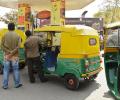
Prices of natural gas, which is used to generate electricity, make fertiliser and is converted into CNG to run automobiles, were on Friday hiked by a steep 40 per cent to record levels, in step with global firming up of energy rates. The rate paid for gas produced from old fields, which make up for about two-thirds of all gas produced in the country, was hiked to $8.57 per million British thermal units from the current $6.1, according to an order from the oil ministry's Petroleum Planning and Analysis Cell (PPAC). Simultaneously, the price of gas from difficult and newer fields like the ones in Reliance Industries Ltd and its partner bp plc operated deepsea D6 block in KG basin, was hiked to $12.6 per mmBtu from $9.92, the order said.
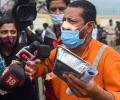
Afcons Infrastructure, whose chartered barge had sunk in the Arabian Sea due to a cyclone this week leaving at least 51 people dead, on Friday said it will provide compensation ranging from Rs 35-75 lakh to the families of the deceased personnel.
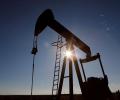
Former oil secretary Tarun Kapoor, present and former chairmen of ONGC and a former director of IOC, are among over a dozen people who have applied for the top job at the oil and gas regulator, PNGRB, sources said. Kapoor, who superannuated as Secretary to the Ministry of Petroleum and Natural Gas last month, is the most prominent name in the list of 13 persons who have applied to become the chairman of Petroleum and Natural Gas Regulatory Board (PNGRB). Oil and Natural Gas Corporation (ONGC) chairman and managing director Subhash Kumar and his predecessor Shashi Shanker are also in the race and so is G K Satish, who superannuated as Director for Planning and Business Development from Indian Oil Corporation (IOC) a couple of months back.

India's latest bid round for 21 oil and gas blocks attracted just three bidders, two of whom were state-owned explorers Oil and Natural Gas Corp (ONGC) and Oil India Ltd (OIL), according to upstream regulator DGH. As many as 21 blocks or areas were offered for exploration and production of oil and gas in the Open Acreage Licensing Policy (OALP) Bid Round-VI, for which bidding closed on October 6. Besides ONGC and OIL, Sun Petrochemicals was the only other company to have bid, according to 'Summary of Bids Received Against Offered Blocks' posted by the Directorate General of Hydrocarbons (DGH).

OVL, the overseas arm of state-run explorer Oil & Natural Gas Corporation, and Oil India Limited agreed in June last year to jointly buy Videocon's 10 per cent interest in the Rovuma Area 1 for $2.475 billion.
Old timers in Oil and Natural Gas Corporation (ONGC) still remember how in early 2000 its overseas subsidiary, ONGC Videsh Ltd (OVL), was on the verge of closure. Though OVL was set up in 1965, the only discovery the company had made till then was in Vietnam offshore, with more investment needed to monetise it. In 2001, when OVL started looking for new blocks abroad, the company's previous acquisition was 13 years old.

The government on Thursday more than doubled the price of natural gas that is used to produce electricity, make fertilisers, turned into CNG and piped to household kitchens for cooking, on the back of a spike in global energy prices. The price of gas produced from old regulated fields, such as the nation's largest gas field of Bassein of ONGC, will rise to a record high of $6.10 per million British thermal unit (mmBtu) from the current $2.90 per mmBtu, according to the oil ministry's Petroleum Planning and Analysis Cell (PPAC). The new price, which is likely to result in a hike in CNG and piped cooking gas rates, will be for six months beginning April 1.
