
In view of the economic shock caused by the COVID-19 pandemic, Reserve Bank of India (RBI) on Friday asked scheduled commercial banks and co-operative banks not to make any dividends for the financial year ended March 2020. In view of the ongoing stress and the heightened uncertainty on account of the pandemic, RBI said it is imperative that banks continue to conserve capital to support the economy and absorb losses, if any. The decision is based on review of the September quarter financial performance of banks.

Though India was under lockdown for only seven days of the quarter, global demand and commodity prices began falling from February as COVID-19 was spreading in other countries. 1,002 listed companies - excluding banks, non-bank lenders, insurers, brokerages, and IT firms - reported a combined pre-tax loss of around Rs 2,700 crore during Q4.

India's top listed companies reported their best-ever quarterly net profit of Rs 2.39 trillion in the September quarter of FY22, up 46.4 per cent year-on-year. The earnings were driven by a big surge in the profitability of banks, non-banking financial companies & insurance (BFSI), oil & gas, and metal & mining firms. The combined net profit of these three cyclical sectors were up 87 per cent YoY to a record high of Rs 1.53 trillion, up from Rs 82,000 crore a year ago and Rs 1.08 trillion in Q1FY22.

On November 12, 2021, the Reserve Bank of India (RBI) decided to ring in uniformity in asset classification and income recognition across all lending institutions. Shadow banks, or non-banking financial companies (NBFCs), like commercial banks, are to test non-performing assets (NPAs) on a daily basis and upgrade them to "standard assets" only when interest and principal arrears are settled by borrowers. This is going to create all manner of headaches for shadow banks and their clientele. Says Y S Chakravarti, managing director and chief executive officer (CEO), Shriram City Union Finance: "NPA levels will go up, especially of small borrowers.

The Reserve Bank of India (RBI) on Friday said it will maintain comfortable liquidity conditions and conduct market operations in the form of outright and special open market operations. It will conduct on tap targeted long-term repo operations (TLTRO) with tenors of up to three years for a total amount of up to Rs 1 lakh crore at a floating rate linked to the policy repo rate.

The interest rate offered by PSBs like SBI, BoB and BoI hover around 8.9 per cent-10.50 per cent. For private banks, the range is between 10.49 per cent and 12 per cent.

With a potential liability of Rs 750-800 crore, sources say Clix Capital's stand on the matter would be crucial in finalising the merger valuation.

Banks have started refunding borrowers the compound interest charged on specified loan accounts during the moratorium period. Last week, the Reserve Bank of India (RBI) had asked all lending institutions, including non-banking financial companies, to ensure that the scheme of waiver of interest on interest for loans up to Rs 2 crore for the six-month moratorium period is implemented by November 5.

Agriculture and allied activity loans are not eligible for the interest on interest waiver announced by the government last week, the finance ministry has clarified.

Experts attribute the lower target to increased allocation under the credit guarantee scheme for small businesses. Out of the Rs 3.21 trillion worth loans sanctioned under the Pradhan Mantri Mudra Yojana (PMMY) in the last financial year, Rs 3.12 trillion were disbursed to entrepreneurs, according to official data.

In India, the company serves customers such as stock exchanges, brokers, non-banking financial companies, financial services and insurance, IT and IT-enabled services.

The government plans to bring down its stake to 26 per cent in these two banks, which are yet to be identified. This may not come in the way of getting investors for these banks, provided the government is willing to step back rather than run them the way it had been doing for over five decades since these banks were nationalised, points out Tamal Bandyopadhyay.

The problem for the NBFC sector is the funding inertia by banks and not lack of funds.

In 2009, the UPA government, had announced a slew of measures to boost liquidity in NBFCs. These included a scheme for providing liquidity support to NBFCs having assets size of over Rs 100 crore through a SPV.

Physical KYC takes anywhere between two to five working days to get done, V-KYC, only a few minutes.

India's economy is estimated to contract by 9.6 per cent in the fiscal year 2020-21, reflecting a sharp drop in household spending and private investment, and the growth is expected to recover to 5.4 per cent in 2021, the World Bank said on Tuesday. In its Global Economic Prospects report, the World Bank said that the informal sector, which accounts for four-fifths of employment, has been subject to severe income losses during the COVID-19 pandemic.

The RBI working group's proposal to allow corporate houses to set up banks is a 'good-looking' step in a 'bad direction' and may lead to crony capitalism and eventual financial instability, former chief economist of World Bank Kaushik Basu said on Thursday. Basu further said that there is a good reason why all successful economies have a clear dividing line between industries and corporations on the one hand, and banks and lending organisations on the other.

New norms are in place to strengthen regulations for this set of lenders which has been playing a critical role in Asia's third largest economy, notes Tamal Bandyopadhyay.

The draft amalgamation scheme of Punjab and Maharashtra Co-operative (PMC) Bank with Unity Small Finance Bank (SFB) allowed quick relief to depositors with savings of up to Rs 5 lakh, but a long wait for those who had their nest egg with the scam-tainted bank. If the scheme gets approved, 96 per cent (or 880,000 of 924,000) depositors will get their full money straightaway after PMC is merged with Unity SFB. According to the draft scheme, retail investors may get up to Rs 5 lakh from the Deposit Insurance and Credit Guarantee Corporation (DICGC) instantly, and then some more in phases till they can recall their full deposits after 10 years.

The infra-major going belly up cracked open some major flaws in the system - the most evident being weak corporate governance and how layers of corporate structures could be formed adding to the opaqueness of the group.

Why can't we have a sunset clause for the ARCs, which is a global norm? questions Tamal Bandyopadhyay.

Banks are set to sell dud-loans worth Rs 90,000 crore of 22 firms in the first tranche to the National Asset Reconstruction Company (NARCL). It's reason for cheer given that such sales to asset reconstruction companies (ARCs) have been poor in recent times. In fiscal 2020, their assets under management (AUM) contracted by 4 per cent; and in fiscal 2021, it fell by another 100 basis points to Rs 1.07 trillion. So, why are we where we are?

Vehicle sales have been hampered by weak consumer sentiment and still-weak availability of financing following tighter liquidity at non-banking lenders since the middle of 2018.

In an indication of easing financial stress among borrowers, the number of unsuccessful auto-debit requests through the National Automated Clearing House (NACH) platform declined in July, reversing a three-month trend that started with the second wave of the Covid-19 pandemic. According to the NACH data, of the 86.4-million transactions initiated in July, 33.23 per cent, or 28.7 million transactions, failed, while 57.7 million were successful. Compared to June, this is a significant improvement in bounce rates.

RBI's oversight cadre move creates HR trouble, officers threaten agitation.

Owing to the risk perception attached with the segment by banks, the residential realty segment has been increasingly relying on non-banking financial companies and housing finance companies to raise debt financing, reports Abhijit Lele.

Indians face COVID-19 with record debt, stalled income.

India may adopt norms similar to the US Federal Reserve model, which regulates conglomerate-led banks in the country.

One of the factors behind the rise in securitisation deals was State Bank of India's (SBI) decision to buy portfolio worth Rs 45,000 crore from NBFCs

The purchase or construction of houses by large numbers of people can add meaningfully to India's economic growth, points out Neelkanth Mishra.

Isn't it time to review the 'fit and proper' criteria for banking licence, particularly with reference to individuals applying for it, asks Tamal Bandyopadhyay?

Is the worst over for Indian banks? The past two years saw them ride on treasury trades as deposits soared and credit growth dipped sharply. Gross and net non-performing assets (NPAs) moved south, and the provision coverage ratio (PCR), capital buffers, and profitability indicators are back at pre-pandemic levels. So, what's the plot ahead?

Many developers are facing financial challenges after the IL&FS defaults, after which non-banking finance companies - the major financiers to real estate firms - slowed disbursals.

Reserve Bank Governor Shaktikanta Das on Wednesday said the country is at the doorstep of economic revival on the back of accommodative monetary and fiscal policies being pursued by the central bank and the government.

This is not her first stint in North Block or in leading a major economic ministry. She started Prime Minister Narendra Modi's first term as minister of state for finance, was made the commerce minister, and then became the defence minister.
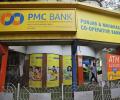
the three investors that have submitted their final bids are not commercial banks. Among the three, one is a non-banking financial company. Another distinctive feature of the revival is that PMC may lose its cooperative bank characteristic after its reconstruction.

The improved outlook on the Government of India announced by rating agency Moody's might need to be viewed with some scepticism. There is no doubt the performance of the Indian economy has sharply improved from the deep trough it hit last year. But the ability of the second largest global ratings agency to assess an upside and downside before events make everyone wise about India has been dismal for a long time, as the chart shows.

In India, economic activity slowed substantially in 2019, with the deceleration most pronounced in the manufacturing and agriculture sectors, whereas government-related services sub-sectors received significant support from public spending, the Bank said.

In a business friendly move, the Reserve Bank of India on Friday said that Real Time Gross Settlement System (RTGS), used for large value transactions, will be made available round-the-clock from December. In December 2019, the National Electronic Funds Transfer (NEFT) system was made available on a 24x7x365 basis. Currently, RTGS is available for customers from 7.00 am to 6.00 pm on all working days of a week, except second and fourth Saturdays of every month.

'The people let off by the NBFCs have little bargaining power and willingly settle for a 20% to 25% cut in their existing salaries when hunting for new jobs.'
