
Foreign banks set the template in consumer banking in its infancy, but have almost vacated this booming space.

Besides low interest rates, a reduction in active Covid cases and strong high-frequency macro data have lifted the sentiment of both corporate India and the stock markets.
Under the co-lending model, banks have to take their share of the individual loans on a back-to-back basis on their books while NBFCs are required to retain a minimum of 20 per cent share of the individual loans on their books.

After swinging nearly 330 points, BSE Sensex finished 172.69 points or 0.43 per cent higher at 40,412.57. Similarly, the 50-scrip NSE Nifty appreciated 53.35 points or 0.45 per cent to close at 11,910.15.

It may be a 'no-go' for banking licences to large industrial houses.

With economic growth slowing to a six-year low, IMF Chief Economist Gita Gopinath says the government should undertake structural reforms such as bank clean-up and labour reforms to address the slowdown in domestic demand. She rooted for government policies focusing on managing a slowdown in domestic demand, and on boosting productivity growth and supporting employment creation in the medium term.

'Indian non-bank lenders stand exposed to a deteriorating credit quality environment.' 'Such a deterioration could put at risk the value of NCDs purchased by the mutual funds and expose investors in bond and liquid funds to a risk of capital loss.'

Bombay Oxygen Investments Ltd shares have been witnessing a particularly sharp rally for many days now and have more than doubled from about Rs 10,000 level seen in March-end and the market watchers feel the only reason for this kind of stupendous rally is the name of the company.

Second-tier NBFC stocks are trading at 24.4x their trailing earnings, which is nearly twice their 15-year average of 13.9x

Banks are in the process of getting a board-approved restructuring framework in line with the RBI's framework and eligibility defined by the central bank.

It said banks' asset quality will deteriorate across the corporate, small and medium enterprises and retail segments, leading to pressure on profitability and capital.

'They can shift to dynamic asset allocation funds to automatically rebalance their equity exposure.'

At a combined level, the fiscal deficit of the Centre and states together will come at 12.1 per cent, with the states contributing 4.5 per cent.

Penalty must act as a deterrent. If it is too low, it could encourage the regulated entities to lap up penalty instead of complying with the norms, suggests Tamal Bandyopadhyay.

If you are running a sweetmeat shop, will you manage a dairy for milk supply or buy milk from the market? Banks are running a dairy (which has its cost for processing milk), while NBFCs are buying milk from the market, observes Tamal Bandyopadhyay.

There are 55 non-banking PPIs operational now, apart from 50 wallets promoted by banks.

The Reserve Bank of India's (RBI's) move to ban Mastercard from issuing new cards for not complying with the local data storage guidelines may hit five private banks, a non-bank lender, and a major card-issuing company. The impact is expected to be felt for a few months as these players transition to other card networks. According to Nomura Research, RBL Bank, YES Bank, and Bajaj Finserv are the ones most impacted by the ban as all their credit card schemes are allied to Mastercard. Among others, IndusInd Bank, Axis Bank and ICICI Bank have 35-40 per cent of their credit card schemes tied to Mastercard, the report said.

For now, the concerns over bad loans have taken a back seat; a bigger challenge for the banking community is credit growth, explains Tamal Bandyopadhyay.
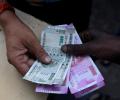
However, in the first quarter when the country was under a lockdown, net financial savings rose to 21 per cent of gross domestic product (GDP), according to the data released in the RBI's monthly bulletin.
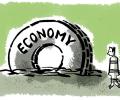
Moody's Investors Service on Friday projected India's growth at zero per cent for the current fiscal and said the negative outlook on sovereign rating reflects increasing risks that GDP growth will remain significantly lower than in the past. The outlook also partly shows weaker policy effectiveness to address economic and institutional issues, it noted in the update to its November 2019 rating forecast.

The Centre has announced an extension for two more weeks in the nationwide lockdown. However, several relaxations will be allowed as per zones.
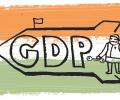
Sectors such as electronics, pharmaceuticals and automobiles can see supply disruptions in value chain, which may lead to a derailment of the domestic economic growth.

Domestic passenger vehicle sales dropped by 17.54 per cent to 2.25 lakh units in June from 2.73 lakh units in the same month of previous year, data released on Wednesday by an apex industry body showed.

Industry players believe the new DFI model will be initially risk capital, which will then be used to mobilise additional resources from development agencies such as World Bank.

Dealers say the significant increase in sales was driven by a need to plug the diminishing inventory as most dealerships were transitioning from BS-IV to BS-VI when the Covid-19 lockdown was announced.

Sitharaman said the government wants to sell stake in public sector companies at a time when it fetches the right price.

The focus of the meeting will be on enabling businesses and households to avail of the revival framework on the basis of viability, necessary steps like finalising bank policies and identifying borrowers, and discussing issues that require addressing for smooth and speedy implementation.

A lack of adequate disclosures raises the financing costs of corporate firms, especially sub-investment grade ones, and keeps the capital markets small, believes RBI deputy governor Viral Acharya.

Khara will replace SBI Chairman Rajnish Kumar, whose three-year term comes to an end on October 7.

'There is still scope for selective stockpicking.'

Finance Minister Nirmala Sitharaman's Rs 30,600 crore government guarantee for the bad bank has changed the body language of bankers for the better, observes Tamal Bandyopadhyay.

Fitch Ratings on Monday said the shock to economic activity from the latest wave of COVID-19 pandemic will be less severe than the one in 2020, but recovery is likely to be delayed as economic activity dropped in April-May. The global rating agency said there are growing indications that the latest wave of COVID-19 infections will add to risks among financial institutions (FIs) and anticipates that the Reserve Bank of India (RBI) may introduce additional measures to support the financial sector if indications of economic stress mount.
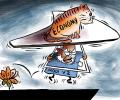
India's growth outlook has weakened sharply this year, with a crunch that started with the non-banking finance institutions spreading to retail businesses, car-makers, home sales and heavy industries.

Auto-debit payment bounces have gone up for the second consecutive month in May, emphasising the stress building up due to a halt in economic activities as authorities lock down various parts of the country to stop the spread of the virus in the second wave. According to the National Automated Clearing House (NACH) data, in May, of the 85.7 million transactions initiated, 35.91 per cent, or 30.8 million transactions, failed.

The liquidity crisis at Dewan Housing Finance Corporation Limited (DHFL) has dented the fortunes of ace investor Rakesh Jhunjhunwala, who increased his stake in the troubled company in the March 2019 quarter (Q4FY19).

New regulatory rules, softer freight rates and a liquidity crunch at non-bank lenders are among the reasons.

To allow applications for new bank licences until July 1, 2013.
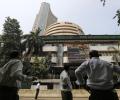
Top gainers in the Sensex pack included Sun Pharma, TechM, Axis Bank, L&T, Reliance Industries and ICICI Bank, which rose up to 2.66 per cent.

After the hit of the pandemic, India Inc is now worried about the adverse impact of inflation and higher commodity prices on their revenues and margins. The inflation scare is the strongest among manufacturers of consumer goods such as automobiles, consumer durables, and fast-moving capital goods (FMCG). Companies across sectors fear they will not be able to pass on the hike in input costs to their consumers due to weak demand, which, in turn, would lead to a hit on margins and profitability in the forthcoming quarters.

As per the RBI Act, the central bank has to have four deputy governors.
