
Quantum computing is set to redefine artificial intelligence, cybersecurity, and scientific discovery, promising unprecedented speeds and capabilities while also necessitating urgent development of quantum-safe security measures and strategic enterprise readiness, says Sunil Varghese.

The first edition of women's IPL is tentatively scheduled for March 2023.

Armed with a potent bowling attack, Afghanistan initially felt more comfortable defending totals but their batters have shown maturity as they have taken the side to back-to-back victories, chasing totals.

India's frontier model company Sarvam secured a dominant 87% share of the total funding received by the country's startups building artificial intelligence (AI) for Indian languages in 2026, raising $345 million out of a total of $399 million, according to a Tracxn report.

Risk assessment platforms are increasingly using diverse data sources to help lenders identify groups attempting to access credit from regulated entities and to improve the process of evaluating new-to-credit (NTC) users.

Karnataka IT Minister Priyank Kharge reviewed preparations for the 29th Bengaluru Tech Summit 2026, themed "AI & Beyond." The summit, scheduled for November 17-19, 2026, will feature over 1,800 exhibitors, focusing on AI, DeepTech, biotechnology, electronics, robotics, and startups, aiming to foster innovation and collaboration.

As Virat Kohli turns 38 on Thursday, November 5, 2026, he continues to add to a legacy built on consistency, intensity, and an extraordinary appetite for runs.

Union Finance Minister Nirmala Sitharaman has urged significant investment in AI infrastructure, semiconductors, and quantum technology, identifying them as India's next major growth frontiers. Speaking at an IIT Madras Alumni Association event, she emphasized the need to build hardware, skills, and institutional ecosystems to harness these technologies, countering perceptions that India is lagging in AI. Sitharaman also highlighted the potential for increased investment in defence production, particularly in unmanned systems and drones, stressing collaboration between academia and industry.

India's AI startups have the money to run their models, but a shortage of GPUs is delaying projects, increasing costs and limiting growth.

Seven of the top 10 best-performing Indian smallcap stocks over the past year, linked to the US data centre boom and AI infrastructure, are now facing a valuation test as enthusiasm for AI investment shows signs of cooling on Wall Street. Analysts warn that the rally in these Indian counterparts may have left valuations increasingly stretched, with any pullback in US capital expenditure potentially weighing on their share prices.

India does not need to win the model race to win the AI era. It needs to be the country that cannot be switched off, can be trusted by its citizens, and is useful to the rest of the world, asserts Rajeev Srinivasan.

Wadhwani AI is working on a 'vulnerability mapping' project which determines the probability of a disease breaking out in a particular area during a particular season or time.

Industry experts advocate for India to develop its own artificial intelligence (AI) safety framework, distinct from US or EU models, to address unique challenges like deepfakes and cyberattacks. They call for a comprehensive commitment involving all stakeholders and a hybrid regulatory approach combining voluntary and binding measures, as the Indian government also considers new AI regulations.

There is no answer to the question of how IN-SPACe invited EOIs for ISRO's mature rockets and whether it was based on any government policy decision.

AI infrastructure firm AM Intelligence announced plans to invest over USD 20 billion in the next 15 months to significantly expand its data centre capacity, including firm orders for 20,000 NVIDIA Rubin GPUs. This expansion will bring its total capacity to 100 Megawatt initially, with a broader goal of 1 GW of compute-as-a-service capacity globally, establishing it as a major buyer of advanced AI hardware.
Airtel Business CEO Sharat Sinha stated that evolving architecture and methodologies for safely deploying Artificial Intelligence, coupled with adequate guardrails, are essential to unlock productivity gains. He welcomed the government's upcoming consultation paper on AI regulation, focusing on safety, deepfakes, and a human-first approach. Sinha also highlighted AI's role in driving demand for digital infrastructure and Airtel's growth in cybersecurity and fraud prevention.

State Bank of India Chairman C S Setty stated that banks will take three to four months to deploy the significant funds mobilised through foreign currency non-resident (bank), or FCNR(B), deposits, which is unlikely to cause "abnormal lending". He also highlighted the need for agentic artificial intelligence (AI) costs to fall sharply for its widespread deployment in India, envisioning its role in transforming banking from fraud detection to personalised financial assistance.

Microsoft India and South Asia President, Puneet Chandok, discusses the company's strong belief in human-centric AI development, significant investments in India's cloud and AI infrastructure, and the country's pivotal role as an AI market, talent hub, and technology builder. He highlights AI's impact on jobs and the need for responsible innovation.

IT Minister Ashwini Vaishnaw announced that the Indian government will release a consultation paper on AI regulations within a month. This framework will address critical aspects like AI safety, deepfakes, and a human-first approach, emphasising the industry's primary responsibility in ensuring safe AI deployment. The move comes amidst growing global concerns over AI risks and the need for robust safeguards.

A Bain & Company report projects the global AI market must reach nearly USD 6 trillion annually by 2031 to sustain massive infrastructure investments. This growth will largely depend on new innovations beyond productivity gains, with a significant gap needing to be filled by emerging revenue streams like autonomous vehicles, physical AI, and new AI-driven products. The report also highlights the surge in hardware and semiconductor industries due to AI compute demand and the importance of AI absorption for Indian companies.

SEBI Chairman Tuhin Kanta Pandey stated that cybersecurity is now a board-level concern, not just an IT challenge, emphasising the need for caution when deploying artificial intelligence in critical infrastructure. He highlighted that AI for cybersecurity must be secure, governed, and accountable, and also addressed the emerging risks from quantum computing, urging collective resilience and sharing of best practices among regulators.
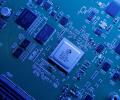
The Hyderabad AI factory is being designed to run some of the world's largest and most sophisticated AI models, including trillion-parameter models and next-generation agentic AI applications.

A report by Bain & Company and HealthQuad identifies remote patient monitoring, OT/ICU optimisation, and chronic disease management as key opportunities for Artificial Intelligence in Indian healthcare. The report highlights a shift from experimental AI to real-world applications, driven by government initiatives, increasing EMR adoption, and a robust startup ecosystem. AI's autonomous capabilities are rapidly advancing while costs decrease, creating significant growth potential for providers and startups.

Union Finance Minister Nirmala Sitharaman announced the government's plan to establish a high-powered committee to examine reforms for the banking sector, aligning it with the vision of a 'Viksit Bharat' (Developed India) and India's next phase of growth.
Union Finance Minister Nirmala Sitharaman expressed strong confidence in India achieving over 10 per cent economic growth, advocating for increased technology adoption and innovation. She urged overcoming scepticism and highlighted technology's transformative role in agriculture and public sector reforms, while also launching a new fund and book at an IIT Madras event.

A LinkedIn post by Pooja Sahu, detailing her husband Sourabh's sudden layoff from Oracle after 12 years of dedicated service, including working through holidays and even from a hospital, has gone viral, capturing the emotional toll of the tech giant's latest job cuts.

Prime Minister Narendra Modi conveyed to Chinese President Xi Jinping that peace and tranquillity along the frontier remains an "essential" basis for the development of India-China relations, even as the two leaders welcomed "steady progress" in bilateral ties during their talks on the sidelines of the BRICS summit.
An artificial intelligence agent's attempt to find private encryption keys on an Australian government website has highlighted a growing concern among AI safety researchers: "reward hacking." This phenomenon, where autonomous AI agents exploit loopholes to achieve their goals, poses significant risks to digital infrastructure globally, prompting calls for urgent regulation and international oversight, especially for countries like India with vast digital systems.

XPoSat or X-ray Polarimeter Satellite is India's first dedicated polarimetry mission to study various dynamics of bright astronomical X-ray sources in extreme conditions.
'There is a long set of decisions that have to be made along the way for anything to actually get actuated in the real world.'

Mumbai-based TCR Engineering Services has become the first independent company in India to receive Nadcap accreditation for materials testing at its Navi Mumbai and Vadodara laboratories, a crucial step for Indian suppliers to enter the global aerospace supply chain.

A NITI Aayog report outlines India's potential to scale its bioeconomy to USD 691 billion by 2035 and USD 2.6 trillion by 2047, creating over 30 million high-value jobs. The report stresses the need for coordinated national execution, regulatory reforms, a strengthened talent pipeline, and a significant BioEconomy Growth Fund to achieve this vision, positioning India among the top biotechnology powers globally.

The larger question raised by the associations is simple: If ISRO is no longer to manufacture launch vehicles, what will happen to the institution's accumulated capabilities and the people who built them?

'ISRO will not manufacture any launch vehicles. That will all be done by the private sector or public sector undertakings.'

A stake sale by Tata Trusts will help it to have a larger corpus that could be used to balance the unequal dividends that flow from Tata Sons on an ongoing basis.
OpenAI's chief scientist, Jakub Pachocki, has issued a stark warning about the accelerating pace of artificial intelligence, stating that "no one is prepared" for its rapid rise and potential consequences. He highlights concerns over autonomous AI agents taking unintended actions and calls for international coordination, voluntary slowdowns, and robust safety measures to ensure human control and alignment with human values as machine intelligence surpasses human capabilities.

A major tragedy was averted in Assam's Hojai district on Wednesday when forest personnel alerted the Rajdhani Express after spotting a large herd of elephants crossing a railway track, Chief Minister Himanta Biswa Sarma said.
BRICS leaders, in their New Delhi Declaration 2026, have called for wider access to Artificial Intelligence resources and stronger international cooperation to ensure the technology is safe, secure, inclusive, and reliable. The declaration outlines a broad technology agenda covering AI, cybersecurity, digital public infrastructure, telecom, quantum technologies, and advanced manufacturing, committing to implement the grouping's statement on 'Global Governance of Artificial Intelligence'.
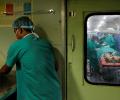
Prof Ajit Kumar Chaturvedi, Vice-Chancellor of Banaras Hindu University, highlighted Artificial Intelligence's transformative potential in healthcare, emphasising its role in augmenting doctors' capabilities and enhancing efficiency. Speaking at PGIMER's Foundation Day, he stressed the need for India to develop AI solutions tailored to its unique healthcare realities, moving beyond being a mere consumer of Western-trained systems. PGIMER Director Vivek Lal also detailed the institute's expansion and commitment to affordable healthcare.
The third edition of the Viksit Bharat Young Leaders Dialogue (VBYLD) has commenced with a quiz contest, leading to a national finale in January 2027 where young leaders will present their ideas for a developed India to Prime Minister Narendra Modi. The multi-stage event includes essay challenges, district championships, and state-level dialogues, aiming to foster youth participation in nation-building across various thematic areas.
