
The Budget reframes healthcare as a strategic national capability, backing biopharma innovation, workforce expansion and technology-led governance to power India's next growth phase.

The government on Sunday gave a strong push to upgradation and expansion of healthcare infrastructure, medical education and pharma sector with the Union Budget 2026-27 announcing a slew of steps, including those aimed at making India a global hub for allied healthcare professionals and biopharma manufacturing.

Reiterating Sitharaman's statement that this is a youth power budget, Modi emphasised that the provisions made in the budget will prepare leaders, innovators and creators across different sectors.
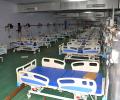
The Union health ministry has been allocated Rs 99,858.56 crore in the Budget 2025-2026, an around 11 per cent hike over the Rs 89,974.12 crore in the budget (revised estimates) of 2024-2025 with the government announcing setting up daycare cancer centres at all district hospitals over the next three years.

Capex, infrastructure development, and prudent fiscal management are the key focus areas in the Budget, says Nilesh Shah.

The Union Budget for 2026-27, presented by Finance Minister (FM) Nirmala Sitharaman on Sunday, which was a first, had an excellent domestic macro backdrop. According to the first advance estimates, gross domestic product (GDP) in constant prices is projected to grow 7.4 per cent in the current financial year, against 6.5 per cent in 2024-25.

Union Minister Jitendra Singh inaugurated a new biotechnology facility and dedicated a national facility for recombinant cells and sensors at the Rajiv Gandhi Centre for Biotechnology in Thiruvananthapuram, highlighting India's focus on biotechnology and its potential for economic growth.

Sustaining 8 per cent-plus growth rates is necessary if we are to reach high-income status by 2047, points out Amitabh Kant.

Three laws passed in Parliament could boost central revenues, reshape GST cess flows, shift MGNREGA costs to states and create new budget headroom ahead of the 2026-2027 Union Budget, points out A K Bhattacharya.

Restoring weighted tax deductions and adopting a petty patents regime can foster firm-level innovative activity critical for competitiveness, points out Nagesh Kumar.

Apart from this, the health sector as a whole has an allocation of Rs 4,447 crore (Rs 44.47 billion). The finance Minister said the response for Rashtriya Swasthya Bima Yojana, which was operationalised last year, has been very good.

The health sector has been allocated Rs 89,155 crore in the Union Budget 2023-24, a hike of around 13 per cent over Rs 79,145 crore allocated in 2022-23, with the government also announcing a mission to eliminate sickle cell anaemia by 2047.

Nagaland Governor Ajay Kumar Bhalla announced the state government's plans to form an interim council for the Frontier Nagaland Territorial Authority (FNTA) and highlighted key achievements and future priorities across various sectors during the Budget Session.

Expenditure on health in India is at a global low of 1.2% of GDP.

Out of Rs 86200.65 crore, Rs 83,000 crore have been allocated to the department of health and family welfare while Rs 3200 crore have been allocated to the department of health research.

The government also announced that healthcare cover under the Ayushman Bharat insurance scheme will be extended to all ASHA and anganwadi workers and helpers.

Karnataka Chief Minister Siddaramaiah met Prime Minister Narendra Modi and insisted on demands pertaining to the state, including on Fair Recovery Price of sugarcane, All India Institute of Medical Sciences for Raichur, the release of flood relief among others.
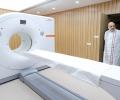
Do we have enough trained oncologists and medical professionals in India to man these over 4,500 beds in the public sector?

The growing caution among hospitals is being driven by a rise in double-extortion ransomware attacks, AI-enabled phishing, deepfake fraud, and vulnerabilities in connected medical devices.

A heated debate erupted in the Rajya Sabha over the ongoing strike by ASHA workers in Kerala, with Congress and CPI(M) MPs trading accusations over responsibility for addressing their demands for a higher honorarium and post-retirement benefits. Congress MP Jebi Mather alleged that both the Kerala government and the Union government had ignored the workers' pleas, while CPI(M) MP John Brittas countered by claiming Kerala provides the highest honorarium to ASHA workers. The debate also saw demands for an AIIMS in Kerala and a hike in MBBS seats, as well as concerns over maternal health, elderly care, and mental health in India.
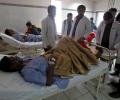
The budgetary allocation for the sector is Rs 60,908.22 crore, with Rs 6,400 crore earmarked for the centre's flagship health insurance scheme Ayushman Bharat- Pradhan Mantri Jan Arogya Yojna (AB-PMJAY).

Recent documents by NITI Aayog and periodic labour force surveys on employment show that the importance of agriculture is rising in the Indian economy.
Universal health scheme on the cards; Spend on the sector likely to be raised.

'The Bhashini Mission has delivered a working technology at large scale, which is as good as or better than the one with MNC tech giants.'

These are the highlights of the Union Budget 2025-26 presented by Finance Minister Nirmala Sitharaman in Parliament on Saturday.

Opposition leaders slammed the Centre on Wednesday for its 'limited' focus on important sectors like health and education in the Budget for 2023-24 fiscal.

The supplementary nutrition programme and the Poshan Abhiyaan under the Women and Child Development Ministry has been merged to launch Mission Poshan 2.0 to strengthen nutritional content, delivery, outreach, and outcome, according to the Union Budget announced on Monday.

'There is no immediate threat to the government, and they would prefer the growth agenda.'

'The scrapping of import duty would help Indian companies compete in international markets, thus paving the way for India becoming a space manufacturing hub for the world.'
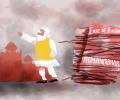
Finance Minister Nirmala Sitharaman on Monday said the government's Aatmanirbhar packages totalling Rs 27.1 lakh crore to deal with the COVID pandemic, accelerated the pace of structural reforms. In the first ever paperless Union Budget, Sitharaman also proposed the introduction of Aatmanirbhar health programme with an outlay of Rs 64,180 crore.
'A government whose policies are focused around making the life of ordinary citizens, specially the most deprived sections, richer; a government that prioritises education, health and transport, that doesn't treat its citizens as subjects who must come to it for everything, is rare in our country.' 'When such a government is thrown out, one is left stunned,' notes Jyoti Punwani.

Ayushman Bharat aims at providing a cover of Rs 5 lakh per family annually and is aimed at benefitting more than 10 crore poor families across the country.

Non-flagship programmes to get a mere 5% hike in allocation

Kerala has again emerged as the top ranking state in terms of overall health performance among larger states, while Uttar Pradesh is the worst, according to the fourth Health Index launched by Niti Aayog.

Increase of 10% to 12% likely in a bid to improve citizens' mood after demonetisation.

Finance Minister Pranab Mukherjee will hold a pre-Budget discussion with state governments on January 13.
The number of centrally sponsored schemes have increased to 35 in FY22 from 30 in FY21 and central sector schemes have increased to 704 from 685 in the previous year, reports Dilasha Seth.

President Droupadi Murmu addressed both Houses of Parliament, highlighting the government's achievements in various sectors, including economic growth, social welfare, and infrastructure development. She emphasized the government's efforts to lift the economy out of "policy paralysis" and create a more inclusive society. Murmu also acknowledged the challenges posed by digital fraud and cybercrime and stressed the need for a social infrastructure revolution. The President's speech is considered a policy statement, outlining the government's vision and roadmap for the future.

Finance Minister Nirmala Sitharaman on Monday presented the Budget for 2021-22 in the Lok Sabha that is expected to provide relief to the pandemic-hit common man as well as focus more on driving economic recovery through higher spending on healthcare, infrastructure and defence amid rising tensions with neighbours, As India emerges from the COVID-19 crisis, the ninth Budget under the Modi government, including an interim one, is widely expected to focus on boosting spending on job creation and rural development, generous allocations for development schemes, putting more money in the hands of the average taxpayer and easing rules to attract foreign investments.

By any economic theory or doctrine, this is no Budget that supports economic recovery, whether through supporting aggregate demand, or through expansionary stimulus, declares Rathin Roy.
 © 2026 Rediff.com - Advertise with us - Disclaimer - Privacy Policy - Sitemap - Feedback - About us - Terms of use - Grievances