
The technical report of the NSSO has generated controversy following its observation that as much as 36 per cent units forming part of MCA-21 database, used in computing GDP, could not be either identifiable or traceable in the field.

'All governments are scared of a negative image.' 'Somehow, this government has a tendency to create a narrative that things are improving.' 'When the real data gives a different picture, they are upset.'

The unemployment rate for people aged 15 years and above in urban areas dipped to 6.4 per cent in the July-September quarter, according to the National Sample Survey Survey (NSSO). Joblessness, or unemployment rate, is defined as the percentage of unemployed people in the labour force. The unemployment rate in the September quarter of FY24 was 6.6 per cent.

Unemployment rate for persons aged 15 years and above has remained unchanged at 3.2 per cent in July 2023 to June 2024, according to the labour force survey annual report released on Monday. The unemployment rate (UR) is defined as the percentage of persons unemployed among the persons in the labour force. The report stated that while the UR for male has shown a marginal decline from 3.3 per cent during July 2022 - June 2023 to 3.2 per per cent during July 2023 - June 2024, among female it has increased from 2.9 per cent to 3.2 per cent during the same time span.

The unemployment rate for people aged 15 years and above in urban areas declined to 6.7 per cent in the January-March period from 6.8 per cent a year ago, according to the National Sample Survey Survey (NSSO). Joblessness, or unemployment rate, is defined as the percentage of unemployed people in the labour force. The unemployment rate in the March quarter of FY23 was 6.8 per cent, while it was 6.6 per cent in April-June as well as in the third quarter (July-September 2023) of the previous fiscal.

At a time when the government is nudging the private sector to ramp up its capital expenditure (capex), the Ministry of Statistics and Programme Implementation (MoSPI) is poised to kick-start the first-of-its-kind annual survey on the status of private sector capex from next month. "The inaugural edition of the annual exercise will start in October and will be completed by December. "The results will be made public by February next year," said Geeta Singh Rathore, director general, National Sample Survey Office (NSSO), at a data users' conference on Thursday.

With the dissolution of former chief statistician Pronab Sen-led Standing Committee on Statistics (SCoS) by the Ministry of Statistics and Programme Implementation (MoSPI), the National Statistical Commission (NSC) has regained prominence as the primary statistical body to address issues regarding results, methodology and questionnaire, among others. A MoSPI official in an email informed the 16-member SCoS about the decision to dissolve it, citing that its work was "overlapping" with that of the Steering Committee for National Sample Surveys (NSS), which was set up in June this year.

A survey conducted by the National Sample Survey Organisation has revealed that 51 per cent or more than half of India's rural households (marginal farmers possessing less than 1,076 square feet of land) have no ration card at all.

Employment in India saw a V-shaped recovery after being adversely impacted between April and June 2020 during the Covid lockdown and during April-June 2021, when the second wave struck, said Krishnamurthy V Subramanian, former chief economic advisor, in a paper released on Friday. Subramanian is now serving as executive director of the International Monetary Fund (IMF). From the official survey data of the National Sample Survey Organisation (NSSO), the paper titled 'Employment in India: Data Sources, Facts, and Trends' showed that both worker-population ratio (WPR) and labour force participation rate (LFPR) were higher, while the unemployment rate was lower during October-December 2022 when compared to the corresponding quarter in 2019.

Unemployment rate for persons aged 15 years or above declined to 3.1 per cent in 2023, the lowest in the last three years, as per a report of National Sample Survey Organisation under the statistics ministry. According to Periodic Labour Force Survey (PLFS) for calender year 2023, the unemployment rate came down to 3.1 per cent in 2023 from 3.6 per cent in 2022 and 4.2 per cent in 2021. Joblessness, or unemployment rate, is defined as the percentage of unemployed people in the labour force.

India's unemployment rate for persons aged 15 years and above was recorded at a six-year low of 3.2 per cent during July 2022-June 2023, as per the Periodic Labour Force Survey Annual Report 2022-2023 released by the National Sample Survey Office. Joblessness or unemployment rate is defined as the percentage of unemployed persons in the labour force. Considering the importance of the availability of labour force data at more frequent time intervals, the NSSO launched the Periodic Labour Force Survey (PLFS) in April 2017.
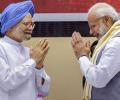
In a scathing attack on Prime Minister Narendra Modi, former prime minister Manmohan Singh on Thursday accused him of lowering the dignity of public discourse and the gravity of the office of the PM by giving "hateful speeches" during the poll campaign.

Between 2004-05 and 2011-12, on an average, poverty declined by two percentage points a year say experts who worked on the data.

As a well-wisher of the Indian Statistical System and part of the system for more than 37 years, Sunil K Sinha, former DG and CEO of NSSO, offers suggestions to improve data quality.
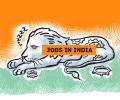
Most economists were of the view that the NSSO should release the data, as any move to withhold it will dent the image of country's statistical system.

This survey also shows how things have moved forward since the last large-scale sample survey conducted by NSSO in 2012-13
'When manufacturing or even services cannot generate the kind of employment they are looking for, they prefer to be unemployed rather than under-employed.'

More than 70 per cent of Indian youth aged between 15 and 29 can't!

According to NSSO, more than half of India's working-age population is out of labour force. In 2017-18, the youth unemployment rate was in the range 13.6-27.2 per cent.
Niti Aayog vice-chairman Rajiv Kumar debunked claims of jobless growth, saying how can a country grow at an average of 7 per cent without employment.
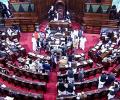
A private member resolution seeking that the government implement the recommendations of the Sachar Committee report and other reports that have discussed the educational and social backwardness of Muslims and enact a legislation for the prevention of atrocities against minorities was moved in the Rajya Sabha on Friday.

'Our study finds that only about 20% of Indians are vegetarians and the rest of the 80% are non-vegetarians or meat-eaters.'
'When you do some job for a few hours, you are hardly earning enough to survive.'
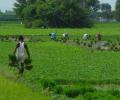
Earlier this month, the Central government said in a reply in Parliament it had taken measures to double farmers' income by the end of FY23 and the progress made so far indicated it was "on the right track". However, a close look at the data and at the assumptions made shows that as of now, it appears the country is unlikely to achieve the goal in real terms.

Given the rapid changes in the Indian labour market, there is an urgent need to have current, accurate and publicly available data through regular, dynamic and comprehensive surveys. Indeed, this was the intention behind constituting the NITI Aayog Task Force on Improving Employment Data. The attempts by the government to "improve" labour data has actually made it worse, say Rosa Abraham, Janaki Shibu & Rajendran Narayanan.
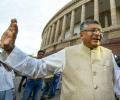
Prasad claimed that one part of his statement had been 'completely twisted out of context', and said 'being a sensitive person, I withdraw this comment'.
Economists on Tuesday are not convinced about the latest monthly unemployment data released by the Centre for Monitoring India Economy (CMIE), particularly about the statistics of the rural areas. They asserted that it is difficult to get the real picture of unemployment from the methodology used by the CMIE to get the data. The overall unemployment rate in India has increased to 7.83 per cent in April 2022 as compared to 7.60 per cent in the previous month, CMIE said in its report.

India's unemployed, the report said, were mostly those with higher education degrees and the young.
According to principal advisor with the Planning Commission and former chief statistician, Pronob Sen, there were 40-45 million more people in the age group of 15-59 between 2004-05 and 2009-10. The unemployment rate has correspondingly fallen from 2.3 per cent to 2 per cent of the labour force.

It said 33,510 slums were estimated to be in the urban areas of the country of which 41 per cent were notified.

With the two members quitting, the NSC now has only two members -- Chief Statistician Pravin Srivastava and NITI Aayog CEO Amitabh Kant.

The government on Wednesday said it will review the methodology for measuring poverty based on the findings of the NSSO Survey 2009-10.
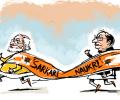
'...because of its permanent nature.' 'If you work for the private sector or for yourself, you are not regarded as being employed,' points out T C A Srinivasa Raghavan.

Officials said several witnesses were heard on the impact of the pandemic. They added that this was the longest meeting of the panel without a break so far.
The problem of unemployment is spread across the economy.
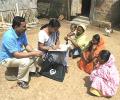
The NSSO had enumerated 79,306 households in rural areas and 45,374 in urban regions.

The share of total health expenditure as part of the gross domestic product (GDP) went down to 3.3 per cent in 2017-18 from 3.8 per cent in the previous two years, according to the national health account data released on Monday by the health ministry. The share of government expenditure as part of total expenditure as well as GDP has gone up from from 3.78 per cent to 5.12 per cent between 2013-14 and 2017-18, which could also explain a decline seen in out of pocket expenditure in 2017-18. Health ministry also emphasised the increase in the government health expenditure as part of the total GDP from 1.15 per cent in 2013-14 to 1.35 per cent in 2017-18.

The findings of the report showed consumer spending falling for the first time in over four decades in 2017-18.
Economy has become a major cause of concern for the new government with GDP dropping to 5.8 per cent in the last quarter of the 2018-19.
Rediff.com's data journalists have visualised the National Sample Survey Office (NSS 66th round, July 2009-June 2010 and 68th round, July 2011-June 2012) data into an interactive map.
