
Finance Minister Nirmala Sitharaman on Monday announced a Rs 6 lakh crore National Monetisation Pipeline (NMP) that will look to unlock value in infrastructure assets across sectors ranging from power to road and railways. She also said the asset monetisation does not involve selling of land and it is about monetising brownfield assets. Projects have been identified across sectors, with roads, railways and power being the top segments.
Roads, railways, and coal together are likely to account for 70 per cent of the government's takings from the upcoming second edition of the National Monetisation Pipeline (NMP), set to run from FY26 to FY30. In comparison, these three sectors are estimated to have contributed 66 per cent in the first edition of the NMP - FY22 to FY25.

'There will be political opposition, and this monetisation will require continued political will.'

Manufacturers said they expect the growth of manufacturing sector to be less than 7 per cent.
'This will have a multiplier effect in generating more jobs.'

The government has fixed an indicative value for Delhi's iconic 'The Ashok' hotel at Rs 7,409 crore under the national monetisation programme, according to sources. The Ashok and the adjacent hotel Samrat are among the eight India Tourism Development Corp assets listed under the National Monetisation Pipeline (NMP) announced by Finance Minister Nirmala Sitharaman last year. The sources said investor consultation has already been undertaken and a cabinet note for the sale of the sprawling 25-acre property in the heart of the national capital is under consideration.

The ministry of railways has dropped its proposal for monetisation of stations on public-private partnership mode, and projects are now being taken up under engineering, procurement and construction (EPC) mode, a source said. The source also told PTI that the ministry of railways has been asked to expedite monetisation of other assets, including trains, goodsheds, hill rail, stadiums, railway colonies and railway land parcels among others. "Largest asset class (stations) dropped. Stations earlier proposed on PPP mode are now being taken up under EPC mode," the source said.

India's production-linked incentive (PLI) scheme, which aims to make domestic manufacturing globally competitive, has attracted investment worth over Rs 45,000 crore and has also created three lakh jobs, NITI Aayog CEO Parameswaran Iyer said on Monday. The government has rolled out the scheme with an outlay of about Rs 2 lakh crore for as many as 14 sectors, including automobiles and auto components, white goods, pharma, textiles, food products, high efficiency solar PV modules, advanced chemistry cell and speciality steel. "The PLI programme has already started showing results.

Gandhi said that the BJP government has clearly mishandled the economy that was built by the United Progressive Alliance government, and is now resorting to selling the country's assets as a "last resort" to generate some money.

The National Highways Authority of India (NHAI) is looking to monetise 33 stretches of national highways during the current financial year (FY25) through its toll operate transfer (TOT) and infrastructure investment trust (Invit). These stretches include Lucknow-Aligarh, Kanpur-Ayodhya-Gorakhpur, and Bareilly-Sitapur in Uttar Pradesh, Gurugram-Kotputli-Jaipur bypass and Jaipur-Kishangarh in Rajasthan, Panikoili-Rimuli in Odisha, Chennai Bypass in Tamil Nadu, and Muzaffarpur-Darbhanga-Purnia highway in Bihar. Cumulatively, the 33 stretches, spanning 2,741 kilometres (km) earned approximately Rs 5,000 crore revenue in FY24.

Infrastructure assets worth over Rs 1.62 lakh crore are expected to be monetised during the current fiscal, Parliament was informed on Monday. The government had last year announced a Rs 6 lakh crore National Monetisation Pipeline (NMP) to unlock value in infrastructure assets across sectors, ranging from power to road and railways in four years till 2025. In a written reply to the Lok Sabha, Minister of State for Finance Pankaj Chaudhary said about Rs 97,000 crore worth of public assets were monetised in the last fiscal (2021-22).

The Centre's ambitious Rs 6-trillion National Monetisation Pipeline (NMP) could fall short of yearly targets for the current fiscal year (FY22) and the next one as well (FY23), partly due to the long gestation period in monetising big-ticket railway infrastructure, Business Standard has learnt from sources in the finance and rail ministries. Officials say the major chunk of railway monetisation will happen from FY24 onwards because leasing some of the infrastructure, like stadiums and dedicated freight corridor, will not happen anytime soon. Rail infra is expected to be the second-biggest contributor to the NMP, with about Rs 1.52 trillion worth of assets to be monetised.
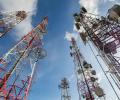
The government expects to realise Rs 35,100 crore from the partial sale of Bharatnet fibre assets and around 13,500 mobile towers owned by state-run telecom firms as part of its national monetisation pipeline released on Monday. Government think tank Niti Aayog has valued over 2.86 lakh kilometre of optical fibre assets laid by BBNL and BSNL under rural broadband project Bharatnet at Rs 26,300 crore, according to the National Monetisation Pipeline (NMP) document. According to the document, BSNL's 13,567 mobile tower assets and MTNL's 1,350 towers have been valued at Rs 8,800 crore.
Now that almost 10 infrastructure ministries have submitted a fresh list of their core infrastructure assets, the government has realised it stands to make much more money from asset monetisation than previously thought. Two persons in the government said it stood to garner over 30 per cent more than the earlier estimates of Rs 2.5 trillion over the next four years under the National Monetisation Pipeline (NMP). The NMP, which is being prepared by Niti Aayog, is in the advanced stages of finalisation and is expected to be unveiled in August.

'Inter-ministerial coordination, information on the proposed PSUs, and due diligence are taking longer than expected to conclude the process.'

India was among the top-five economies with the largest general government capital stock level, said, in 2015, an International Monetary Fund report called "Making Public Investment More Efficient". The report fuelled a debate on countries sitting on piles of cash that could be used better. India was believed to have public assets worth $4.5 trillion. The report urged countries to start asset recycling. Six years after the report, Australia's success in asset recycling has turned India into a believer; despite doing averagely in its previous efforts on roads, railways or meeting its divestment targets.

Finance Minister Nirmala Sitharaman on Tuesday highlighted "significant reforms" undertaken by the government including National Monetisation Pipeline (NMP) and National Infrastructure Pipeline (NIP) as she met institutional investors in Boston. Sitharaman arrived in the US on Monday for a week-long trip to attend the annual meet of the World Bank and IMF in Washingon as well as G20 Finance Ministers and Central Bank Governors (FMCBG) meeting. During the official visit to the US, Sitharaman is expected to meet US Treasury Secretary Janet Yellen.

The government has developed an asset monetisation dashboard for monitoring real-time progress of its ambitious Rs 2.5 trillion-plus pipeline, and providing visibility to investors. The portal has been prepared as the government tries to provide a one-stop shop to investors keen on taking over assets of government departments and ministries.

Airports hold pride of place in the government's National Monetisation Pipeline (NMP) programme to monetise public assets. Private airport operators, including the Adani group, Fairfax, GMR and Zurich Airport, are expected to evince interest in the next round of public private partnership (PPP) development of state-owned Airport Authority of India (AAI) airports. Industry analysts, however, do not expect bids to be as high as the last round, which saw Adani group gain control of six airports.
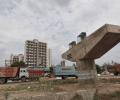
These could include strengthening the public-private partnership (PPP) dispute resolution mechanism, uniform PPP institutional framework, easier terms for infrastructure companies accessing bond markets, and tax sops, Business Standard has learnt. Investment in infrastructure projects with high multiplier effect has been the Centre's main plank to revive the economy, create employment and boost consumption.

Talking to PTI Amarjeet Kaur, General Secretary of All India Trade Union Congress (AITUC), said, "The two-day nationwide strike by the joint forum of central trade unions has begun this morning". About the impact of the agitation, she said that the entire coal belt (mining area) is affected in Jharkhand, Chhattisgarh and Madhya Pradesh. She also said that there is a good response in industrial areas of Assam, Haryana, Delhi, West Bengal, Telangana, Kerala, Tamil Nadu, Karnataka, Bihar, Punjab, Rajasthan, Goa, Andhra Pradesh and Odisha. The AITUC official noted that the banks and insurance sectors are affected all over India, while steel and oil sectors are also seeing partial impact due to the strike. Kaur said that she has got preliminary reports that markets are closed in Odisha.

Bajaj Finserv was the top gainer in the Sensex pack, soaring around 8 per cent, followed by Tata Steel, Tech Mahindra, Bajaj Finance, HDFC Bank and SBI.
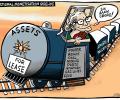
'This plan is basically to allow some of the government assets for rent, and surely not for sale.' 'There is a difference between selling a house and renting out a house.'

The government has used four methods to value the assets that it is looking to monetise under its Rs 6-trillion National Monetisation Pipeline (NMP). The value of the assets on the block is indicative that the government is expected to realise either in the form of upfront accruals or by the way of private sector investment, NITI Aayog said in its report. Valuations are essentially estimates, so multiple methodologies are useful to get a range, said Manish Agarwal, infrastructure expert and co-founder of AskHowIndia.org. Different valuation methodologies depend on the different assumptions that are being considered for valuing a business, he said.

Infrastructure funds, which bet on stocks closely linked with infrastructure development in the country, have emerged as one of the best-performing categories over the past year. They have generated an average return of 90.63 per cent - the third-best, after technology funds and small-cap funds. Of the 21 schemes in the category, seven have given a return of more than 100 per cent in a year.

If 2019-20 (FY20) was an unusual year for highway construction in India, with the pace of work slowing down for the first time since the Narendra Modi government assumed power in 2014, largely due to the general elections in May and liquidity crunch, the outbreak of the Covid-19 pandemic in 2020-21 (FY21) only made matters worse with lockdowns and labour unavailability. The pace of highway construction in 2021-22 (FY22) has not been able to bulldoze the pandemic barriers in a year marred by two Covid-19 waves - the second at the start of the fiscal year, the third towards the close. With localised lockdowns and restrictions on mobility, highway construction growth in the country has now fallen to a five-year low.
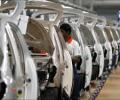
At present, the NMP states a series of fiscal incentives, including tax sops, will be offered but only to small and medium enterprises.

"It will be ensured that such agreements (free trade agreements) do not have a detrimental effect on domestic manufacturing in India," according to the National Manufacturing Policy (NMP), cleared by the Union Cabinet on October 25.
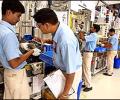
While the special economic zones have seen several labour laws being by-passed within their geographical confines, that is not the case with the NMP.

Size seems stuck at a low when compared with other developing economies, with various issues dogging growth.

A series of steps taken by the government to promote ease of doing business and liberalisation of foreign direct investment norms have helped India receive record FDI inflows so far this year, and implementation of measures like PM Gati Shakti, single window clearance and GIS-mapped land bank are expected to further push investments in 2022. Notwithstanding the global slowdown and the COVID-19 pandemic, total foreign direct investments into India rose to a record $81.72 billion in 2020-21. During April-July this fiscal, FDI (foreign direct investment) into the country increased by 62 per cent to $27.37 billion.

"If you show us (threaten us with) ED, we will also send proof against BJP leaders to the agency. A section of BJP ministers and leaders is hand in glove with the coal mafia. They even stayed at hotels run by them during elections," she said.

Referring to Modi, Adityanath and Union Home Minister Amit Shah as 'outsiders', the farmer leader said he has no objection if they become prime ministers after winning polls from Uttarakhand or Gujarat.

The chief ministers of five mineral-rich states on Wednesday urged Prime Minister Manmohan Singh for local value addition in the National Mineral Policy (NMP). They also argued that foreign firms must not be allowed to grab control of prized natural resources. The team consisted of Orissa Chief Minister Naveen Patnaik, Chhatishgarh CM Raman Singh, Jharkhand CM Madhu Koda, Madhya Pradesh CM Shivraj Singh Chauhan and Rajasthan's Vasundhara Raje.
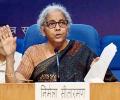
'When the government wants to sell these assets, even if one set of assets gets caught in any quagmire, the whole process will fail.' 'The entire world is watching us.'

Make in India right now is just a slogan. The policy content is missing or not clearly articulated. The lion with cogs and wheels must now show some majestic movement forward, says Rahul Khullar.

The manufacturing sector, which constitutes over 75 per cent of the index, declined by 2 per cent in October as against a growth of 9.9 per cent a year ago.
