
Farmers have been protesting at various places in Delhi and Haryana and have rejected the central government's offer to hold talks on December 3 saying that imposing conditions for starting a dialogue is an insult to them.

The restrictions barred civilian traffic from plying on the highway on Wednesdays and Sundays from 4 am to 5 pm till May 31.

The agitating farmers had earlier said they would picket toll plazas to press their demand for a repeal of the three new laws, which were voted through in Parliament in September amid strong protests by opposition parties.

The Tripura government decided to ration petrol, diesel and cooking gas from Thursday as the state remained cut off from the rest of the country for the fourth consecutive day due to landslides triggered by heavy rains on the vital NH 44.

Farmer leader Kulwant Singh Sandhu had said that 32 farmer unions from Punjab held a meeting on Tuesday and discussed the next course of action.

On Wednesday, the top court observed that the Centre's talks with the protesting farmers have 'not worked apparently' and were bound to fail, and said it will form a committee having representatives of both the sides, but the agitating leaders dismissed it as no solution.

The Haryana government, which had earlier ordered suspension of mobile Internet services in Karnal from Monday 12.30 pm to Tuesday midnight, decided to suspend these services in four adjoining districts as well.

Prohibitory orders banning the gathering of people were imposed in Karnal on Monday, a day ahead of a farmers' planned gherao of the mini-secretariat over the August 28 lathicharge episode, officials said.
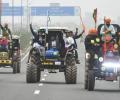
According to them, these marches were a "rehearsal" for their proposed January 26 "Kisan Parade" to the national capital from different parts of Haryana, Punjab and Uttar Pradesh.

A resident of Uttarakhand's Badena village, Singh had joined the army in 2016 and is survived by his parents.

How can highways be blocked perpetually, the Supreme Court wondered on Thursday while referring to road blockades by farmers protesting at Delhi borders against the three farm laws passed last year, and said it is the executive's duty to implement the law laid down by the court.

The government and the farm unions had reached some common ground on Wednesday to resolve the protesting farmers' concerns over rise in power tariff and penalties for stubble burning, but the two sides remained deadlocked over the main contentious issues of the repeal of three farm laws and a legal guarantee for MSP.

Police said farmers have been allowed to hold peaceful protest at the Nirankari Ground in north Delhi.

Security was stepped up after farmers threatened to block more highways connecting the national capital.
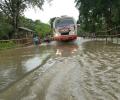
Five persons were killed on Tuesday in two separate incidents of landslips triggered by incessant rains in Meghalaya's West Garo Hills district.

The bench noted that "conflicting versions about the incident demands an inquiry to uncover the true facts".

Those gathered at the Tikri border continued to hold ground as wellA decision on whether they would head to the designated protest site is expected soon.

Clashes broke out at multiple places and Delhi's borders resembled a virtual battle zone with restless crowds of farmers, mostly from Punjab and Haryana, milling around and a sea of police personnel keeping them at bay.

Haryana remained on the boil on as the Jat stir unleashed fresh incidents of violence and arson even as the Army had to use choppers to reach parts of blocked Rohtak.

It's time to eat, drink and be merry.

Many of the tragedies occurred in the dark, which is when it is cooler to walk, and many people were caught in their sleep. The combination of no traffic and speeding vehicles has led to havoc, endangering the lives of those who found themselves without work or money in the coronavirus-induced lockdown and were frantic to get home, any which way.

With almost all opposition parties too backing the 'Bharat bandh' and many announcing parallel protests in support of the farmers, the Centre has issued an advisory directing the states and Union Territories to tighten security and ensure peace is maintained.
