
You will come across many a hurdle while purchasing a used car. That, however, cannot keep you away from realising your dream.

Insurance firms and non-banking finance companies are heaving a sigh of relief as the revised draft of the Direct Taxes Code has suggested that book profits rather than gross assets be used to calculate the minimum alternate tax, or MAT, for both groups.
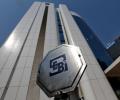
Capital markets regulator Sebi has penalised stock exchanges -- BSE and NSE -- for "laxity" on their part in detecting misuse of clients' securities worth Rs 2,300 crore by Karvy Stock Broking Ltd (KSBL). In two separate orders, the Securities and Exchange Board of India (Sebi) has imposed a fine of Rs 3 crore on BSE and Rs 2 crore on NSE. The matter relates to KSBL misutilising client securities worth Rs 2,300 crore, belonging to more than 95,000 clients, by pledging them from just one demat account. The funds raised against the pledge were used by KSBL for itself and its group entities.

'The focus needs to shift towards the ability to collect payments, particularly in tier-3 to tier-4 areas where acceptance is still lacking.'

this move by the government is likely to iron out the current challenges for the NBFCs and in turn help the real estate sector.

The credit guarantee cover under the scheme would be both transaction-based (for single eligible borrowers) and umbrella-based (for a group of eligible borrowers).

Such cold-shoulder by banks also indicates a credit freeze that is hard to overcome, unless the government comes out with credit guarantee schemes for loans given by banks. Since that is not happening, and there is no indication of that too, banks are not willing to listen to RBI prodding.
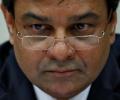
Under Urjit Patel, the then RBI Governor, the central bank had a habit of making complete about-turns on various issues, including electoral bonds and digital payments, former finance secretary Subash Chandra Garg said in his book titled 'We Also Make Policy: An Insider's Account of How the Finance Ministry Functions.' Citing some instances of about-turns by the then RBI Governor Patel, Garg in his book said, RBI had done so on the electoral bond issue and it had so in case of setting up of Payments Regulatory Board (PRB). RBI also made unilateral decisions like ordering complete data localization for participation in the payment system, Garg wrote in the book which will hit the stands on October 1.

In view of the economic shock caused by the COVID-19 pandemic, Reserve Bank of India (RBI) on Friday asked scheduled commercial banks and co-operative banks not to make any dividends for the financial year ended March 2020. In view of the ongoing stress and the heightened uncertainty on account of the pandemic, RBI said it is imperative that banks continue to conserve capital to support the economy and absorb losses, if any. The decision is based on review of the September quarter financial performance of banks.

After banks, it is now the turn of non-banking finance companies (NBFC) to see a spike in loan defaults and provisioning for non-performing assets ( NPAs ).

NBFCs seek level playing field with banks in terms of treatment of NPAs, TDS on deposits, removal of service tax on HP and lease transactions, refinance mechanism akin to NHB etc

While lenders create a hype around the services offered on digital platforms, customers think otherwise, given that frustration due to the quality of service has only increased, over the years.

More and more PE players are willing to test the waters now, just in case they become early entrants in a future booming business.

Nearly three-fourths of the debt money, as of April 30, 2019, was invested in securities with duration of less than three years.

'If individual stocks start falling 25% to 30% or more, then I doubt how many of them will be able to withstand that (kind of selloff). That is when you'll see panic coming in.'

The Reserve Bank on Thursday asked banks and other financial institutions to report to the government details about accounts resembling 10 individuals who have been designated as terrorists by the Union home ministry earlier this month. On October 4, the Union Ministry of Home Affairs (MHA) had designated a total of 10 members of Hizbul Mujahideen (HM), Lashkar-e-Taiba (LeT) and other proscribed outfits as terrorists under the Unlawful Activities (Prevention) Act (UAPA). Those designated as terrorists include Habibullah Malik alias Sajid Jutt, a Pakistani national, Basit Ahmad Reshi, who hails from Jammu and Kashmir's Baramulla but is currently based in Pakistan, Imtiyaz Ahmad Kandoo alias Sajad, who hails from Jammu and Kashmir's Sopore but now lives in Pakistan, Zafar Iqbal alias Salim, who is from Poonch but presently residing in Pakistan, and Sheikh Jameel-ur-Rehman alias Sheikh Sahab, who hails from Pulwama.

The Ministry of Corporate Affairs had taken various steps to protect small investors.
'Facilitating conversion of well-run NBFCs into banks is urgently needed.'
As part of its efforts to strengthen customer protection, Reserve Bank is considering setting up a fraud registry to create a database of fraudulent websites, phones and various modus operandi used for digital fraud. Such a database will help prevent these fraudsters from repeating the fraud as the websites or phone numbers would be blacklisted, RBI executive director Anil Kumar Sharma said on Monday. "There is no definite timeline for setting up of the fraud registry.
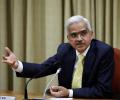
Reserve Bank Governor Shaktikanta Das on Wednesday said the country is at the doorstep of economic revival on the back of accommodative monetary and fiscal policies being pursued by the central bank and the government.

'India has always been a bottom-up stock-picking market, and as growth recovers with higher liquidity, mid and small-caps always tend to outperform.'

Second-tier NBFC stocks are trading at 24.4x their trailing earnings, which is nearly twice their 15-year average of 13.9x

The finance minister asked lenders to identify eligible borrowers and reach out to them and urged for quick implementation of a sustained resolution plan for the revival of every viable business.

The plan is to offer the ratings of drivers to insurers, which can then customise their premiums -- a higher score meaning a lower premium, for instance, and vice-versa.

'MFs have a combined exposure of Rs 3.2 lakh crore to NBFCs, out of which Rs 1.1 lakh crore matures by September 2019.'

The global turmoil in the banking sector has made analysts cautious, who advise that investors stay away from stocks of this sector till the overall sentiment improves. The recent trouble for the banking sector started with the collapse of US-based Silicon Valley Bank (SVB), Silvergate Capital and Signature Bank. On its part, Moody's Investors Service has also cut its outlook for the US banking system to 'negative' from 'stable', citing the run on deposits at these three banks that led to the collapse of these banking majors in less than a week.

The Reserve Bank of India (RBI) on Monday allowed microfinance lenders to fix interest rates on loans with a rider that those should not be usurious for the borrowers. A microfinance loan is defined as a collateral-free loan given to a household having an annual income of up to Rs 300,000. Each regulated entity (RE) should put in place a board-approved policy regarding pricing of microfinance loans, said the 'Master Direction - Reserve Bank of India (Regulatory Framework for Microfinance Loans) Directions, 2022'. In the past, the central bank used to announce the rates on quarterly basis.

The FM he said non-performing assets of PSBs have come down by Rs 1 lakh crore.

Most of the NBFCs do not take public deposits but that does not mean they cannot create systemic risks. The banking system has at least Rs 57,000 crore exposure to IL&FS. Haven't the banks invested public money in IL&FS papers, asks Tamal Bandyopadhyay.

The prime minister's sop is expected to give a massive boost to priority-sector housing loans, thereby pulling the entire housing loan portfolio of banks.

Banks are set to sell dud-loans worth Rs 90,000 crore of 22 firms in the first tranche to the National Asset Reconstruction Company (NARCL). It's reason for cheer given that such sales to asset reconstruction companies (ARCs) have been poor in recent times. In fiscal 2020, their assets under management (AUM) contracted by 4 per cent; and in fiscal 2021, it fell by another 100 basis points to Rs 1.07 trillion. So, why are we where we are?

'If we want faster growth and want greater flow of credit towards the private sector, it's important to have many more of such large entities.'

Fix India's real estate sector. Fix India's public sector banks, advises Tamal Bandyopadhyay.

A lot depends on how Srei shapes up under the new administrator and his team, which is critical for investors' interest.

While taking gold out of the closet to borrow money is no longer taboo in Indian households, the sharp drop in gold prices is hitting the newest loan product on the banking turf hard, explains Tamal Bandyopadhyay.
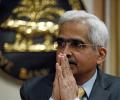
Reserve Bank Governor Shaktikanta Das said on Monday that fair and impartial auditing is essential for a resilient economy as it instils confidence among citizens. Addressing officers at the National Academy of Audit and Accounts, Das said that audit is important for the country as public expenditure decisions are based on these reports. Observing that there is a need to improve the quality and depth of audit, he said the Reserve Bank has taken a host of steps in consultation with the Institute of Chartered Accountants of India (ICAI) for improving the audit of banks and financial institutions.
