
The 21st meeting of FSDC comes against the backdrop of the economy hitting a six-year low growth rate of 5 per cent in the first quarter of 2019-20. Even some of the macroeconomic data for the second quarter does not portray an encouraging picture of the economy.

The finance minister chaired a meeting through video conference with major private banks and NBFCs to ensure effective rollout of ECLGS and uninterrupted liquidity to Indian MSMEs in this difficult time.

At a pre-Budget meeting, the FM was asked to ensure that NBFCs come out of the liquidity crisis they are facing with the help of RBI. They also spoke about the futility of trying to achieve a 3 per cent fiscal deficit target over the medium term.

The unexpected interest rate hike by the RBI on Wednesday will have the banking system on average making a 10-15 bps gains on the yields, with private banks making larger gains as 57 per cent of their loans are linked to external benchmark rate and 40 per cent to the marginal cost of lending rates, as per a report. Stating that lenders and borrowers will face volatile times with the Reserve Bank raising the repo rate by 40 bps to 4.40 per cent and the cash reserve ratio (CRR) by 50 bps on May 4 in an off-cycle policy move, India Ratings said the market rates had already been moving higher before the move. The 364-day T-bills have moved up 120 bps and 10-year G-sec by 140 bps since May 2020, when the repo rate was cut to a record 4 per cent, which led to an expectation of a faster and sharper rise in interest rates in the system but the central bank stayed the course to support the fragile economy battered by the pandemic.

After the finance minister directed public sector banks to join the account aggregator (AA) ecosystem, 5-6 major ones, including State Bank of India (SBI) and Bank of Baroda are expected to go live by July-end. Sahmati, an industry alliance for the AA ecosystem, has been working with PSU banks to get them onboarded for quite some time now. So far, Union Bank of India and Punjab National Bank (PNB) have gone live on the AA ecosystem. While Union Bank has been live for a while, PNB went live earlier this month.

Superseding the boards of two non-banking financial companies (NBFCs) in the Srei group will neither create liquidity challenges for sound entities, nor build systemic crises because the markets have factored in the problems with the Kolkata-based firms. Such regulatory steps will help in making the NBFC space more robust, bankers and market experts said. The action should have begun earlier because the Reserve Bank of India (RBI) had done a special audit last financial year and asked the group to make provisions for assets considered stressed, analysts said.

During a three-hour long virtual meeting with CEOs of large public and private sector banks along with heads of NBFCs, the prime minister assured them that the government is ready to take all steps to support the financial sector.

North Block is concerned that when India is trying to attract more investment, putting up restrictions on audit firms could create an avoidable bad advertisement.

Driven by strong demand, the overall passenger vehicle dispatches crossed 3.35 lakh units in February as automakers, including Maruti Suzuki India, Hyundai, Tata Motors and Mahindra & Mahindra, reported robust sales during the month. The dispatches of more than 3.35 lakh units last month marked an 11 per cent over February 2022. It was also the highest ever overall wholesales in the month of February. The country's largest carmaker Maruti Suzuki India on Wednesday said its domestic wholesales rose 11 per cent to 155,114 units in February as compared with 140,035 units in the same month last year.

Indian economy is poised to do better on the back of reforms undertaken by the government and is expected to clock a 6.5-7 per cent growth in the remaining part of the decade, Chief Economic Advisor (CEA) V Anantha Nageswaran said on Tuesday. Addressing reporters here after the tabling of the Economic Survey in Parliament by Finance Minister Nirmala Sitharaman, Nageswaran said that by and large, inflation is likely to be "well behaved" in FY2023-24 barring headwinds. "My optimism is that in the coming decade, rest of the decade, the potential GDP growth, without taking into account export potential, because global economy is still rife with uncertainty, the growth rate would be around 6.5 to 7 per cent, rather than between 6 per cent and 6.5 per cent," he said.
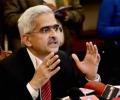
The overarching talking point will be the reluctance on the part of private banks to loosen their purse strings and increase lending substantially, even as the central bank believes there is adequate liquidity within the system.

In an indication of easing financial stress among borrowers, the number of unsuccessful auto-debit requests through the National Automated Clearing House (NACH) platform declined in July, reversing a three-month trend that started with the second wave of the Covid-19 pandemic. According to the NACH data, of the 86.4-million transactions initiated in July, 33.23 per cent, or 28.7 million transactions, failed, while 57.7 million were successful. Compared to June, this is a significant improvement in bounce rates.

YES Bank, Bank of Baroda, SBI, IndusInd Bank, and RBL Bank are amongst the banks, Jefferies says, are most prune to "high risk" emanating from ADAG, Cox & Kings, CG Power, DHFL and Essar Shipping.

The Financial Stability and Development Council meeting on Tuesday started with an air of tension in the room. An official present described the participants' body language as "tetchy". However, once presentations and discussions begun, the mood considerably eased.

Permitting realty firms to tap ECBs, relaxing borrowing norms for non-banking finance companies, increasing the ECB limit 50 per cent to $750 million under the automatic route (that is, without central bank permission) and raising the price ceiling at which overseas loans can be raised are among proposals the committee is considering. For realty, the committee may relax norms only for integrated township projects, said a top finance ministry official.

Since infrastructure projects have long gestation periods, investors need to enter them with a long horizon of at least 10 years.

Days after Moody's cut its gross domestic product (GDP) forecast for financial year 2022-23 (FY23) after the official GDP print for the June quarter came in lower than expectations, the global ratings agency said it would maintain its long-term sovereign debt credit rating and outlook on Asia's third-largest economy. "The credit profile of India reflects key strengths, including its large and diversified economy with high growth potential, a relatively strong external position, and a stable domestic financing base for government debt," Moody's said on Tuesday. "We do not expect rising challenges to the global economy, including the impact of the Russia-Ukraine military conflict, higher inflation, and the tightening financial conditions on the back of policy tightening, to derail India's ongoing recovery from the pandemic in 2022 and 2023," it said.

The bi-annual financial stability report noted that failure of an NBFC with the maximum capacity to cause solvency losses to the banking system will lead to a loss of 2.5 per cent of the total tier-I capital of the banking system.

The sector seems set for a rally that may be somewhat temporary.

NBFCs are facing the heat of a crisis at IL&FS, which defaulted on repayment of its commercial paper dues, leading to a contagion effect in the sector.

Is the worst over for Indian banks? The past two years saw them ride on treasury trades as deposits soared and credit growth dipped sharply. Gross and net non-performing assets (NPAs) moved south, and the provision coverage ratio (PCR), capital buffers, and profitability indicators are back at pre-pandemic levels. So, what's the plot ahead?

NBFCs with a proven track record, supported by the brand values of reputed corporate, can play a key role in bringing the benefits of banking and economy to the underserved and newer segments of India.

The RBI on Thursday filed an application for initiation of Corporate Insolvency Resolution Process (CIRP) against debt-ridden Reliance Capital at the Mumbai bench of the National Company Law Tribunal. The Reserve Bank had on November 29 superseded the board of Anil Ambani-promoted Reliance Capital Ltd (RCL) in view of payment defaults and serious governance issues. The central bank had also appointed Nageswar Rao Y (former executive director, Bank of Maharashtra) as the administrator of the company.

The Serious Fraud Investigation Office (SFIO) has arrested a person who the Ministry of Corporate Affairs (MCA) said has emerged as the mastermind of the racket of incorporating a large number of shell companies with Chinese links in India.

The RBI said the board has been superseded "in view of the defaults by RCL in meeting the various payment obligations to its creditors and serious governance concerns which the Board has not been able to address effectively". It has also appointed Nageswar Rao Y (ex-executive director, Bank of Maharashtra) as the administrator of the NBFC.

'The real estate sector has been badly bruised because it has become too reliant on funding from NBFCs, including housing finance companies. 'When the NBFC industry was rocked late last year by a large default, the real estate sector was hit hard. 'An intricate web of links between rural incomes, construction activity and shadow banks are fuelling the economic slowdown', says Pranjul Bhandari.

You would find NBFCs more willing to lend even if you have a poor credit score, says Adhil Shetty

'I suggest a cut in the GST rates and an infusion of Rs 1.2 trillion into the economy in six months.'

The Income-tax department has conducted searches at multiple premises of Chinese telecom company Huawei in the country as part of a tax evasion investigation, official sources said on Wednesday. The raids were launched at the company's premises in Delhi, Gurugram (Haryana) and Bengaluru in Karnataka on Tuesday. Sources said the officials looked at financial documents, account books and company records as part of a tax evasion investigation against the company, its Indian businesses and overseas transactions.

'The CM kept his cool, but his adviser was liberal with filthy language.' Tamal Bandyopadhyay recreates the diary of a general manager in a public sector bank, providing a glimpse of how they balance their work and life.

Auto-debit payment bounces have gone up for the second consecutive month in May, emphasising the stress building up due to a halt in economic activities as authorities lock down various parts of the country to stop the spread of the virus in the second wave. According to the National Automated Clearing House (NACH) data, in May, of the 85.7 million transactions initiated, 35.91 per cent, or 30.8 million transactions, failed.

S&P Global Ratings on Monday expressed scepticism over allowing corporate ownership in banks given India's weak corporate governance amid large corporate defaults over the past few years. It also said that the Reserve Bank of India (RBI) will face challenges in supervising non-financial sector entities at a time when the health of financial sector is weak. Last week, a RBI panel had proposed that large corporate may be permitted to promote banks, as well as raising the cap on promoters' stake in private sector banks to 26 per cent, from15 per cent at present.

The rupee breached the 80-mark against the dollar on Tuesday. The steady depreciation in the value of the rupee against the US dollar is likely to prove expensive for corporate India. The listed companies' revenue expenses in foreign currency or imports exceed their export revenues or revenue earnings in forex. In their latest financial year, BSE500 companies, excluding banks and non-banking finance companies and insurance (BFSI), reported combined forex expenses of Rs 12.31 trillion against forex earnings of around Rs 10 trillion.
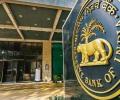
The Reserve Bank on Monday superseded the boards of Srei Infrastructure Finance as well as Srei Equipment Finance, citing concerns over governance and payment defaults, and decided to refer the two NBFCs for resolution under the insolvency law. This is only the second time in as many years that the Reserve Bank of India (RBI) is referring entities for the resolution process under the Insolvency and Bankruptcy Code (IBC) after taking first ever such step in the case of DHFL back in 2019. Superseding the boards of the crisis-hit Srei Infrastructure Finance Limited (SIFL) and Srei Equipment Finance Limited (SEFL), the RBI has appointed Rajneesh Sharma, former Chief General Manager of Bank of Baroda as the administrator to manage the affairs of the two companies.
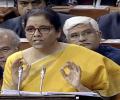
The revised estimated expenditure for FY20 has been pegged at Rs 26.99 lakh crore and receipts at Rs 19.32 lakh crore, she said.

'The people let off by the NBFCs have little bargaining power and willingly settle for a 20% to 25% cut in their existing salaries when hunting for new jobs.'

The interest rate offered by PSBs like SBI, BoB and BoI hover around 8.9 per cent-10.50 per cent. For private banks, the range is between 10.49 per cent and 12 per cent.

'This is the first time we will see how SIP investors react to market correction.'

Experts say a combination of improving asset quality and NBFCs' weak balance-sheets bodes well for both corporate and retail banks.
