
With liquidity crunch hitting operations, many finance companies have put the brakes on sanctions in the third quarter in the aftermath of the IL&FS crisis.
NBFCs which have not met Sebi criteria will face tough action.

Observing that the economic recovery was not yet fully entrenched, the RBI Governor said recovery is likely to be gradual.

It takes a longer time to avail of these loans, owing to tight due-diligence process of banks.

The country's largest commercial bank State Bank of India is likely to go for stake sale by December as a part of its efforts to mobilise Rs 50,000 crore (Rs 500 billion) in the next three years.

Buying a used vehicle is a lot more complicated. Not only do you have to worry about its condition, you also have to think about whether the price you are offering is anywhere close to its true value, reveals Sanjay Kumar Singh.

From FY18, Ind-AS will be mandatory for all listed entities, barring those listed on the SME platform.
'The macro-economic stresses -- high interest rates, rupee depreciation and capital flows -- have receded now.' 'Interest rates have come down, inflation is down and the rupee has bounced back.' 'If oil prices continue at this level, there will be no vulnerability.' 'Growth is a different story.'
The Hongkong and Shanghai Banking Corporation is in the process of setting up a non-banking financial company to cater to new market segments

Members of Parliament, state legislatures, and local governments not eligible to be members of PSB boards
The government on Tuesday approved 30 foreign direct investment proposals amounting to Rs 305.29 crore (Rs 3.05 billion), including the proposal of Japanese firm Kansai Paints to acquire stake in Mumbai-based GoodLass Nerolac Paints for Rs 104.27 cro
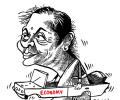
While the situation Sitharaman finds herself in may not be that good, how does it stack up against her three immediate predecessors Pranab Mukherjee, P Chidambaram and the late Arun Jaitley?

His portfolio was worth Rs 12,333 crore at the end of June 2018. It was worth Rs 10,633 crore at the end of the September quarter. Smallcaps account for the largest number of his stock-picks. Such a fall has now happened for the third quarter in a row.
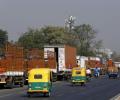
The industry said if the policy was announced, it would have taken 28 million vehicles bought before March 2005 off the road.

Reserve Bank of India Governor Shaktikanta Das on Friday said the central bank will ensure adequate liquidity in the system to ease the financial stress caused by the Covid-19 pandemic. The central bank reduced the reverse repo rate -- the rate at which banks park their fund with the central bank -- by 25 basis points to 3.75 per cent.

'Equities are likely to be range-bound with a downward bias for the remaining part of the year.'
The Kunal Bahl-led firm wants to add 1,000 sellers every three months in its loan scheme.

What ex-IL&FS top brass got for loans? Foreign trips, private jets and chopper rides.

Homegrown e-Commerce major Snapdeal on Tuesday launched a new initiative to help sellers on its platform get easy access to working capital to help them expand their business further.
An initial reading of the guidelines indicates two factors - potential rise in borrowing cost and lower returns on investment book - could hit the spread of NBFCs.

The underperformance comes amid liquidity concerns in the non-banking finance companies space and Essel Group default news.

'It may sound like sacrilege, but does it really matter if the global raters downgrade India for fiscal slippage?' asks Tamal Bandyopadhyay.
Among the stocks that have seen the largest cut by MFs, the DVR shares (shares with differential voting rights) of Tata Motors have seen a cut of 243 basis points (bps) in MFs' stake.

The surge in oil prices has also affected the rupee, which hit a 6-week low of 70.25 on Friday against the dollar.
'2018 has seen a bi-polar market.' 'Thanks to gains in some key stocks, market returns are positive. But there has been huge wealth destruction in the small and mid-cap space.'

The Reserve Bank of India (RBI) on Thursday paved the way for niche banking by issuing draft guidelines for setting up payment banks and small banks.

The first half of 2019-20 will be under pressure, since prices are expected to go up by Rs 7,000-8,000 at a time when sentiment is poor.

Finance Minister Nirmala Sitharaman on Wednesday announced Rs 3 lakh crore collateral free automatic loan for businesses, including MSMEs, to benefit 45 lakh small businesses. Detailing parts of the Rs 20 lakh crore economic stimulus package, she said this loan will have a 4-year tenure and will have 12-month moratorium, she said.
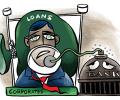
Let all the stakeholders, especially the government, remember that if the Make in India lion needs to roar and rise again, it won't happen unless India Inc rises too, points out Shekaar Subramanian.

Large number of buyers has put purchases on hold because of a combination of factors, including high fuel prices, higher insurance cost, and firm interest rates.

'After that, volumes and prices would move up.'

Factors like high fuel prices, higher insurance cost and firm interest rates kept buyers away, especially in case of passenger vehicles.

'Common sense says if one can afford, servicing the loans during this period is a better bet than postponing it by three months,' says Tamal Bandyopadhyay.
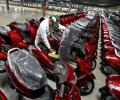
Navratri and Onam saw flat sales, but industry hopes to turn the corner with a cracker of a Diwali.
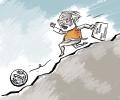
'Without bold action to deal with our banking crisis, count on the economy's doldrums to continue for much longer than most of us anticipate,' says Rahul Jacob.

IMF believes it is mostly cyclical, not structural, but because of the financial sector issues, recovery will be not be quick. IMF said, it saw an opportunity with the strong mandate of the new government to reinvigorate the reform agenda to boost inclusive and sustainable growth.
