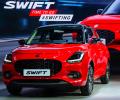
Passenger vehicle sales in India are estimated to have surged by nearly 25 per cent in June 2024, reaching approximately 4 lakh units, with Maruti Suzuki, Tata Motors PV, and Mahindra & Mahindra leading the growth, despite concerns over geopolitical tensions and monsoon impact.

Indian benchmark indices Sensex and Nifty opened higher, extending gains from the previous session, driven by a rally in global markets and a slight cooling in crude oil prices. Optimism around a potential meeting between US and Iranian presidents also contributed to positive sentiment.Later both indices pared gains and were trading in red. Track Sensex, Nifty on September 22.

Maruti Suzuki India Ltd has launched the Wagon R, India's first flex-fuel car, capable of running on any blend of ethanol and petrol from E20 to E100, aligning with national energy security and sustainability goals.

'With inflationary pressures now at elevated levels and the adverse cost environment persisting, the company has to pass on a portion of the increased costs to the market, while continuing to ensure that the impact on customers is kept to the minimum extent possible.'

Indian benchmark equity indices, Sensex and Nifty, closed mixed on Friday. While a drop in crude oil prices offered some relief, weakness in IT stocks and several Tata Group counters, including a significant dip in Tata Chemicals and ongoing boardroom issues at Tata Sons, limited a broader market recovery.

Indian benchmark indices, Sensex and Nifty, closed nearly flat on Thursday, influenced by the US Federal Reserve's interest rate hike and indications of further monetary tightening. Despite some intraday gains, caution prevailed, with foreign institutional investors continuing to offload equities. Meanwhile, the National Stock Exchange of India's (NSE) mega initial public offering opened for subscription, garnering 39 per cent subscription on its first day.

Kalyan Bainsla has been arrested in connection with an alleged road rage incident in Gurugram where he reportedly hit a woman biker with his car after making indecent comments. The victim, Shivani Chauhan, survived due to protective gear. Bainsla, who claims it was an accident, was apprehended in Rajasthan's Dausa, and police are investigating the role of another person present.

Indian carmakers, including Maruti Suzuki and Kia India, reported robust sales growth in May 2026, with both companies achieving their highest-ever monthly sales despite rising fuel prices. Maruti Suzuki's domestic sales surged to 1,93,535 units, while Kia India recorded 27,586 units, driven by strong demand in mini and compact segments and a shift towards electric and CNG vehicles.

Volkswagen, a long-standing but minor player in India's fiercely competitive automotive sector, is now exploring a strategic partnership with the JSW group, aiming to revitalise its market presence, enhance profitability, and potentially establish India as a key export hub for electric vehicles.

Indian benchmark indices, Sensex and Nifty, closed marginally lower due to elevated crude oil prices, fresh US-Iran tensions, and expectations of a tighter monetary policy from the US Federal Reserve, despite strong domestic GDP growth.

Maruti Suzuki India reported a significant 147 per cent year-on-year increase in mini-car sales (Alto and S-Presso) during April-May 2026, reaching 32,341 units, driven by eased production constraints and a surge in demand for CNG vehicles amidst rising fuel prices.

Indian benchmark indices, Sensex and Nifty, closed lower on Monday due to elevated crude oil prices, escalating US-Iran hostilities, and concerns over a potential US interest rate hike, impacting investor sentiment.

J R D Tata, chairman of the Tata group from 1938 to 1991, said that whenever he had to make a difficult decision, he would ask himself, what will be good for India, and what will be good for the Tatas. If he had a doubt, he would decide in favour of India. In the long run, it would turn out well for the Tatas too, he said, points out Arun Maira.

Tata Motors has emerged as the biggest market-share gainer among India's leading passenger vehicle (PV) makers in the first eight months of 2026, securing the No. 2 position in the PV market.

A 33-year-old gym owner, Kalyan Bainsla, has been arrested in Rajasthan for allegedly ramming his car into a woman biker, Shivani Chauhan, on Gurugram's Golf Course Road. The incident, captured on video, led to charges of attempt to murder and stalking after police investigation revealed alleged indecent comments and deliberate intent to harm. Bainsla's cousin and another friend have also been detained.

Maruti Suzuki Chairman R C Bhargava is pushing for increased government incentives for biogas-powered vehicles over hybrids, emphasising their net-zero carbon emissions and the valuable organic manure they produce, while also advocating for continued GST benefits for electric vehicles.

A gym owner has been arrested in Rajasthan for allegedly ramming his car into a woman biker in Gurugram, knocking her off her vehicle. The incident, captured on video, led to charges of attempt to murder and stalking after the victim claimed the accused made indecent comments and deliberately hit her. The accused, Kalyan Bainsla, along with a cousin, was apprehended after a two-day search.

A tragic head-on collision between a Mercedes and a Maruti WagonR in Delhi's Narela area resulted in the death of a 70-year-old woman, prompting a detailed police investigation into the fatal road accident.

The benchmark BSE Sensex rebounded by 362 points, ending a four-day losing streak, driven by strong buying in metal, private banking, and oil and gas shares, while the broader NSE Nifty saw modest gains despite paring some advances in the closing session.

Apple's upcoming iPhone 18 lineup is set to cost 20 to 43 per cent more in India, primarily due to rising global memory component costs and a depreciating rupee, while the new foldable iPhone Duo will be priced between Rs 3 lakh and Rs 4.5 lakh, matching the cost of some hatchback cars.

Indian passenger vehicle manufacturers are significantly increasing production and stocking dealerships in anticipation of strong festival season demand, with new launches planned and supply bottlenecks being addressed. However, the industry faces potential moderation in growth during the second half of FY27 due to a high base from last year's post-GST surge, commodity inflation, and elevated inventory levels.

Indian benchmark indices Sensex and Nifty experienced declines in early trade, influenced by the escalating US-Iran standoff and persistently high crude oil prices, with experts predicting increased volatility.

Maruti Suzuki India's shares gained over 2.5 per cent after a strong March-quarter performance, with analysts maintaining a positive medium-term outlook driven by buoyant domestic market volumes, capacity expansion, and export growth, despite anticipated near-term margin pressures from higher commodity prices and startup costs.

Indian benchmark indices, Sensex and Nifty, closed flat on Friday, with elevated crude oil prices due to geopolitical uncertainties and a rebound in US Treasury yields making investors cautious and preventing a decisive market rally.
Indian benchmark indices Sensex and Nifty experienced declines in early trade, driven by a surge in Brent crude oil prices above USD 91 per barrel due to escalating tensions between Iran and the US, alongside an increase in US 10-year bond yields. Track Sensex, Nifty on August 18.

In the next 36 months nearly 25 to 40 per cent of jobs will be under threat from AI and job losses are inevitable.

Maruti Suzuki has discontinued its Ignis hatchback due to weak sales and a shift towards SUVs, while simultaneously facing supply chain issues for its popular S-Presso and WagonR models, leading to booking halts at some dealerships.

Indian markets on Dalal Street rallied sharply as easing tensions in the US-Iran conflict and stable oil prices boosted sentiment. Track Nifty 50 and BSE Sensex performance and key global triggers.

India's passenger vehicle industry is poised for a record-breaking year in 2026, propelled by robust dispatches in the first half of the calendar year and strong demand for utility vehicles, despite facing several economic challenges.
Indian stock market benchmark indices, Sensex and Nifty, saw significant gains in early trade, driven by a sharp decline in crude oil prices and easing geopolitical tensions, alongside renewed foreign fund inflows.
Indian benchmark stock indices, Sensex and Nifty, extended their winning streak to a fourth day, with Nifty surging 1.60 per cent, driven by a sharp decline in crude oil prices and renewed foreign fund inflows.

Indian benchmark indices, Sensex and Nifty, opened higher on Friday, primarily driven by a significant surge in Bajaj Finance shares following its strong Q1 FY27 earnings report, coupled with continued foreign fund inflows and a dip in crude oil prices. Track Sensex, Nifty on July 31.
Indian benchmark indices Sensex and Nifty experienced a significant slump in early trade, driven by escalating tensions in West Asia and a sharp rise in crude oil prices, alongside a bearish trend in other Asian markets.
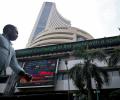
Indian benchmark indices, Sensex and Nifty, saw early gains, primarily driven by IT stocks, amidst expectations of a less aggressive monetary policy from the US Federal Reserve following softer inflation data. Global market trends and upcoming Q1 results are also influencing investor sentiment. Track Sensex, Nifty on july 16.

In 2025, the Maruti Suzuki Dzire has emerged as India's top-selling car, while sport utility vehicles continue to rule the broader passenger vehicle market, capturing almost 55 per cent of the segment.

India's domestic passenger vehicle sales experienced a robust 24.6 per cent year-on-year increase in June, propelled by favourable government policies like income tax relief and repo rate cuts, alongside resilient rural demand, even as global crude oil prices pose potential cost pressures.

Indian benchmark equity indices closed higher on Thursday, with the Sensex gaining 273.55 points to 77,928.15 and the Nifty rising 66.95 points to 24,317.15, driven by bargain hunting and short-covering in IT and auto sectors.

Indian benchmark indices, Sensex and Nifty, experienced declines in early trade due to a surge in crude oil prices and significant selling pressure on bank stocks, impacting overall investor sentiment. Track Sensex, Nifty on July 22.

VinFast has gone from an unknown brand to India's fifth-largest EV carmaker in just seven months, but its toughest battle is only beginning.
Indian equity benchmark indices Sensex and Nifty plummeted over 2 per cent following US President Donald Trump's declaration that the interim agreement with Iran is 'over', which led to a sharp rally in crude oil prices and heightened geopolitical tensions.
