'The central bank has highlighted that the slowdown in growth has been limited to a few sectors and overall growth is expected to pick up in the second half of the year.'

Retail inflation dipped to an over six-year low of 2.82 per cent in May due to subdued food prices, remaining below the RBI's median target of 4 per cent for the fourth consecutive month, according to government data released on Thursday. Consumer Price Index (CPI)-based retail inflation was 3.16 per cent in April and 4.8 per cent in May 2024.

Jio Finance, a wholly owned subsidiary of Jio Financial Services, is likely to delay its maiden bond issue of Rs 3,000 crore, originally scheduled for this month. The decision comes amid expectations of softening yields in April because the Reserve Bank of India's (RBI's) monetary policy committee (MPC) is widely expected to cut the policy repo rate by another 25 basis points, sources said.

'I think today RBI supervision is much sharper than what it was earlier.'
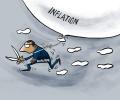
Wholesale price based inflation declined to a 3-month low of 1.89 per cent in November on cheaper food items, and experts predicted a 0.25 per cent interest rate cut by the RBI in the policy review in February. The Wholesale Price Index (WPI) based inflation was 2.36 per cent in October 2024. It was 0.39 per cent in November, last year. In August, 2024, it was 1.25 per cent.
The Reserve Bank is unlikely to cut the benchmark interest rate in its forthcoming bi-monthly monetary policy review later in the week as retail inflation is still a cause of concern, and there is a possibility of the Middle East crisis deteriorating further, impacting crude oil and commodity prices, say experts.

Since Sanjay Malhotra took office as governor in December, the Reserve Bank of India (RBI) has adopted a more accommodative stance, which bodes well for banking and the economy as they navigate a growth slowdown, according to analysts.
The government has invited applications for the post of deputy governor of the Reserve Bank of India (RBI) from interested candidates with at least 25 years of experience and below 60 years of age as on January 15, 2025. One of the deputy governors, Michael Patra's current term will end on 15 January. The last date of submission of applications is November 30, 2024.

Maruti, IndusInd Bank, Bajaj Finserv, Eternal, Mahindra & Mahindra, Tata Steel, Kotak Mahindra Bank, Titan, HDFC Bank, and NTPC were among the other major gainers. Bharti Airtel and Sun Pharma were the laggards.
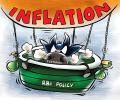
The Reserve Bank on Wednesday lowered the inflation projection for the current fiscal to 4 per cent from 4.2 per cent earlier, taking into account good agricultural output and falling crude prices.
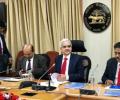
'Overall, domestic demand has moderated significantly. 'The weakening of private consumption, which for long has been the bedrock of aggregate demand, in particular, is a matter of concern,' RBI Governor Shaktikanta Das said in the MPC meetings, in October.

'A possible post-election growth momentum may be lost.'
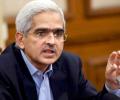
The December meeting of the Reserve Bank of India's (RBI's) six-member Monetary Policy Committee (MPC) will start on Wednesday even as there is no clarity on whether Governor Shaktikanta Das, the chair of the panel, will continue in office after his term ends next week. The outcome of the meeting will be announced on Friday by Das at 10 in the morning.
The Reserve Bank is unlikely to ease the benchmark policy rate during 2024 given the uncertainty over food inflation, State Bank of India (SBI) chairman C S Setty has said. The US Federal Reserve's first cut in interest rates in more than four years is expected soon, triggering central banks in other economies to follow suit. "On the rate front, a lot of central banks are taking independent calls.

Das favoured shifting the stance of monetary policy from neutral to accommodative to send a clear signal, indicating that more measures could be taken in the near future to boost growth.

The Reserve Bank of India on Thursday decided to keep the policy rate unchanged for the ninth time in a row, saying food inflation remains stubborn. The rate increase cycle was paused in April last year after six consecutive rate hikes, aggregating to 250 basis points since May 2022.

The 6-member Monetary Policy Committee, headed by Reserve Bank of India Governor Urjit Patel, in its fifth bi-monthly review, kept the repo rate unchanged at 6 per cent and reverse repo at 5.75 per cent.
Reserve Bank of India (RBI) Governor Shaktikanta Das has said the decision on interest rate moderation will be based on long-term inflation trajectory and not monthly data. The Monetary Policy Committee (MPC) headed by the RBI Governor is scheduled to meet between October 7 and 9 and take call on interest rate. The RBI kept the repo rate unchanged at 6.5 per cent for the ninth time in a row amid risks from higher food inflation.

To ease the potential liquidity stress, the Reserve Bank on Friday slashed Cash Reserve Ratio (CRR) by 50 basis points to 4 per cent, a move that would unlock Rs 1.16 lakh crore bank funds. The RBI on May 4, 2022 had raised CRR to 4.5 per cent from 4 per cent in an off-cycle Monetary Policy Committee (MPC) meeting, with effect from May 21 the same year.

With the setting of MPC, the interest rate setting powers would move from RBI Governor to the panel.

On one hand, Operation Greens should help to smoothen volatility in the prices of vegetables, whereas the proposal to enhance and extend minimum support prices to augment farmer incomes, may emerge as an inflation risk.
Amid a debate on the basis of a monetary policy stance, one may be curious enough to know how non-food retail inflation has behaved over the years in India. Let the eager souls catch a glimpse of facts. In the past 10 years, non-food inflation came down below 4 per cent on two occasions - pre-Covid period of 2019-20 and now in the first four months of the current financial year (FY25).
Some say the MPC will raise the rate, while others are of the view that there is already de facto interest rate tightening through rising bond yields, which might prompt the central bank to go for a pause.

Even as the high inflation figure for October has ruled out any possibility of a rate cut by the Reserve Bank of India's (RBI's) monetary policy committee (MPC) in December, a rate cut in February also looks uncertain due to global uncertainties. Economists told Business Standard that unless domestic growth slows markedly, the outlook on rate cut remains unclear. India's headline inflation touched a 14-month high of 6.2 per cent in October, breaching the MPC's upper tolerance band of 6 per cent.

High frequency indicators suggest that a growth recovery is underway, but very tentatively and with weak legs, says Saugata Bhattacharya.
The Reserve Bank of India on Wednesday decided to keep the policy rate unchanged for the tenth time in a row but changed its stance to 'neutral' that may lead to a cut in the forthcoming policies. RBI maintained status quo despite the US Federal Reserve lowering the benchmark rates by 50 basis points last month.

The RBI under new Governor Sanjay Malhotra on Friday cut interest rate for the first time in nearly five years as the central bank pivoted the policy stance to support a shuttering economy. The 25 basis points rate cut to 6.25 per cent comes after last rate reduction in May 2020. The last revision of rates happened in February 2023 when the policy rate was hiked by 25 basis points to 6.5 per cent.

Retail inflation breached the Reserve Bank's upper tolerance level, soaring to a 14-month high of 6.21 per cent in October mainly on account of rising food prices. Inflation based on the consumer price index (CPI) was 5.49 per cent in September and 4.87 per cent in the year-ago month. Retail inflation trended below the RBI's upper tolerance band of 6 per cent since September last year.

Wholesale inflation fell to a 3-month low of 2.04 per cent in July on decline in prices of food items especially vegetables, government data released on Wednesday showed. The decline in wholesale price index (WPI) based inflation in July came after it rose for four months in a row till June, when it was 3.36 per cent. It was (-) 1.23 per cent in July last year. In April wholesale inflation stood at 1.19 per cent.

Investors would track a host of macroeconomic data announcements scheduled this week, including inflation numbers, and also monitor global market trends, and trading activity of foreign institutional investors, analysts said. The ongoing quarterly earnings announcements and the rupee-dollar trend would also influence the markets.
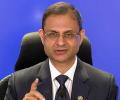
'We will be very, very proactive in providing whatever liquidity requirements are needed.'

The RBI is fully aware that the high-cost loans and high indebtedness of the borrowers could pose financial stability risks, if not addressed by these NBFCs. Governor Shaktikanta Das has issued a stern warning, saying the RBI is closely monitoring these areas and will not hesitate to take appropriate action, if necessary, if the culprits don't opt for self-correction. Watch out for some action, soon, notes Tamal Bandyopadhyay.

'If it doesn't, it will continue with measures to infuse liquidity, signalling a new cycle,' predicts Tamal Bandyopadhyay.

Among the 30 Sensex firms, Asian Paints, Infosys, JSW Steel, UltraTech Cement, Power Grid, Larsen & Toubro, HCL Technologies and Tata Steel were the biggest laggards. Tata Motors, HDFC Bank, Bharti Airtel, ITC, IndusInd Bank and Axis Bank were the gainers.
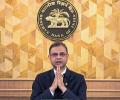
'A repo cut will be very good for the market as it will mean that everything is being done to spur growth in these uncertain times.'

Reserve Bank of India (RBI) Governor Shaktikanta Das said on Friday said the central bank has developed an innovative artificial intelligence and machine learning (AI/ML) based model MuleHunter.ai to address the growing issue of mule bank accounts that are often used for committing financial fraud. Developed by the Reserve Bank Innovation Hub, the new initiative is piloted with two public sector banks.
Retail inflation slipped to seven-month low of 3.61 per cent in February mainly due to easing prices of vegetables, eggs, and other protein-rich items, creating space for the RBI to go for another cut in interest rate next month.
Reserve Bank of India (RBI) is unlikely to cut the benchmark interest rate at its upcoming monetary policy review meeting, taking place soon after the announcement of the Lok Sabha election results, amid inflation challenges, said experts. The Monetary Policy Committee (MPC) may also refrain from rate cut as economic growth is picking up, notwithstanding the elevated interest rate of 6.5 per cent (repo) prevailing since February 2023. The meeting of the Reserve Bank Governor Shaktikanta Das headed MPC is scheduled for June 5 to 7.

The Reserve Bank of India's (RBI's) interest rate decision, West Asia conflict and trading activity of foreign investors are the key factors that will dictate investors' sentiment in the market this week, analysts said. Moreover, quarterly earnings from IT bellwether TCS, domestic macroeconomic data and movement in global oil benchmark Brent crude would also guide trends in the market. Worsening tensions in the Middle East and foreign fund outflows were the major culprits behind the equity markets sharp fall last week.
The RBI is likely to reduce the key interest rate by 25 basis points this week after keeping it on hold for two years, complementing the Union Budget initiatives to push consumption-led demand, though the sliding rupee continues to be a concern. As the retail inflation has remained within the Reserve Bank's comfort zone (less than 6 per cent) for most of the year, the central bank can take rate action to boost growth hit by sluggish consumption, opined experts.
