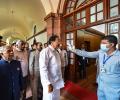
Many feel that the money from their MPLADS should go directly to a district hospital in their respective constituencies rather than a central fund like PM CARES. Archis Mohan reports.

Retail inflation rose to three-month high of 4.81 per cent in June, mainly on account of hardening prices of food, according to the government data. Inflation based on the Consumer Price Index (CPI) stood at 4.31 per per (revised upward from 4.25 per cent) in May and 7 per cent in June 2022. The inflation, however, remains within the RBI's comfort level of below 6 per cent.

India's economic growth will be above 6 per cent in the current fiscal as the country has managed to strengthen its macroeconomic stability and performance even in a period of large global shocks, RBI Monetary Policy Committee (MPC) Member Ashima Goyal said on Monday. Goyal further said that a global slowdown reducing India's export growth, geopolitics fueling oil and food prices, and erratic weather are some of the continuing risks that the country faces. "India has managed to strengthen its macroeconomic stability and performance even in a period of large global shocks.

It is human error, which cannot be completely avoided in complex data like the Index of Industrial Production (IIP), says T C A Anant.

'Revision of the base year for both CPI and GDP are long overdue.' 'The basic data that went into the 2011-2012 series were mainly from surveys done in 2011 or earlier.' 'We have since seen the emergence of new sectors like platform-based work and online marketing.' 'The employment surveys and the consumption surveys need to reflect these adequately.'
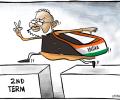
The government's decision to release the reports comes two days after over 200 scholars from across the globe issued a statement demanding release of all withheld reports produced by the NSO, including the household consumer expenditure survey that was junked.

The statement comes in the wake of two independent members of the NSC, P C Mohanan and J V Meenakshi, quitting the Commission over disagreements with the government on the back-series GDP data and delay in release of labour force survey. Mohanan was also the acting chairperson of the Commission.

The technical report of the NSSO has generated controversy following its observation that as much as 36 per cent units forming part of MCA-21 database, used in computing GDP, could not be either identifiable or traceable in the field.

Developers grappling with labour shortage and getting construction material to sites could be among a list of problems.

As a well-wisher of the Indian Statistical System and part of the system for more than 37 years, Sunil K Sinha, former DG and CEO of NSSO, offers suggestions to improve data quality.

The Indian economy has recovered 'handsomely' from the pandemic-induced disruptions, former Niti Aayog vice chairman Arvind Panagariya said on Tuesday, while expressing hope that the recovery will be sustained and the growth rate of 7 to 8 per cent will be restored. Panagariya suggested that the government must now signal its intention to wind down fiscal deficit by cutting it by half-to-one percentage point in 2022-23. "The Indian economy has recovered handsomely, returning to its pre-COVID GDP... "Only private consumption is still below its pre-COVID-19 level," the eminent economist told PTI in an interview.
PM-led body won't have jurisdiction over state-level issues that contribute most to delays.
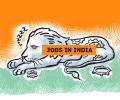
Most economists were of the view that the NSSO should release the data, as any move to withhold it will dent the image of country's statistical system.
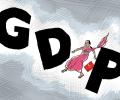
Though the ministry is considering 2017-18 as the new base year, no decision has been taken as the committees of experts are awaiting some more data before finalising their opinion.
MoSPI showed Maharashtra as the state with the least economic growth in 2011-12.

The retail inflation rate breached the 6 per cent upper tolerance limit of the RBI for the first time in seven months in January, while the wholesale price index stayed in double-digits for the 10th month in a row, showed two sets of data released by the government on Monday. Retail inflation, the key input for the RBI while reviewing the repo rate every two months, soared during the month mainly because of a spike in certain food items. The previous high for retail inflation was 6.26 per cent in June 2021.
With Indian statistics facing heavy criticism from all quarters in recent times, the Central Statistical Organisation (CSO), which is responsible for coordination of statistical activities in the country and evolving and maintaining statistical standards, will have to explore ways to reduce dependence on outsourced secondary data collection.

As India looks to mend its Covid-battered economy, one thing that will grab the attention of all concerned is the path that both wholesale and retail inflation will follow. Even the Reserve Bank of India in its latest policy statement said, "Going forward, the inflation trajectory is likely to be shaped by uncertainties impinging on the upside and the downside.

The inflation in the food basket spiked to 7.89 per cent in October 2019 as against 5.11 per cent the preceding month.

Pushed by rising prices of essential kitchen items, the retail inflation rose to an eight-month high of 7.34 per cent in September, making the RBI's task to push growth by reducing the interest rate even more difficult in coming the days. The Consumer Price Index (CPI)-based inflation was 6.69 per cent in August and 3.99 per cent in September 2019. Inflation has been hovering above 4 per cent since October 2019.

Per capita income is a crude indicator of the prosperity of a country.
The Ministry of Statistics and Programme Implementation (MOSPI) is in talks with the Department of Posts to take the help of its staff in collecting sample data for the proposed Consumer Price Index for Rural India (CPI-R). The data for the index would be collected from 1,000 villages, Chief Statistician of India Pronab Sen said on the sidelines of a national seminar on the results of the 61st round of the National Sample Survey.

Fruits, vegetables and eggs continued to witness deflationary trend during January this year, with their prices declining 4.18 per cent, 13.32 per cent and 2.44 per cent, respectively.

A look at six indicators shows all of them have collapsed from positive growth in April to contraction in September.

The overall consumer food inflation in August fell to 5.91 per cent as against 8.35 per cent in July
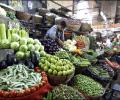
Retail inflation in pulses and products category rose to a staggering 42.20 per cent in October.

India's per capita income, a gauge for assessing standard of living, for 2013-14 is up at Rs 6,699 per month for 2013-14 as against the earlier estimate of Rs 6,198.33 after the government updated the base year for measuring national accounts.

The retail inflation, which is factored in by the RBI to arrive at its monetary policy, has been on decline since last month. The previous low was 5.54 per cent in November 2019. The government has asked the RBI to restrict the inflation around 4 per cent, with a margin of 2 per cent on the either side.

Retail inflation rises to 4.41% in Sep on dearer food items
Subramanian's paper comes at a time when concerns have been raised in various quarters about the official economic growth numbers. The Economic Advisory Council-PM said the Base Year of India's income calculations were shifted to 2011-12 on the basis of recommendations of several committees with experts in national income accounting.

Rajan had said that there was lack of clarity about the new method.

Piyush Goyal, who held the post of finance minister when Arun Jaitley was undergoing treatment, told the Confederation of Indian Industry's annual session: "All stakeholders, including the RBI, should introspect on their respective roles (on low economic growth)."

Well then, what did DeMo achieve? As predicted by most economists, the volume of transactions fell, economic activity was adversely impacted, and some sectors (which were more dependent on cash transactions) witnessed greater disruption than others, says Rahul Khullar.

Slowdown in industrial production notwithstanding, a marginal increase in inflation raised the clamour for another round of rate cut by the Reserve Bank on April 4 to boost economic activity.

Almost half the overall projects costing at least Rs 150 crore (Rs 1.5 billion) are facing a time lag as on March 31. Of 558 projects, 272 were running late when FY13 came to an end, official data showed.

Discrepancies in the statistical GDP data refer to the difference in national income under production method and expenditure method.

N R Bhanumurthy, professor of economics at the National Institute of Public Finance and Policy, and the author of the series, presented in a report to the National Statistical Commission, explains to Abhishek Waghmare various aspects of the methodology.
.jpg)
According to the latest data, until May, 48.3 per cent of the total 207 projects worth Rs 1,000 crore (Rs 10 billion) or above, also termed as mega projects, faced delays and witnessed a cost overrun of 19.2 per cent from the originally-sanctioned Rs 656,000 to Rs 781,000.

'We are looking at the Budget with the hope that it will address all issues even at the cost of exceeding the fiscal deficit target.'
