
Our cricketers, who rarely get off-time, have had to spend the last week locked down in their respective homes like the rest of us across India.
The government is mulling allowing foreign direct investment (FDI) in the country's largest insurer LIC, a move which would help overseas investors take part in the company's proposed mega IPO, sources said. The proposal is under discussion between the Department of Financial Services and Department of Investment and Public Asset Management (DIPAM). "Discussions have been going on for the proposal for the last few weeks. "It would also go for inter-ministerial discussions and would also require Cabinet nod," a source said.

The primary market has seen hectic fundraising activity in April-November 2021, with 75 companies garnering Rs 89,066 crore through their IPOs, much higher than in any year in the last decade, Economic Survey showed on Monday. Moreover, a flurry of technology startups made their public debuts during the period. In comparison, 29 companies raised Rs 14,733 crore through initial public offerings (IPOs) during April-November 2020.
The RBI refuses to classify a cryptocurrency as an asset since it doesn't have future cash flow and its value is always fluctuating because of speculation. There is also no consumer protection, observes Tamal Bandyopadhyay, and hence the e-rupee trial run.

Between April-June 2016-17, the additional excise duty mop up on these two products stood at Rs 17,692 crore.

International oil prices jumped to the highest level since 2014, topping $87 a barrel but domestic petrol and diesel prices remained unchanged for the 74th day in a row - a freeze that may be linked to ensuing assembly elections in states like Uttar Pradesh and Punjab. Brent - the key global oil benchmark - soared to $87.7 per barrel mostly due to rising geopolitical tensions and supply-side disturbances due to Yemen's Houthi group's attack on oil facilities in the United Arab Emirates. Also, global inventories are waning. The attack, some analysts believe, may lead to more hostile behaviour between the two power centres in the Middle East - Iran and Saudi Arabia.
SBI is expected to mop up almost $202 million via the share sale.

Companies spent less money buying back their shares from the public last year than at any time since 2015. They announced buybacks of up to Rs 14,341 crore, show numbers from primary market tracker Prime Database. The total amount spent was Rs 13,597 crore. Both the amounts are lower than what was offered (Rs 39,564 crore) and spent (Rs 36,517 crore) in 2020.
The government is looking to sell shares of Reliance Industries (RIL) held through Specified Undertaking of the Unit Trust of India (SUUTI) and is soon going to appoint an intermediary to manage it. The plan is to sell about 8 lakh shares of RIL that will help the government garner around Rs 180 crore. The Department of Investment and Public Asset Management (DIPAM) will appoint an intermediary that will act as a custodian of these shares. The intermediary, based on its market analysis, will offload these shares at the best price, said an official. A final approval on the proposal is expected soon.

Indiabulls Financial Services Ltd will raise up to $ 60 million through Global Depository Receipts from the international capital market to fund its working capital requirements.

After a stellar November that saw companies mop up over Rs 36,000 crore from the primary market via initial public offers (IPOs) and offers for sale (OFS), the current month, analysts said, will test investor's willingness to stay on with their investments as the one-month mandatory lock-in period for anchor investors begins to loosen. A note by Edelweiss Alternative Research suggests that in calendar year 2021 (CY21), 51 companies went public. Of these, 41 issuances' anchor selling dates are already over.
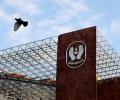
Life Insurance Corp of India (LIC), which is aiming to launch its initial public offering (IPO) next month, is set to alter the pecking order of top listed companies in the country. Depending upon where the government prices the IPO, the stock could end up becoming India's most valuable company on the first day and even get fast-tracked into global benchmark indices given its sheer size. According to market sources, LIC's IPO is targeting to mop up Rs 63,000 crore and Rs 75,000 crore.

A total of Rs 52,759 crore has been raised by 61 companies through initial public offers till October this fiscal, higher than the funds mopped up through this route in the last financial year, the government told the Lok Sabha on Monday. Out of the 61 companies that hit the markets till October of the current fiscal, 34 entities were Small and Medium Enterprises (SMEs). Finance Minister Nirmala Sitharaman said that a large number of manufacturing and service sector companies are coming up for listing.
Revenue from divestment has fetched Rs 40,000-50,000 crore against target of Rs 2.10 trillion.

Bangladesh had made a bright start, reducing their opponents to 57-3 but Conway and Latham steadied the innings with a 63-run stand for the fourth before the former added another 159 for the fifth with Mitchell.

The IPO lane will continue to be busy in December as 10 companies have lined up initial share-sale plans worth more than Rs 10,000 crore, merchant banking sources said on Wednesday. Moreover, the initial public offerings of Star Health and Allied Insurance and Tega Industries are currently open for public subscription. This comes after 10 firms successfully concluded their initial public offerings (IPOs) in November. Among the companies that scheduled their IPOs in this month include RateGain Travel Technologies, travel and hospitality technology services provider, and Anand Rathi Wealth Ltd, part of Mumbai-based financial services group Anand Rathi.

Coal India Ltd's IPO was one of the big-ticket issues.

The finance ministry on Friday withdrew expenditure curbs on various departments and ministries imposed in June in the wake of the COVID-19 second wave, reflecting improvement in public finances and the urgency to step up growth.
NDTV on Monday said it will raise Rs 109 crore (Rs 1,090 million) through the initial public offer for working capital requirements and to repay Rs 38 crore (Rs 380 million) debt.

GST collections in March slipped below the psychological Rs 1 lakh crore-mark for the first time in four months to Rs 97,597 crore as the Covid-19 lockdown that shut most businesses compounded tax collection woes in an already sluggish economy. Goods and Services Tax (GST) mop-up in March recorded a 8.4 per cent decline over March 2019 collection of Rs 1.06 lakh crore. The collections were lower on account of dip in revenues from domestic transactions as well as imports.

Close to $18 billion that Reliance Jio and Reliance Retail mopped up from a slew of private equity transactions in 2020 has pushed up the money inflows through this route by 108 per cent to $33.8 billion, according to an industry report. As per the data collated by Refinitiv, private equity investments increased 108 per cent in 2020 over the previous year, with the number of deals jumping from 665 in 2019 to 791 in 2020 at $33.8 billion, despite the pandemic. In 2019, total PE deals stood at $16.2 billion. Most of the fund inflows were in the third quarter, fetching $24 billion, which, however, tapered off in Q4 to just about $4.57 billion, as per the data from the agency that tracks financial transactions at a global level.

The government's subsidies on food, fertilisers and petroleum are estimated to decline by 39 per cent to Rs 4,33,108 crore this fiscal and fall further by 27 per cent to nearly Rs 3.18 lakh crore in 2022-23. In its revised Budget (RE) estimate for the 2021-22 fiscal, the government has pegged total subsidies to be at Rs 4,33,108 crore against the actual Budget estimate of Rs 7,07,707 crore in the previous financial year. Out of which, the food subsidy is estimated to decline to Rs 2,86,469 crore in the current fiscal from Rs 5,41,330 crore in 2020-21, while petroleum subsidy is estimated to fall to Rs 6,517 crore from Rs 38,455 crore in the said period.

The Union government's fiscal deficit works out to be Rs 5.47 lakh crore or 36.3 per cent of the budget estimates at the end of October 2021 on the back of improvement in revenue collection, according to the data released by the Controller General of Accounts (CGA) on Tuesday. The deficit figures in the current fiscal appear better than the previous financial year when the gap between expenditure and revenue had soared to 119.7 per cent of the last year's Budget Estimates (BE) mainly on account of a jump in expenditure to deal with the COVID-19 pandemic. In absolute terms, the fiscal deficit was Rs 5,47,026 crore at the end of October, the CGA said.

At 13:57 local time, the umpires finally decided to officially abandon the match.

The actor mum talked about the importance of spending time with family.

The Indian women's cricket team's horror tour of New Zealand continued as they suffered a 63-run defeat in a rain-curtailed fourth ODI in Queenstown on Tuesday with the hosts inching towards a series clean sweep.

Between trying to compose himself, wiping away tears and facing a long standing ovation, it took Lionel Messi more than a minute to start his farewell news conference on Sunday at FC Barcelona, where the Argentine has spent all of his playing career.

'We have been given time to look deep within, learn to laugh again, to understand that there is so much more to life than just trying to make life happen.'

The government would fall short of its target for direct tax collections for the second consecutive year, with the revenue department estimating its direct tax receipts at Rs 3,70,000 crore (Rs 3700 billion) for 2009-10.

Ujjivan Small Finance Bank's initial public offering attracted heavy investor demand on the final day of bidding on Wednesday as the issue was subscribed a whopping 126.36 times.
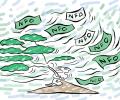
Domestic asset management companies (AMC) have launched around 60 new fund offers (NFOs) in the last six months and mobilised around Rs 27,000 crore. Fund houses are rushing to launch new funds amid buoyancy in the equities market.

Enthused by rising potato prices after a prolonged slump, Pradeep Sharma was planning to sow the crop on his 15-acre farm near Agra slightly earlier than usual. The delayed departure of the southwest monsoon also prompted his decision, since the good soil moisture would have saved at least one initial irrigation. But the acute shortage of diammonium phosphate (DAP), a crucial nutrient ahead of the sowing season for potatoes, nipped those hopes in the bud. DAP is the second-most used fertiliser in the country after urea.

GST collections in March slipped below the psychological Rs 1-lakh crore mark for the first time in four months to Rs 97,597 crore as the COVID-19 lockdown that shut most businesses compounded tax collections in an already sluggish economy.

India's collection from tax on personal and corporate income jumped over 48 per cent in the current fiscal after a 41 per cent surge in advance tax payments, mirroring sustained economic recovery in a year that witnessed two waves of coronavirus infections. Net collections of direct taxes until March 16, 2022, in the fiscal year that started on April 1, 2021, stood at Rs 13.63 lakh crore compared to Rs 9.18 lakh crore in the same period a year back, an official statement said. The net collections in direct taxes, which is made up of income tax on individual income, corporation tax on profits of companies, property tax, inheritance tax and gift tax, in the current fiscal is 35 per cent higher than the collection of Rs 9.56 lakh crore in the pre-pandemic year of 2019-20 (April 2019 to March 2020).
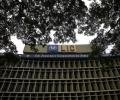
Taking a cue from Zomato's stellar initial public offering (IPO), through which it garnered a valuation of Rs 1 trillion, the government has asked its advisors and valuers to ascertain if the Life Insurance Corporation of India (LIC) should be valued at Rs 10 trillion or more. The government is looking to offload about 10 per cent stake in LIC through the IPO. At that valuation, the government stands to net at least Rs 1 trillion from LIC's proposed IPO, which will boost the Centre's efforts to meet its disinvestment target of Rs 1.75 trillion for the current financial year.
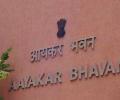
Amid economic uncertainties owing to the pandemic, the government's key revenue agency, the Income Tax Department, has close to 400 vacancies at commissioner level and above, affecting its functioning. Seventy-three of the 91 chief commissioner positions are lying vacant, with some for more than a year. Chief commissioner is the second-highest post in the department, below principal chief commissioner, which is at par with secretary in a ministry.

After a hiatus of nearly two decades, the government's programme to privatise state-owned firms restarted with the handing over of debt-laden national carrier Air India to the Tata Group. With the new owner shelling out Rs 18,000 crore for the buyout of the 'Maharaja', this would be the highest-ever amount garnered through privatisation, and is even more than the cumulative sum mopped up through strategic sales from 1999-00 to 2003-04. The government had in October last year inked the share purchase agreement with the Tata Group for sale of national carrier Air India for Rs 18,000 crore. Tatas would pay Rs 2,700 crore cash and take over Rs 15,300 crore of the airline's debt.
