
India is deeply concerned by the growing consolidation of Pakistan-backed jihadi and radical Islamist groups in Bangladesh, particularly in the strategically vital Chittagong Hill Tracts, which experts warn is transforming the country into a new safe haven for these networks and posing a direct threat to India's security.

A powerful suicide blast during Friday prayers at a mosque near police lines in Kohat, northwest Pakistan, killed at least 16 people, including police personnel and civilians, and injured dozens. A militant group, Ittehad-ul-Mujahideen Pakistan, claimed responsibility for the attack, which involved an explosives-laden vehicle and an exchange of fire.

Shah said stringent actions would be taken against any individual who jeopardises the nation's security.

Indian authorities have requested additional information from the United States based on the interrogation of Tahawwur Rana, an accused in the 2008 Mumbai terror attacks. The request was made through the Mutual Legal Assistance Treaty (MLAT).
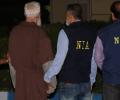
The National Investigation Agency (NIA) has begun questioning Tahawwur Hussain Rana, the mastermind behind the 2008 Mumbai terror attacks, to uncover the larger conspiracy behind the deadly strikes. Rana, who was extradited from the US, is being held at the NIA headquarters in New Delhi. The interrogation is focused on his possible connection with the Lashkar-e-Taiba (LeT) and his suspected links with the Pakistani spy agency Inter-Services Intelligence (ISI).

Tahawwur Hussain Rana, a jailed accused in the 2008 Mumbai terror attacks, has moved a court in New Delhi seeking permission to speak to his family. The 64-year-old Pakistani-origin Canadian businessman is currently in judicial custody and is accused of conspiring with David Coleman Headley and operatives of Lashkar-e-Taiba (LeT) and Harkat-ul-Jihadi Islami (HUJI) to carry out the terror attacks. Rana was brought to India after the American Supreme Court dismissed his review plea against his extradition.
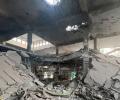
Pakistan claims it was a mosque and an educational complex that were hit in the strikes at Muridke, located at about 40 km from Lahore.
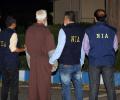
He was sent to judicial custody on May 9 and lodged in Tihar jail after his custodial interrogation by the NIA.
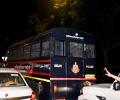
Tahawwur Hussain Rana, a key figure in the 2008 Mumbai terror attacks, has been extradited from the US to India and produced before a Delhi court. Rana, a close associate of David Coleman Headley, was brought to India after the US Supreme Court dismissed his review plea against extradition. The National Investigation Agency (NIA) has sought 20 days of custody to interrogate Rana, citing clinching evidence, including emails. The agency believes that Rana's interrogation is critical to understanding the larger conspiracy behind the attacks and his role in planning them.
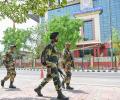
The 64-year-old Pakistani-origin Canadian businessman would also be questioned on his suspected links with the officials of Pakistan spy agency Inter-Services Intelligence (ISI) and his association with terror group Lashkar-e-Taiba (LeT), which had orchestrated the attacks.
Tahawwur Hussain Rana, a Canadian national accused of involvement in the 2008 Mumbai terror attacks, has been extradited to India from the United States. Rana's interrogation is expected to shed light on the role of Pakistani state actors in the attacks, which claimed 166 lives. Indian authorities are particularly interested in his travels across India in the days leading up to the attacks, including visits to Hapur, Agra, Delhi, Kochi, Ahmedabad, and Mumbai. Rana's extradition follows a lengthy legal battle, with the US Supreme Court ultimately denying his application to challenge it. Rana is known to be associated with Pakistani-American terrorist David Coleman Headley, one of the main conspirators of the 26/11 attacks. The investigation into the Mumbai attacks has implicated senior members of terror outfits Lashkar-e-Taiba (LeT) and Harkat-ul Jihadi Islami (HuJI), as well as officials from Pakistan's Inter-Services Intelligence (ISI).
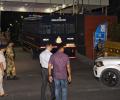
Tahawwur Hussain Rana, the key mastermind of the 2008 Mumbai terror attacks, is being interrogated for eight to ten hours daily by the National Investigation Agency (NIA) to unravel a larger conspiracy behind the strikes. Rana, who was extradited from the US, is being grilled by NIA investigators to probe a larger conspiracy behind the attacks, in which 166 people were killed and over 238 injured. He is being allowed to meet his lawyer and is being provided with basic necessities. The investigators hope to find some important leads on his travels in parts of northern and southern India days before the carnage in Mumbai on November 26, 2008.

Tahawwur Hussain Rana, a Canadian national convicted in the United States for his role in the 2008 Mumbai terror attacks, has been extradited to India. Rana, a close associate of Pakistani-American terrorist David Coleman Headley, was involved in the conspiracy from 2005 onwards and assisted Headley in obtaining a visa for India. He is the third person to be sent on trial in India for the 26/11 attacks after Ajmal Kasab and Zabiuddin Ansari alias Abu Jundal. Rana's extradition comes after US President Donald Trump approved the request.

Jamaat-e-Islami leader Syed Ali Shah Geelani told Pakistan's Friday Times that the two militant outfits 'have never acted in a manner that is against humanity or morality'.
Tahawwur Hussain Rana, a Pakistan-born Canadian national and close associate of David Coleman Headley, is set to be extradited to India from the US. Rana was involved in the planning and execution of the 2008 Mumbai terror attacks, which killed 166 people, including six Americans. He assisted Headley in obtaining a visa for India, established a front company in Mumbai, and helped in reconnaissance of targets in Mumbai and New Delhi. Rana was convicted in the US for providing material support to Lashkar-e-Taiba (LeT) and sentenced to 14 years in prison. His extradition to India will allow authorities to question him about his involvement in the Mumbai attacks and potentially uncover new information about the role of Pakistani state actors.
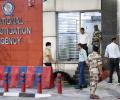
Tahawwur Hussain Rana, the mastermind behind the 2008 Mumbai terror attacks, has been taken into 18-day custody by the National Investigation Agency (NIA) in India. Rana was extradited from the United States after years of legal battles and will be questioned to unravel the complete conspiracy behind the attacks.
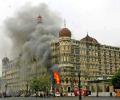
Tahawwur Rana, accused of involvement in the 2008 Mumbai terror attacks, is expected to be extradited to India from the United States soon. The US Supreme Court denied his last-ditch effort to stop his extradition, moving him closer to being handed over to Indian authorities. Rana's extradition is expected to help probe agencies expose the role of Pakistani state actors behind the attacks and shed new light on the investigation. He is associated with Pakistani-American terrorist David Coleman Headley, one of the main conspirators of the 26/11 attacks.

Aveek Sen on how the Lashkar e Tayiba looks at the world while focusing on India and Afghanistan.
Tahawwur Hussain Rana, a key accused in the 26/11 Mumbai terror attacks, was brought to India on Thursday after being "successfully extradited " from the US, the National Investigation Agency (NIA) said. The 64-year-old Canadian citizen of Pakistani origin landed in Delhi in a special plane on Thursday evening, ending days of speculation of when and how he will be extradited, officials said. The NIA said in a statement that it had secured the successful extradition after years of sustained and concerted efforts to bring to justice the key conspirator behind the 2008 mayhem that claimed 166 lives. Rana is accused of conspiring with David Coleman Headley alias Daood Gilani, and operatives of designated terrorist organisations Lashkar-e-Taiba (LeT) and Harkat-ul-Jihadi Islami (HUJI) along with other Pakistan-based co-conspirators, to carry out the the three-day terror siege of India's financial capital.

A total of 10 members of Hizbul Mujahideen, Lashkar-e-Tayiba and other proscribed outfits were on Tuesday designated as terrorists by the Union ministry of home affairs under the Unlawful Activities (Prevention) Act.

The raids in the twin capitals of Srinagar and Jammu along with Budgam in central and Kulgam and Anantnag in south Kashmir led to the seizure of incriminating documents and digital devices connected with the activities of JeI and its related Trusts and more than Rs 20 lakh, a spokesperson of the federal agency said.

Gujarat Chief Minister and Bharatiya Janata Party's prime ministerial candidate Narendra Modi is the top-most target for all four major terror outfits in India, according to Indian Mujahideen's recently-arrested chief Yasin Bhatkal.

Shoaib Ahmed Mirza alias Chhotu (35), a resident of Hubbali city in Karnataka, is the fifth person to be arrested in the case, they said.
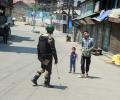
Authorities clamped strict restrictions in Srinagar and north Kashmir's Sopore town to foil a separatist march on Friday.

It was also revealed that Bashir motivated two youngsters and made them to join the terrorist ranks.

Bangladesh Prime Minister Sheikh Hasina on Sunday secured a record fourth straight term as her Awami League party won two-thirds of the seats in the general elections marred by sporadic violence and a boycott by the main opposition BNP and its allies.
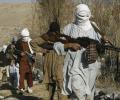
Satish Kumar Singh, a Rajput, was shot by terrorists in Kakran area of the south Kashmir district at around 7.30 pm.

According to a notification issued by the ministry, the JKGF has been involved in infiltration bids, narcotics and weapon smuggling, terror attacks in the Union territory, and threats to security forces.

Bangladeshis on Sunday began voting in the general elections expected to be won by Prime Minister Sheikh Hasina in the absence of the main Opposition Bangladesh Nationalist Party (BNP) which is boycotting it.
Russia has identified underworld don Dawood Ibrahim and Pakistan-based terror outfits Lashkar-e-Tayiba, Harkat-ul-Jihad-al-Islami and Lashkar-e-Jhangvi as financiers of terrorism through money laundering.

Seeking to wriggle out of the FATF's grey list, Pakistan has imposed tough financial sanctions on 88 banned terror groups and their leaders, including Hafiz Saeed, Masood Azhar and Dawood Ibrahim, by ordering the seizure of all of their properties and freezing of bank accounts, a media report said.
The United States on Thursday slapped sanctions on India-based terrorist group Indian Mujahideen by designating it as a Foreign Terrorist Organisation and said it has significant links with Pakistan-based groups like the Lashkar-e-Tayiba.

United States officials have identified Pakistan as a base of operations or target for numerous armed and non state militant groups, some of which have existed since the 1980s, the independent Congressional Research Service said in the report.

'IM has expanded its area of operations into Nepal, which is now the biggest hub for IM operatives.'
HuJI leader Abu Zandal, who was recently arrested, said they had sent several consignments of grenades to Lashkar outfits operating in India until 2004, an unnamed security official was quoted as saying by the Prothom Alo daily. But the outfit failed to send the last such consignment as the Lashkar representative who was supposed to receive it was killed in an encounter with the Border Security Force near Bangladesh's Kaliganj frontier.

Dawood Ibrahim is wanted in India to face the law of the land for carrying out serial blasts in Mumbai in 1993 in which scores of people were killed and injured.

Syed Ahmad Shakeel and Shahid Yousuf, who are sons of Hizbul Mujahideen chief and one of the most wanted terrorists, Salahuddin, were also dismissed from service for allegedly being involved in terror funding, the officials said.
The five Pakistan-based organisations are Harakat-ul-Jihad-ul-Islami, Jundallah, Khuddam ul-Islam, Lashkar-e Jhangvi and Sipah-e Sahab Pakistan. The Bangladesh-based outfit is Harakat-ul-Jihad-ul-Islami (Bangladesh).
The IB says Al Qaeda suspects that the growing proximity between India and the US will prove fatal for its operations in Afghanistan and with its threat it hopes to slow down Indian designs of helping the US there.
The probe into the alleged plot to target politicians including members of Parliament, members of Legislative Assembly and also some journalists by 15 terror suspects belonging to Lashkar-e-Tayiba and Harkat-ul-Jihad al-Islami who were nabbed by city police, has been handed over to the National Investigative Agency, a top police official said.
