
Pakistani authorities have detained the founder and former head of militant group Lashkar-e-Jhangvi Malik Ishaq at his home in Punjab province.
Zafar, who was linked to Al-Qaida, was wanted by the US in connection with a March 2006 suicide attack on the US consulate in Karachi that killed an American diplomat and three Pakistanis.
A Pakistani court on Friday remanded Malik Ishaq, chief of the banned Lashkar-e-Jhangvi, to judicial custody for 14 days, a day after he was arrested on his return to the country from Saudi Arabia.
A Pakistani judicial review board on Friday ended the house arrest of Malik Ishaq, the head of the banned Lashkar-e-Jhangvi who was detained last year after his group was blamed for a string of attacks on the minority Shia community.
A Pakistani court on Monday granted bail to Malik Ishaq, the chief of the banned Lashkar-e-Jhangvi, for making hate speeches against Shias.
The Pakistani police on Thursday arrested Malik Ishaq, chief of the banned Lashkar-e-Jhangvi, as he returned to the country after performing the Umra pilgrimage in Saudi Arabia by violating his bail, officials said.

Malik Ishaq, the chief of banned sectarian outfit Lashkar-i-Jhangvi, his two sons and 11 top members of the group linked to Al Qaeda were killed in an "encounter" in Pakistan's Punjab province, police said on Wednesday.
Malik Ishaq, the chief of the banned Lashkar-e-Jhangvi, accused of plotting the 2009 attack on the Sri Lankan cricket team, walked out on bail after 14 years in prison on Thursday to a jubilant welcome by his supporters who showered rose petals on him.
A Pakistani court has rejected the bail application of Malik Ishaq, chief of the banned Lashkar-e-Jhangvi that has been blamed for a series of attacks on the Shia minority.
Pakistan's Punjab government has warned citizens against providing charity to banned organizations such as Jaish-e-Mohammad (JeM) and Lashkar-e-Taiba (LeT), stating that those who do so will face terrorism charges.
The United States has designated Lashkar-e-Jhangvi co-founder Malik Ishaq, who is responsible for killing scores of members of Pakistan's Shia minority, as a global terrorist.
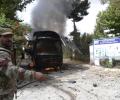
In a sinister attack, militants on Saturday targeted the bus of a women's university with a bomb and then stormed a hospital where the victims were being rushed to in the Pakistani city of Quetta, killing at least 12 people and injuring more than 20.
Pakistan Tehrik-e-Insaf chief Imran Khan has accused the ruling Pakistan People's Party and main opposition Pakistan Musolim League-Nawaz of providing 'refuge' to terrorists of banned groups, including the Lashkar-e-Jhangvi, and making seat adjustments with them for the upcoming general election.

Former premier Yousuf Raza Gilani's son Ali Haider, kidnapped by gunmen while campaigning for Pakistan's landmark elections, had received threats from the banned Lashkar-e-Jhangvi and Sipah-e-Sahaba.
The Pakistan army will deploy about 50,000 troops across the country to secure the general election process on May 11, which is facing a 'massive terrorist threat' from the Taliban and other terrorist groups.
Four members of the banned Lashkar-e-Jhangvi were killed and seven others arrested during an operation conducted by security forces in the restive southwestern Pakistani city of Quetta in the wake of a terror attack that killed nearly 90 people last week.
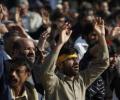
Pakistan's minority Shia Hazara community has said it will not bury dozens of people killed in a devastating bombing in Quetta till the army takes control of the southwestern city to prevent further terrorist attacks.

Pakistani authorities on Friday issued a list of 109 "most wanted" terrorists, including Lashkar-e-Jhangvi member Mati-ur-Rehman who was accused of involvement in a suicide attack on former premier Shaukat Aziz.
Gunmen ambushed a bus carrying Shia pilgrims in Balochistan province of southwest Pakistan on Friday killing 18 people in the latest in a string of attacks in the region targeting the minority community.
A bid to storm the central jail in Karachi has been foiled with the police arresting seven members of a banned militant outfit that were plotting the raid.
Police in Pakistan's populous province of Punjab have detained over 50 people in a crackdown on the banned Lashkar-e-Jhangvi and Sipah-e-Sahaba Pakistan that was launched in the wake of terror attacks on the minority Shia community. The crackdown has focused on the southern part of Punjab, where several militant groups like the LeJ and Jaish-e-Mohammed have strongholds and support bases.
Russia has identified underworld don Dawood Ibrahim and Pakistan-based terror outfits Lashkar-e-Tayiba, Harkat-ul-Jihad-al-Islami and Lashkar-e-Jhangvi as financiers of terrorism through money laundering.
Bike-borne unidentified gunmen on Tuesday shot dead at least 26 Shia Muslim pilgrims in cold-blood in southwest Pakistan's Balochistan province after forcing them out of a bus.
"The creation of the cells is aimed at coordinating the banned group's activities in the area ranging from the southern port city of Karachi to Waziristan in the restive tribal belt bordering Afghanistan," the Express Tribune newspaper quoted its sources in Kohat, Hangu, Peshawar and Lahore as saying.
The coordinated terrorist attacks against military installations as well as civilian bazaar areas across Pakistan over the last week seem to have thrown the country into such a nervous spin that ordinary Pakistanis are beginning to ask if better relations with India can help restore some desperately-needed normalcy to their country.
In major swoops across the key federal capital and the southern port city of Karachi, the Pakistani police nabbed 13 suspected terrorists linked to the Al Qaeda, with authorities claiming that this had averted major terror strikes on VVIPs in the country.
The US Department of Treasury on Thursday designating two of Pakistan's most wanted terrorists, Lashkar-e Jhangvi senior leader Amanullah Afridi for acting for or on behalf of the LeJ and LeJ chief operational commander Mati ur-Rehman for acting for or on behalf of the Al Qaeda. The Treasury also designated a third individual, Abdul Rauf Azhar, a senior leader of Jaish-e Mohammed.
The Karachi police has claimed to have recovered Indian made arms and ammunitions from the five Lashkar-e-Jhangvi operatives, who were nabbed during a raid conducted by the Criminal Investigation Department. Officials said they have recovered 150 kg of Indian-made RDX, two suicide jackets and five AK series rifles from the militants, who may have links with the Indian spy agency, the Research and Analysis Wing.
Pakistani security agencies have arrested Al Qaeda's number two, Ayman al-Zawahiri's close aide from Gujranwala and shifted him to Islamabad to investigate the Marriott Hotel suicide attack.
Security agencies told rediff.com that this year Al Qaeda will team up with the Harkat-ul-Mujahideen and the Lashkar-e-Jhangvi to set up India operations. Intelligence Bureau officials point out that this would be the end of the SIMI and the Indian Mujahideen and all their cadre would be accommodated into there three outfits for their Indian operations.
Terrorists from the Taliban and other banned groups like the Jaish-e-Mohammad carried out the assault on the Pakistan army headquarters with the intention of taking hostages who could be swapped for over 100 arrested militants, a military spokesman said on Monday.
In a major catch, Pakistani authorities on Saturday nabbed a top militant suspected of beheading the Wall Street Journal reporter Daniel Pearl in 2002.
Three gunmen opened fire inside the Imam Bargha Mehdi, a Shiite mosque in Karachi, when worshippers were offering prayers.
The five Pakistan-based organisations are Harakat-ul-Jihad-ul-Islami, Jundallah, Khuddam ul-Islam, Lashkar-e Jhangvi and Sipah-e Sahab Pakistan. The Bangladesh-based outfit is Harakat-ul-Jihad-ul-Islami (Bangladesh).
