
Maheshgiri alias Mahesh Dilip Kakde, who claimed to have divine powers, allegedly told them that she had been affected by 'Karni' (black magic) and asked them to perform certain rituals, an official said.
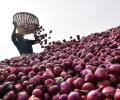
Data from the Nashik-based National Horticultural Research and Development Foundation showed that onion was trading at at Rs 24 a kg on Tuesday in the benchmark Lasalgaon mandi in Nashik district of Maharashtra. That's a fall of four per cent since Monday and 40 per cent from Rs 40 a kg on January 20, a level not seen since November 6, 2019. It continues to sell at Rs 40-44 a kg in retail markets across the country.

Onion prices had peaked to Rs 57 per kg on August 22.
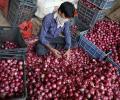
In a significant move to control spiralling onion prices ahead of the festive season, the government will transport 1,600 tonnes of buffer stock via railways from Maharashtra to Delhi - the first such initiative using rail transport for the kitchen staple. The special rake, dubbed 'Kanda Express', will depart from Maharashtra's Lasalgaon Railway Station and reach Delhi's Kishanganj Railway Station on October 20, Consumer Affairs Secretary Nidhi Khare announced on Thursday. The government expects this bulk movement to help stabilise prices in the Delhi-NCR region, where buffer stock onions are currently being sold at a subsidised rate of Rs 35 per kg.

Bhujbal stridently opposed Maratha quota activist Manoj Jarange's demand for Maratha quota from the Other Backward Classes (OBCs) share.

The price per kilogram of onion came down to Rs 2 to Rs 4, which angered the growers, who had stopped the auction at the APMC last week for a day.

Maharashtra minister Dada Bhuse said the decision to impose export duty should have been taken with proper coordination.
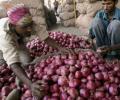
Farmers in Nashik district, Maharashtra - a major producer of onion - have started harvesting the premature crop to cash in on the high prices in mandis. Good-quality onion was quoted at Rs 93.50 a kg on the higher side. However, the poorest-quality onion was selling at Rs 25.50 a kg on Wednesday as against Rs 20 a kg on Tuesday. Thus, the model price of onion works out to Rs 70-75 a kg in Lasalgaon, translating into Rs 100-125 a kg in the retail markets of the country.

Barely days after imposing a 40 per cent export tax on onions to cool down soaring prices, which, in turn, triggered widespread protests across the main growing belts, the Centre on Tuesday sought to mitigate both political and economic tensions gripping parts of Maharashtra. It decided to procure an additional 200,000 tonnes of onions at Rs 2,410 per quintal for its buffer stock from farmers, a rate that is strikingly close to the price at which they were being exported before the 40 per cent duty was levied on August 19. The export price before the imposition of the duty stood at around $320 per tonne free on board (approximately Rs 2,650 per quintal).
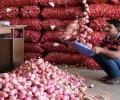
Despite onion prices hitting Rs 130 a kg in the wholesale market, farmers have not gained enough to make a profit this season. Farmers and other stakeholders in the value chain estimate that 30 per cent crop damage this kharif season would result in a decline of about 2 million tonnes in output from Lasalgaon district alone. Similar crop damage across the country could lead to an onion shortage of nearly 7 million tonnes this year.
Assembly elections in Maharashtra are scheduled later this month. The farmer protests are likely to affect the results, especially in the onion-growing belt of Nashik.
Onion is currently trading between Rs 70 and Rs 80 in retail markets across the country.
At the benchmark Lasalgaon Agricultural Produce Market Committee (APMC) mandi, the model onion price shot up to Rs 21.50 a kg on Thursday, as against Rs 16.50 a kg on Wednesday. This was the highest since February 11.
The crop is currently trading at Rs 22 a kg compared to Rs 12.50 one month ago.
At Lasalgaon mandi, Asia's largest onion selling market, the onion price jumped Rs 1.50 a kg to Rs 32 a kg, the highest since January last year.
With auctions unable to proceed, the median onion price declined 17 per cent or Rs 6 a kg to trade at Rs 30 a kg on Monday, with arrivals of around 500 tonnes.
However, truckers have spared other vegetables, fruits, fuel and milk from the strike.

However, onion arrivals have been normal with farmers bringing in 1,400 tonnes of the bulb to Lasalgaon on Friday, substantially lower than 2,429 tonnes on Thursday, but there is no dearth of supply to mandis.

Prices started rising again beyond Rs 30 per kg in the last one week and are now ruling at Rs 32 per kg at Lasalgaon
Because of the reluctance to intervene structurally in the political economy of onion trade, the BJP is paying the price till today and might continue to do so in the forthcoming election to the Delhi assembly.
The model or average price for a kg of onion was Rs 6 on Monday -- the lowest in this late kharif and rabi harvesting season, so far. While poorer quality kharif onions traded at Rs 3 a kg, the price of export quality was Rs 9 a kg.
.jpg)
India eats 1.2 million tonnes of onions a month and the current stock will last till the end of August.
The fear of price rise gained momentum after reports surfaced that the NAFED procured 50,000 tonnes of onion this season.
Experts believe the rising prices may encourage farmers to bring in additional areas for under onion cultivation during the rabi season, which may boost the precious bulb's output, reports Dilip Kumar Jha.

Several experts are of the view that inflationary pressure, including that in food items, may build from October with economic activity gathering steam. However, the price movement in three key items of tomato, onions and potatoes, commonly known as TOP, may give some solace in the months to come. Traders and market watchers said the price movement in all the three will remain within the band sans any unusual spikes.

With 3,000 tonnes of imported onion entering the market over the next fortnight, the price should start cooling off. Soon after, the new crop of onions will arrive, further reducing prices.
'Onion supply to mandis has declined due to its lower availability.'

Sharad Pawar reckons that the NCP has value as a united, going concern, not as a gaggle of leaders in search of followers, notes Shreekant Sambrani.

India exports about 1.5 mt of onion every year.

Spiralling vegetable prices are likely to remain firm for at least a month, till the new seasonal crop comes to the wholesale markets.

In upmarket colonies, the bulb, a key ingredient in many Indian dishes, cost as high as Rs 70-80 a kg.
The off-spot prices were Rs 3.50 a kg two weeks before, with farmers planning to dump on the road instead of selling in mandis.

Vegetables and fruits have weights of 1.74 per cent and 2.11 per cent, respectively, in the wholesale price index.
Onion prices both in wholesale and retail markets in most parts of the country have seen a sharp increase since July.
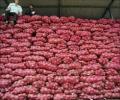
Lasalgaon, Pimpalgaon mandis halt auctions to arrest the decline.

Prices of the kitchen staple in Azadpur mandi, Asia's largest wholesale market, were ruling at Rs 60 per kg today as supplies were below normal.
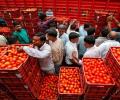
All India average retail tomato price, which has shot up by 63 per cent to Rs 67 per kg over the last year due to unseasonal rains, are likely to soften from December with the arrival of fresh crop from northern states, the government said on Friday. In the case of onions, retail prices have substantially subsided below to the level that prevailed in 2020 and also 2019, it said. "Tomato arrivals from north Indian states will start from the beginning of December itself, which will add to availability and lead to fall in prices.

Prices start downward trend but rainfall, supply restrict climbdown.

In the coming weeks prices are expected to further cool down as new crop from Karnataka has started coming into the market.
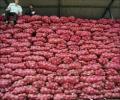
To give relief to Delhiites, the National Agricultural Cooperative Marketing Federation of India Ltd has started selling onions at Rs 55 a kg through its five retail outlets and two mobile vans in the national capital.
