
Reliance Industries Chairman Mukesh Ambani met top government officials on Tuesday, including Cabinet Secretary and Principal Secretary to the prime minister, to explain his company's approach to pricing of natural gas to be produced from KG basin.
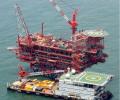
Govt plans to stop RIL from selling crude to Jamnagar refinery.
The Bombay high court has modified the interim order on the sale of KG basin gas by Reliance Industries.
The empowered group of ministers, however, decided to allocate the initial 40 million standard cubic metre per day of gas from KG-D6 basin to the existing power and fertiliser plants and proposed units like the captive power plant at Nagothane did not figure in the scheme of things. A company spokesperson confirmed the scrapping of the project.
Anil Ambani group firm Reliance Natural Resources on Friday posted a marginal increase in its net profit for the third quarter and said it hopes to get gas from Reliance Industries' KG-D6 fields once the group's Dadri power plant begins operations.

Billionaire Mukesh Ambani's Reliance Industries Ltd (RIL) has seen pre-tax profit recover to pre-pandemic levels on the back of continued growth in consumer businesses, Moody's Investors Service said on Monday. The oil-to-retail-to-telecom behemoth on Friday reported a 0.7 per cent Ebitda (earnings before interest, tax and depreciation and amortisation) growth for the quarter ended December 31, 2020, compared with the corresponding quarter in the previous year. "A strong performance in digital services and retail segments underpinned the improvement in consolidated earnings, a credit positive," Moody's said commenting on the earnings. Continued growth in earnings combined with the company's strong balance sheet with zero net debt on a reported basis will keep Reliance's credit metrics strong for its Baa2 rating over the next 12-18 months, it said.

The Petroleum Ministry has proposed a 33 per cent hike in the price of natural gas produced by ONGC and Oil India and gradually increase it to $4.20 per mmBtu set for gas from Reliance Industries' KG-D6 fields.

In the 38-page report, across 10 chapters, RIL explained how it entered the exploration and production business; the history of the New Exploration and Licensing Policy and the introduction of production-sharing contracts.
Reliance Industries is in talks with global energy majors, like British Gas of the UK, Chevron Corp of the US, Exxon and Shell for a possible stake sale in its Krishna-Godavari basin gas fields. RIL is looking for a strategic partner for its KG-D6 gas block to get deep sea exploration technology. The percentage of stake to be divested has not been firmed up & may depend on the value that the partner was bringing in. The block contains over 50trillion cubic feet of gas reserve
With pricing of natural gas from the KG-D6 block stuck, Mukesh Ambani made the second trip to New Delhi this month to meet top officials.
Reliance Industries and Oil and Natural Gas Corporation will present their views as producers on pricing of natural gas on Tuesday to a panel of top government officials formed to resolve the vexed issue.
Petroleum Ministry has sought help from Law Ministry in resolving the Ambani demerger issue over the production of gas from KG fields.
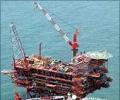
Reliance Industries has said that it had in December 2005 signed a contract to sell natural gas to NTPC at $2.34 per mmBtu price for 17 years, but it was the state-run firm that did not reciprocate.

RIL, its partner BP plc of UK will invest about Rs 6,000 crore (Rs 60 billion) by 2016 to help sustain and improve recovery from the two main gas fields.
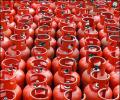
Reliance Industries on Friday dubbed as a "canard" allegations that the near-doubling of natural gas prices will lead to a similar hike in domestic cooking gas (LPG) and inflation in food item rates.
A group of ministers, constituted to look into pricing and utilization of natural gas produced from new fields like the KG-D6 of Reliance Industries, is likely to hold its first meeting on August 27.
A fall in crude oil price and Aramco's $75 billion annual dividend commitment may have delayed Saudi company picking a stake in Reliance Industries Ltd's oil-to-chemical unit (O2C), research firm Jefferies said. Richest Indian Mukesh Ambani had in August 2019 announced talks for the sale of a 20 per cent stake in the O2C business, which comprises its twin oil refineries at Jamnagar in Gujarat and petrochemical assets, to the world's largest oil exporter. The deal was to conclude by March 2020 but has been delayed for reasons not disclosed by either company.

The committee said whatever benefit RIL received in terms of the migrated gas is liable to be returned to the government.
Fertilizer sector on Friday sought gas supplies from Reliance Industries's KG-D6 block at no more than 5 dollars per million British thermal unit, even as the power sector nudged the government to take its share of gas in kind.
RIL filed an appeal on Monday before a division bench headed by Chief Justice Swantra Kumar seeking a stay on an interim order by a single bench restraining it from selling gas to companies other than RNRL and NTPC.
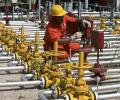
The government on Thursday hiked by 62 per cent the price of natural gas that is used to produce electricity, make fertilisers and turned into CNG to use as fuel in automobiles and cooking gas for household kitchens. This is the first increase in rates since April 2019 and comes on back of firming benchmark international prices but does not reflect the spurt in spot or current price of liquefied natural gas (LNG) witnessed during the last couple of weeks. The oil ministry's Petroleum Planning and Analysis Cell (PPAC) said the rates paid for gas produced from fields given to state-owned Oil and Natural Gas Corporation (ONGC) and Oil India Ltd (OIL) will be $2.90 per million British thermal unit for the six-month period beginning April 1.

The Supreme Court on Friday granted six weeks time to Mukesh Ambani's Reliance Industries Ltd (RIL) to respond to the final CAG report which found alleged irregularities including in payments made to the contractors on drilling of D6 wells at the Krishna-Godavari basin.
Reliance Industries found huge natural gas reserves in the very first well it drilled, which subsequently proved to be the world's second largest deepwater discovery in the last decade.
Justice Anoop V Mohta, delivering the final verdict in the gas supply row between RIL and Reliance Natural Resources Limited, asked the two companies to decide on a new gas price, as the rate of $2.34 per mBtu agreed in the family de-merger agreement had already been rejected by the government.

The government has formed a four-member panel of secretaries to suggest a new gas pricing mechanism.
The Prime Minister's Economic Advisory Council has approved Reliance Industries' 4.33 dollars per mBtu price of gas from KG-D6 fields, saying it was in line with industry practices.
Originally, the company had planned to invest $2.47 billion to produce 40 mmscmd gas. However, with rig prices going up and more reserves being found in the block the company raised the capex and the planned output.
Reliance Industries Ltd will invest $8.84 billion in producing 80 million standard cubic meters per day (mmscmd) of gas from its KG-D6 block in Krishna Godavari basin.
A Committee of Secretaries will meet on July 6 to discuss pricing of natural gas to be produced from Reliance Industries' block off the east coast and whether the Centre should take its share in cash or kind.

Why does the world's fastest-growing major consumer of energy fail to attract investments in oil and gas? This is a question worth pondering after private sector conglomerate Reliance Industries Ltd (RIL) failed to close a $15-billion downstream asset deal with Saudi Arabia's national oil company, Aramco. It's understandable if multi-billion dollar investments in oil and gas projects or deals involving state companies that need to traverse a complex bureaucracy at state and federal levels and the corridors of ministries unravel. However, Mukesh Ambani-run RIL, India's most successful energy company, is not typically known to fumble on closing deals (Ambani closed deals worth around Rs 2 trillion early last year in telecom and retail with blue chip investors).

After grappling with the issue for two years, the Ministry of Petroleum and Natural Gas had on November 21 ordered that the margin to be charged, over and above the gas sale price, should be fixed between the seller and buyers in all sectors other than urea and LPG.

After missing two self-imposed deadlines, billionaire Mukesh Ambani's Reliance Industries Ltd on Friday announced recalibration of a proposed $15 billion deal to sell 20 per cent stake in its oil refinery and petrochemical business to Saudi Aramco, saying the two firms have agreed to re-evaluate the proposed investment in light of the Indian firm's new energy forays. The stake sale talks, which were first officially revealed in August 2019, are being reset in light of Reliance making forays into new energy business in recent months by investing $10 billion in alternative energy over three years. To pivot to green energy, it has already bought a German maker of photovoltaic solar wafers and signed a deal with a Danish company to manufacture hydrogen electrolysers in India.
Anil Ambani Group firm Reliance Fuel Resources Ltd has sought government permission to lay a Rs 16,000-crore (Rs 160 billion) pipeline to take natural gas from Reliance Industries-operated field off the Andhra coast to its power plant at Dadri in UP.

The company had a total debt of Rs 16,010 crore (Rs 160.1 billion).

The government has slapped an additional penalty of $792 million on Reliance Industries for producing less than targeted natural gas from its eastern offshore KG-D6 block.
Reliance Industries on Monday said it has no plans to spin off its Krishna Godavari gas field into a separate company and rope in a strategic partner.
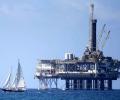
The stage for negotiations to settle the Krishna-Godavari basin dispute is long over, says a government official

The commission asks for notification to be deferred; RIL's KG-D6 pricing issue may return to Cabinet
Days after the Cabinet approved doubling of natural gas price from April next year, the Finance Ministry has written to Oil Ministry suggesting setting of a ceiling or an upper limit for the rates.
