
The main culprit behind this cost escalation are rising prices of sugar and milk that go into making the sweets.

The Indian government has decided to cap trade margins on all non-scheduled anti-cancer drugs at 30 per cent of their maximum retail price. This move aims to improve affordability and ensure continued availability of these life-saving medicines, potentially saving cancer patients an estimated Rs 2,500 crore annually. The decision, expected to be implemented later this month, will affect 110 anti-cancer drugs, including 35 patented ones.

Indian IT stocks have experienced their most significant weekly surge in 18 years, with the Nifty IT index climbing 11.72 per cent, as a global sell-off in AI-linked equities redirected investor attention towards India's IT services sector. This shift aligns with a JP Morgan report identifying India as a 'natural AI hedge' due to its large, liquid market and strong domestic institutional investor base.

Paris St Germain manager Luis Enrique has stated that Manchester City deserve to keep their trophies, despite the Premier League club facing potential sanctions for alleged financial rule breaches. Enrique emphasised respecting the ongoing process but highlighted City's on-pitch performance.

India's retail inflation rose to 4.38 per cent in June, driven primarily by costlier food items, pushing it above the Reserve Bank of India's median target of 4 per cent for the first time under the new series.

Europe is reeling under a fresh wave of protests as people march over the rising cost of living, pensions, housing, education, corruption and opposition to war. Groups across France, Albania, Italy, Spain and Portugal have held demonstrations in multiple cities, leading to clashes between protesters and the police.
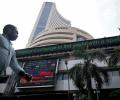
Indian equity benchmarks, the Sensex and Nifty, opened higher on Friday, driven by a strong rally in IT stocks, despite a significant overnight decline in US technology shares and broader Asian markets. Experts anticipate further market support from falling US bond yields, a strengthening rupee, and a substantial liquidity inflow following the Jio Platforms IPO allotment. Track

Gold and silver are expected to remain volatile with a corrective bias as investors assess the latest flare-up in the US-Iran conflict, movements in crude oil prices, and inflation data, which could reshape expectations for global interest rates, according to analysts.

The RBI can slow the rupee's fall, but lasting stability depends on tackling the root causes of depreciation and attracting foreign investment.

Former England captain Gary Lineker has urged Manchester City to admit their breaches of the Premier League's financial rules and accept their punishment, suggesting he wouldn't be surprised if they were stripped of titles.

Indian stock markets closed lower, with the Sensex falling 429 points, after the Reserve Bank of India raised its benchmark interest rate for the first time in nearly four years, coupled with rising crude oil prices and persistent foreign fund outflows.
India's wholesale price inflation (WPI) increased to 9.87 per cent in June, up from 9.68 per cent in May, primarily due to significant price increases in non-food and food products, with food inflation alone rising to 5.49 per cent.

Investors are set to monitor quarterly earnings, crude oil prices, the Jio Platforms initial public offering, and foreign investor activity in the upcoming holiday-shortened week, according to market analysts.

Canada coach Jesse Marsch has called for Manchester City to be severely punished, including relegation, over breaches of Premier League financial rules, citing inconsistencies he observed during his time managing in England.

Bollywood actor Dino Morea was questioned by Mumbai police's Economic Offences Wing (EOW) for six hours regarding the alleged Rs 65 crore Mithi river desilting scam. The investigation focuses on financial irregularities in a Brihanmumbai Municipal Corporation (BMC) sanitation contract, where key accused allegedly siphoned off funds. Morea's name emerged due to communications and suspected financial transactions with one of the accused. Federal agencies, including the ED, are also probing the case for money laundering.

An independent commission has found Manchester City guilty of serious financial rule breaches over nine seasons, involving "sham" commercial contracts to inflate revenue and understate costs by over 900 million. The club denies wrongdoing and plans to appeal the decision, which could have significant consequences for its past and future achievements in English football.

RBI Governor Sanjay Malhotra reiterated India's cautious stance on cryptocurrencies due to concerns over monetary sovereignty and capital flows, while actively promoting underlying technologies like distributed ledger technology and tokenisation. He also addressed the global rise in public debt and hardening bond yields, attributing it to increased government and private spending, including that driven by AI, and noted the implications of global interest rates on India's monetary policy.

'I don't really expect the August increase in food prices, which was close to 6 per cent, to persist as we go close to the end of this year.'

Indian benchmark equity indices, Sensex and Nifty, closed higher on Monday, driven by softer-than-expected US jobs data which reduced expectations of aggressive monetary tightening by the US Federal Reserve, boosting risk appetite across emerging markets.

Most members of the Reserve Bank of India's Monetary Policy Committee (MPC) expressed concerns about inflation becoming generalised and highlighted uncertainties surrounding both inflation and growth prospects due to the West Asia conflict, according to the recently released minutes.

Gold prices in India have fallen for the third consecutive day, shedding Rs 1,800 to Rs 1.5 lakh per 10 grams, primarily due to a strengthening rupee and weak global cues. Silver also saw a significant decline, tumbling Rs 5,000 to Rs 2.21 lakh per 10 grams.

Punjab & Sind Bank MD and CEO Swarup Kumar Saha clarified that merchants cannot pass on Merchant Discount Rate (MDR) charges to customers for UPI payments, ensuring consumers only pay the displayed price. The new MDR structure, effective October 15, applies a 0.4% charge on P2M transactions above Rs 2,000, with specific flat rates for certain sectors, but small-value transactions remain free.

Indian benchmark stock indices, Sensex and Nifty, rallied significantly, with Sensex jumping over 1,500 points and Nifty reaching a nearly three-week high, driven by strong buying in banking, IT, and Reliance Industries stocks, alongside easing crude oil prices.

Fitch Ratings has increased India's GDP growth forecast for the current fiscal year (FY'27) to 6.9 per cent, up from 6.4 per cent, attributing the revision to robust economic growth in the June quarter and overall economic resilience. The agency also anticipates the Reserve Bank of India (RBI) will raise interest rates by 0.25 per cent in October.

The Kerala Legislative Assembly has passed a motion urging the central government to completely withdraw the proposed Merchant Discount Rate (MDR) on UPI transactions exceeding Rs 2,000. Chief Minister V D Satheesan and CPI MLA K Rajan highlighted concerns that the MDR would increase business costs, harm small businesses, and reduce the appeal of digital payments, while the BJP argued it would not affect general public or small merchants.

Liverpool fans staged a vocal protest against Manchester City at Anfield following the verdict of 114 breaches of Premier League financial rules. Supporters displayed banners, chanted, and booed, while police were on alert for potential bus targeting, though City's team took an alternate route.

India's finance ministry anticipates inflation will remain relatively contained in the coming months, supported by a correction in crude oil prices and softening input costs following the cessation of the West Asia conflict, despite earlier spikes in wholesale and retail inflation.

Indian benchmark indices Sensex and Nifty extended their losses for a third consecutive day, driven by firm crude oil prices, elevated global bond yields, and significant foreign fund outflows, making investors cautious.

India's manufacturing sector activity surged to a seven-month high in September, driven by a significant acceleration in new orders and output, leading to solid expansion in factory hiring and a four-month peak in business optimism.

Donald Trump expressed confidence in a swift victory over Iran, suggesting military strikes before midterm elections are possible, with the primary goal of denying Tehran nuclear weapons. Meanwhile, Iranian Foreign Minister Seyyed Abbas Araghchi declared readiness for a "doomsday war" if hostilities resume, while also expressing openness to diplomacy if assets are unfrozen and oil sales allowed.

Erling Haaland urged Manchester City supporters to stick together and stay positive as the club appeals its financial verdict ahead of Sunday's crucial Liverpool clash at Anfield amid off-field turmoil.

Navigating this geopolitical minefield requires a cold-blooded blend of immediate tactical pleading, structural domestic diversification, and aggressive collective resistance, suggests Ambassador Rajasekhar.

Indian benchmark indices Sensex and Nifty experienced declines in early trade, influenced by the Reserve Bank of India's (RBI) recent repo rate hike and its signal for continued monetary tightening, coupled with rising crude oil prices and foreign fund outflows. Track Sensex, Nifty on October 8.

The ongoing US conflict with Iran has cost the Trump administration an estimated $45.1 billion, according to a Pentagon estimate provided to the US Congress on Friday, CNN reported, citing two sources familiar with the matter.

They had bought Rs 29,631 crore worth of shares in August.

India's leading IT companies are anticipated to report subdued revenue growth and largely stable margins for the July-September quarter, as clients maintain tight discretionary budgets, with analysts closely watching the conversion of strong bookings into revenue and the impact of AI on traditional services.

Chief Economic Advisor V Anantha Nageswaran stated that the second half of the current fiscal year (FY27) is expected to be challenging due to increased downside risks to global growth and rising interest rates worldwide.

Rising bond yields in the US and other advanced economies are making it increasingly difficult for Indian equities to attract foreign portfolio investors (FPIs), leading to pressure on valuations and potentially lower returns for domestic investors.

The Indian corporate sector demonstrated strong credit quality in the first half of FY27, driven by robust balance sheets and healthy liquidity, despite facing risks from elevated crude prices, inflation, and global interest rates.

Indian benchmark indices Sensex and Nifty experienced significant declines in early trade, driven by soaring crude oil prices amidst escalating tensions in West Asia, coupled with weak global market trends and foreign fund outflows.
