
India's foreign exchange reserves experienced a notable decline of USD 8.578 billion, settling at USD 726.027 billion for the week ending October 9, marking a continued downward trend from their September peak.

India's foreign exchange reserves experienced a substantial drop of USD 18.343 billion, settling at USD 747.557 billion for the week ending September 25, according to the Reserve Bank of India.

India's foreign exchange reserves experienced a notable decline of $12.952 billion, settling at $734.606 billion for the week ending October 2, according to the latest data released by the Reserve Bank of India.
India's foreign exchange reserves experienced a substantial decline of USD 14.881 billion, reaching USD 765.901 billion for the week ending September 18, primarily due to a fall in foreign currency assets, as per recent RBI data.
India's foreign exchange reserves decreased by $4.92 billion to $780.78 billion for the week ending September 11, primarily due to a reduction in foreign currency assets and gold reserves, as per the latest RBI data.

'This rise in foreign exchange reserves was expected given the amount of FCNR(B) flow.'

India's foreign exchange reserves have surged by a record USD 44.903 billion to a new lifetime high of USD 785.706 billion for the week ended September 4, driven by the Reserve Bank of India's concessional forex swap initiatives.

Union Minister Ramdas Athawale stated that opposing reservation is unconstitutional and that the policy would be given up if casteism is eliminated. He highlighted the historical context of reservations for SC/ST and OBCs, and the Modi government's EWS quota. Athawale also criticised the opposition, praised government achievements, and discussed various welfare schemes and infrastructure projects in Chhattisgarh.

The Reserve Bank of India (RBI) net purchased a record $18.65 billion in July, driven by inflows from its concessional swap facility, leading to a significant increase in India's foreign exchange reserves.
India's foreign exchange reserves saw a substantial decline of USD 9.985 billion, reaching USD 671.625 billion for the week ended June 12, primarily driven by a sharp decrease in gold reserves, according to the Reserve Bank of India (RBI).

India's foreign exchange reserves increased by USD 6.118 billion, reaching USD 682.354 billion for the week ending July 24, according to the Reserve Bank of India.

Delhi Police detained several anti-reservation protesters at Jantar Mantar who were demanding that economic criteria be prioritised over caste for government support and reservation. The protest, mobilised via social media by 'Reservation Hatao Andolan', proceeded despite police denying permission for Jantar Mantar and offering Ramlila Ground as an alternative venue. Demonstrators called for a review of the existing reservation system and the introduction of a creamy-layer criterion.

'The day we start making rules purely along caste lines, we only divide society further. That's the conversation the government needs to have, and soon.'

India's foreign exchange reserves saw an increase of USD 963 million, reaching USD 672.587 billion for the week ending June 19, as reported by the RBI. This rise follows a previous week's drop. While foreign currency assets decreased, the value of gold reserves significantly increased, contributing to the overall growth.

India's foreign exchange reserves saw one of their largest weekly expansions, surging by USD 14.136 billion to reach USD 707.002 billion during the week ended August 7, according to the Reserve Bank of India.
India's foreign exchange reserves decreased by $711 million to $681.61 billion for the week ending June 5, primarily driven by a significant reduction in foreign currency assets, according to the Reserve Bank of India (RBI).
India's foreign exchange reserves increased by USD 7.26 billion to USD 674.193 billion for the week ending July 3, as reported by the Reserve Bank of India. This surge follows a previous week's drop and comes after Prime Minister Narendra Modi's appeals to conserve forex.

Jio Platforms Ltd's initial public offering (IPO), anticipated to be India's largest, is scheduled to open for subscription on October 21 and close on October 23, with reservations for employees and Reliance Industries Ltd shareholders.

The conversations on July 22 and 23, 1962, meetings in Geneva between V K Krishna Menon, India's defence minister at the time, and Chinese vice premier Chen Yi are important because, had they been followed up, the subsequent border war may perhaps have been avoided, notes former foreign secretary Shyam Saran.

Navigating this geopolitical minefield requires a cold-blooded blend of immediate tactical pleading, structural domestic diversification, and aggressive collective resistance, suggests Ambassador Rajasekhar.

India's foreign exchange reserves increased by USD 1.08 billion to USD 676.237 billion for the week ended July 17, primarily due to a significant rise in foreign currency assets, despite a drop in gold reserves.
India's foreign exchange reserves surged by USD 11.475 billion to a new record high of USD 740.803 billion for the week ended August 28, driven by the RBI's concessional forex swap initiatives.

The Reserve Bank of India (RBI) has increased its GDP growth forecast for the current fiscal year (FY27) by 40 basis points to 7.1 per cent, acknowledging the resilience of domestic economic activity despite global headwinds and geopolitical tensions.

Ladakh has approved a four per cent reservation for outstanding sportspersons in Group 'C' government jobs, becoming the first Union Territory in India to implement such a fixed quota. This initiative aims to provide financial security and career opportunities for talented athletes, fostering an ecosystem where sporting excellence is recognised and rewarded.

Jio Platforms' upcoming initial public offering (IPO) is anticipated to be India's largest to date, potentially listing among the top three stocks with a valuation of around Rs 12 lakh crore, and is expected to proceed without an offer-for-sale as current investors show no interest in diluting their holdings.

Jio Platforms Ltd's Rs 30,213-crore initial public offering (IPO) has garnered bids worth Rs 3.73 lakh crore, achieving a subscription rate of 5.57 times the shares on offer, driven by robust institutional and anchor investor demand.

Jio Platforms Ltd, the digital and telecom arm of Reliance Industries, is poised to launch India's largest-ever initial public offering (IPO) at Rs 30,213 crore, surpassing Hyundai Motor India's Rs 27,870-crore offering.

'The larger lesson for India Inc is that promoter oversight and professional management are not inherently contradictory. The difficulty arises when the boundaries between the two are unclear.'

Jio Platforms Ltd's (JPL) public offer, valued at Rs 30,213 crore, was fully subscribed within 100 minutes of opening, making it the fastest-ever subscribed IPO in India, driven by strong institutional demand.

Atomic Energy Commission Chairman Ajit Kumar Mohanty announced that India's private sector is projected to invest Rs 7.5 lakh crore and contribute 30 GW towards the nation's goal of achieving 100 GW nuclear power capacity by 2047. This marks a significant policy shift, facilitated by the SHANTI Act, encouraging private participation in nuclear energy beyond the traditional public sector model. The country is also exploring Small Modular Reactors (SMRs) for industrial needs and advancing its three-stage nuclear power programme, leveraging its substantial thorium reserves.

India's foreign exchange reserves have surged by $12.42 billion, reaching a new all-time high of $729.33 billion for the week ended August 21, driven by increases in foreign currency assets and gold reserves.

Fast bowler Akash Deep is expected to be recalled to India's Test squad for the upcoming New Zealand tour, following a successful return to domestic cricket after a seven-month injury layoff. The selection committee is also set to pick squads for T20Is, ODIs, and India A's shadow tour.

The Indian rupee has achieved its longest winning streak in nearly eight years, appreciating for eight consecutive sessions to close at a six-week high. This rally is attributed to strategic central bank interventions, healthy foreign capital inflows linked to the Jio Platforms IPO, and profit-taking in the US dollar.

The BCCI has announced a 15-member India A squad for three unofficial Tests against New Zealand A, starting October 24. The squad includes senior players like KL Rahul, Yashasvi Jaiswal, Devdutt Padikkal, and Rishabh Pant (subject to fitness), raising questions about their availability for all 'A' matches due to overlapping ODI commitments.

The Supreme Court has ruled that social backwardness is not transferable from a Hindu social order to a non-Hindu social order upon religious conversion, meaning individuals converting to Islam cannot claim reservation benefits under the Backward Class (Muslim) category solely due to conversion.
India's foreign exchange reserves increased by $9.9 billion to $716.9 billion for the week ended August 14, as reported by the Reserve Bank of India (RBI). This surge follows a previous jump of $14.14 billion in the week prior, indicating a robust recovery after a period of decline earlier this year.
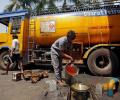
The Reserve Bank of India has opened a special dollar window for three public sector oil marketing companies (OMCs) to meet their daily dollar requirements, aiming to curb the rupee's depreciation amidst global economic uncertainty. Additionally, the RBI has introduced new regulatory measures for the foreign exchange market, including reducing the threshold for derivative transactions without underlying exposure and introducing a Foreign Exchange Risk Reserve (FERR).

The United Arab Emirates (UAE) has expressed intent to invest an additional $25 billion in India, with an ultimate goal of reaching $100 billion in investments, Union Minister Piyush Goyal announced. This comes as both nations plan to enhance cooperation in shipping, ports, energy, and emerging technologies, against a backdrop of expanding bilateral trade.

Finance Minister Nirmala Sitharaman stated that the Reserve Bank of India (RBI) will persist in its efforts to prevent excessive volatility in the rupee, which has significantly depreciated against the US dollar due to global uncertainties, despite India's strong macro-economic fundamentals.

Jio Platforms Ltd's Rs 30,213-crore initial public offering was subscribed 3.01 times, attracting approximately Rs 66,500 crore in public bids, with qualified institutional buyers oversubscribing their portion by 9.02 times, while retail investor demand remained under-subscribed at 0.68 times.
