
International Monetary Fund (IMF) Deputy Managing Director (MD) Gita Gopinath has condemned the "terrible and disturbing" incident of rape and murder of a trainee doctor in Kolkata. "Personally, it is terrible to have any event of this kind. It is disturbing," she told Business Standard in New Delhi.

India's forex reserves dropped by $3.71 billion to $701.18 billion for the week ended October 4, the RBI said on Friday. In the previous reporting week, the reserves had jumped by $12.59 billion to an all-time high of $704.88 billion.

Widespread use of crypto assets, including stablecoins, can have a negative impact on the macroeconomic and financial stability of a country, the Reserve Bank of India (RBI) said on Monday. In its Financial Stability Report (FSR), the banking regulator highlighted that excessive use of crypto assets can reduce effectiveness of monetary policy, worsen fiscal risks, circumvent capital flow management measures, divert resources available for financing the real economy and threaten global financial stability.

Declining for the second straight week, India's forex reserves dropped $10.75 billion to $690.43 billion for the week ended October 11 in one of the largest decreases in the kitty in recent times, the RBI said on Friday. In the previous reporting week, the reserves had dropped by $3.71 billion to $701.18 billion.

IMF Chief Economist Gita Gopinath also said the pickup in global growth for 2020 remains highly uncertain as it relies on improved growth outcomes for stressed economies like Argentina, Iran, and Turkey and for under-performing emerging and developing economies such as Brazil, India, and Mexico.

IMF believes it is mostly cyclical, not structural, but because of the financial sector issues, recovery will be not be quick. IMF said, it saw an opportunity with the strong mandate of the new government to reinvigorate the reform agenda to boost inclusive and sustainable growth.

The voting share of India in IMF would increase to 2.6 per cent from 2.34 per cent.

India's forex reserves dropped by $2.16 billion to $688.27 billion for the week ended October 18, the Reserve Bank said on Friday. In the previous reporting week, the overall kitty had dropped by $10.75 billion to $690.43 billion in one of the largest declines in the reserves in recent times, the RBI said on Friday.
India's forex reserves jumped by $2.84 billion to a new all-time high of $692.3 billion for the week ended September 20, the RBI said on Friday. The overall kitty had increased by $223 million to a new high of $689.46 billion for the previous reporting week.

India's forex reserves jumped by $12.59 billion to a new all-time high of $704.88 billion for the week ended September 27, the Reserve Bank said on Friday. The overall kitty had swelled by $2.84 billion to $692.3 billion in the previous reporting week. The $12.588 billion would be one of the highest weekly rises ever and this is the first time the reserves have crossed the $700 billion mark.

Facing the twin task of fighting the coronavirus pandemic today and building a better tomorrow, the world is experiencing a new Bretton Woods moment, IMF managing director Kristalina Georgieva said

'The critical event signalling a new era for India was Dr Singh's 1991 Budget in which he quoted Victor Hugo to say that no power on earth could stop an idea whose time has come,' recalls T N Ninan.

India's forex reserves rose by $223 million to a new all-time high of $689.46 billion for the week ended on September 13, according to the Reserve Bank data released on Friday. The overall forex kitty had jumped by $5.25 billion to a high of $689.24 billion for the previous reporting week ended on September 6.

Revising its economic outlook, International Monetary Fund (IMF) today marginally brought down India's growth rate projections to 5.6 per cent for this fiscal and 6.3 per cent for the next financial year.
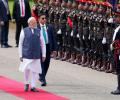
'Granting the country's highest civilian honour to Prime Minister Modi was surprising as it indicated the government was going out of its way to have India as a close partner.'
India's forex reserves jumped by $2.3 billion to a new high of $683.99 billion for the week ended on August 30, according to the RBI data release on Friday. In the previous reporting week, the forex reserves had jumped by $7.02 billion to a high of $681.69 billion.

'It took us 75 years to reach a per capita income of $2,730.' 'According to IMF projections, it will take only five years to add another $2,000.'
India's forex reserves jumped $5.25 billion to a new all-time high of $689.24 billion for the week ended September 6, the Reserve Bank of India said on Friday. The overall kitty had jumped by $2.3 billion to a record $683.99 billion for the previous reporting week.

Prime Minister Narendra Modi Wednesday said the International Monetary Fund (IMF) sees India as a "bright spot" in the global economy and as per the World Bank, India is in a better position to deal with the global headwinds than many other countries. This is because of India's strong "macroeconomic fundamentals", Modi said while virtually addressing the inaugural function of the 7th edition of Invest Madhya Pradesh-Global Investors Summit in Indore. In the past eight years, the government has increased the speed of reforms and removed many hurdles in the way of investments.

The IMF said global growth is projected to reach 3.9 per cent in 2018 and 2019, in line with the forecast of the April 2018 WEO, but the expansion is becoming less even, and risks to the outlook are mounting.

She would be the first Indian to be occupying the coveted post at IMF after former RBI governor Raghuram Rajan

The agreement is subject to approval by the IMF management and consideration by its executive board, which is expected in early April.
India's forex reserves jumped by $4.55 billion to $674.66 billion during the week ended August 16, the RBI said on Friday. In the previous week, the forex kitty had dropped by $4.8 billion to $670.12 billion.

"Antonio Borges, director of the International Monetary Fund's European Department, has notified IMF managing director Christine Lagarde of his intention to leave the Fund for personal reasons," the IMF said in a statement on Wednesday.

Gold buying by central banks surged to 60 tonnes in October, mainly led by the Reserve Bank of India (RBI) which added 27 tonnes of the precious metal to its reserves, the World Gold Council (WGC) said on Thursday. India added 27 tonnes of gold in October, bringing its total gold purchases to 77 tonnes from January to October, according WGC data based on reported monthly data from the International Monetary Fund (IMF).

Gearing up for Trump 2.0 era, Chinese President Xi Jinping on Tuesday cautioned there will be no winner in a tariff or tech wars between China and the United States and vowed that Beijing would firmly safeguard its interests.

Wabel Abdallah, a 60-year-old Lebanese national, had been leading the IMF's office in the Afghan capital since 2008.

India's forex reserves jumped by $7.02 billion to touch a new high of $681.69 billion in the week ended August 23, the RBI said on Friday. The overall reserves had jumped by $4.55 billion to $674.66 billion in the previous reporting week. The previous all-time high for the overall reserves was recorded at $674.92 billion as on August 2.

IMF, which has also lowered its global economic growth forecast for 2016 and 2017 by a marginal 0.1 per cent to 3.1 and 3.4 per cent respectively, recommended six 'reform priorities' for India
India's forex reserves dropped by $4.8 billion to $670.12 billion for the week ended August 9, the Reserve Bank of India said on Friday. In the previous reporting week, the kitty jumped by $7.53 billion to an all-time high of $674.92 billion.

IMF said the repercussions from India's currency exchange initiative will likely persist through the first quarter of 2017.

The year 2020 could see the worst global economic fallout since the Great Depression in the 1930s, with over 170 countries likely to experience negative per capita income growth due to the raging coronavirus pandemic, IMF Managing Director Kristalina Georgieva said on Thursday. Georgieva made the remarks during her address on 'Confronting the Crisis: Priorities for the Global Economy' in Washington, DC, ahead of next week's annual spring meeting of the International Monetary Fund and the World Bank.

India's forex reserves dropped by $3.47 billion to $667.39 billion for the week ended July 26, according to the RBI data released on Friday. In the previous reporting week, the kitty had jumped by $4 billion to an all-time high of $670.86 billion.

"Now is the time for countries with room in their budgets to deploy -- or get ready to deploy -- fiscal firepower. In fact, low interest rates may give some policymakers additional money to spend," new IMF chief Kristalina Georgieva said.

The IMF said in its latest report that the global economy is likely to grow at a slower rate than previously forecast over the next two years.
Advanced economies will be back on track by 2024, but developing economies will be 5 per cent below where they would have been otherwise, IMF's Gita Gopinath said on Wednesday. Economies worldwide have been adversely impacted by the coronavirus pandemic and are slowly coming back into the recovery path. The First Deputy Managing Director of the International Monetary Fund said the war in Ukraine has been a major setback to the global recovery.
Take the rediff business quiz and see how much you know about the International Monetary Fund

The Financial Intelligence Unit-India (FIU-India), the national agency responsible for analysing suspicious financial transactions, has received requests from four more offshore crypto exchanges to operate in India again, said a senior government official familiar with the matter. In the beginning of 2024, India had banned nine crypto exchanges - Binance, Kucoin, Huobi, Kraken, Gate.io, Bitstamp, MEXC Global, Bittrex, and Bitfenix - for non-compliance with anti-laundering law in the country.

India's forex reserves jumped by $7.53 billion to a new record high of $674.92 billion for the week ended August 2, the Reserve Bank said on Friday. The overall kitty had dropped by $3.471 billion to $667.386 billion in the previous reporting week ended July 26.
Surpassing the all-time high level achieved the previous week, India's forex reserves jumped by another $4 billion to $670.86 billion for the seven days ended July 19, the Reserve Bank said on Friday. The overall reserves had jumped by $9.7 billion to an all-time high of $666.85 billion in the week ended July 12.
