
Indian sweet, snack, and restaurant chain group Bikanervala, with revenues of over Rs 3,000 crore, is working towards an initial public offering (IPO) for its food company in the next three years. Before that, it could also bring in private equity (PE) investors. The low-profile Aggarwal family-owned group company, Bikanervala Foods (which also sells under the brand name Bikano), operates in the snack business.

Bolstered by an impressive performance in the global specialty business and outstanding results in the Indian market, Sun Pharmaceutical Industries, the largest pharmaceutical (pharma) company in the country, showcased a strong performance in the July-September quarter (second quarter, or Q2) of 2023-24 (FY24).

The stock of consumer goods major Emami has corrected nearly 3.5 per cent since its 52-week high of Rs 546.25. On August 29, the stock closed at Rs 521.90 on the BSE. After underperforming the Nifty FMCG index for a long time, the stock is now doing a catch up and surged over 13 per cent in the past one month.

Distribution yields could rise, but risk of Covid, higher interest rates remain.

rediffGURU Ulhas Joshi answers your mutual fund queries.

Irregular rainfall and a pick-up in commodity costs are expected to weigh on the demand and margins of fast-moving consumer goods (FMCG) companies. Most companies reported a sharp expansion in gross margins in the April-June quarter (first quarter, or Q1) of 2023-24 (FY24), given the lower prices of key raw materials and earlier price hikes. Furthermore, there were expectations that cost savings being passed on could reflect in volume growth going forward. However, these hopes could be dashed if demand recovery, especially in the rural segment, stalls, and gains on the raw material front start to recede.

The July-September quarter results of software companies in the engineering research and development (ER&D) segment were broadly in line with expectations, though there have been cuts in revenue growth guidance. While results were a mixed bag, and there are cautionary views on the near-term outlook, brokerages and global consulting firms highlight the strong growth trajectory for the sector. They expect this segment of the software sector to grow by 8-12 per cent going forward.

These funds can fetch double-digit returns over the long term which debt tax-saving products can't.

Since its results for the first quarter of the 2023-24 financial year (Q1FY24) earlier this month, the stock of auto component major Bharat Forge is up nearly 15 per cent and hit its all-time high in the process. The recent gains have extended the returns over the last three months to over 34 per cent. After a strong Q1 performance which beat expectations, brokerages had revised their earnings estimates upwards to factor in the improved outlook.

After underperforming its peers in the consumer space in 2022-23, and experiencing a mixed bag in the 2023-24 (FY24) April-June quarter (first quarter, or Q1), brokerages are positive about the medium-term outlook for liquor stocks. Higher raw material costs, concerns regarding increased duties, regulatory changes, and competitive pressures weighed on performance returns in the past quarters. Analysts believe that the sector could experience a reversal of fortunes due to better demand and margin improvements.

These stocks offer the best combination of maximum 'buy' recommendations from brokerages and share price upside over the next 12 months.

After being underweight on domestic agrochemical companies and preferring global plays, brokerages believe that the former may perform better in the quarters ahead. Domestic crop protection companies have faced multiple headwinds over the past year and a half, given high inventory costs, pricing pressures, lower realisations in the generic segment, increased stocks due to lower infestations, and demand-led hits to volumes. Some of the overhang from previous quarters was reflected in the April-June quarter (first quarter, or Q1) of 2023-24 (FY24) as well, with aggregate revenues and operating profit for the sector down 12 per cent and 27 per cent, respectively.

Rising crude oil prices and muted passenger traffic in the July-September quarter (second quarter, or Q2) of 2023-24 (FY24) have raised concerns about the profitability of listed aviation players. These two concerns have caused the stock of InterGlobe Aviation (IndiGo), the largest player in the sector, to slip by 11 per cent since its highs at the end of July. Nuvama Research expects yields to cool down in the near term due to seasonality, rising crude oil prices, and higher capacity.

The stock of auto component major Bosch was up 2.5 per cent on Wednesday and in the process hit its 52-week high. Expectations of higher volumes of medium and heavy commercial vehicles' (M&HCV), rise in content supplies on account of BS VI stage 2 implementation from April, and improved profitability are some of the positives for the stock. In addition to this, the company appointed a new managing director and joint managing director last week, which will come into effect from July 1.

Logistics services provider Delhivery posted a mixed set of results during the March quarter of the previous financial year (Q4 of FY23). While its operating profit was marginally in the green, its net losses widened as compared to the year-ago quarter. Overall revenues, which were in line with estimates, fell 10 per cent year-on-year (YoY).

Since its results, the stock of bottling and beverage distribution company Varun Beverages (VBL) is up 7 per cent on the back of a strong 2022-23 January-March quarter performance, robust outlook, and revision in profit estimates. Given the sharp uptick, it is now part of the trillion-rupee club, with its market capitalisation at Rs 1.01 trillion. The stock is one of the best performers in the consumer space as well as the S&P BSE 200, of which it is a constituent.

Among the many exits from the billionaire's club in 2022 are D Uday Kumar Reddy of Tanla Solutions (net worth down 66 per cent), Sushil Kanubhai Shah of Metropolis Healthcare (down 65.7 per cent), Vijay Shekhar Sharma of One97 Communications (down 66 per cent), and C K Birla (down 43.4 per cent).

'Small cap funds do have their own merits and they make sense when the investor has a longer investment horizon.'

Except for Westlife Foodworld (Westlife), a weak 2022-23 (FY23) January-March (fourth quarter, or Q4) quarter performance and a muted near-term outlook led to a downward revision of earnings estimates for quick-service restaurant (QSR) players. Brokerages have slashed estimates by as much as 10 per cent for 2023-24 (FY24) and 2024-25 (FY25). The downward revisions have weighed on the performance of listed players, who have underperformed the market with low single-digit returns over the past month.

The National Stock Exchange (NSE) Nifty Next 50 Index could undergo large-scale changes if the proposed tweaks to its computation methodology get implemented. In a discussion paper floated recently, NSE Indices, which owns and manages a portfolio of over 350 indices under the Nifty brand, proposed that only stocks that are traded in the futures and options (F&O) segment can be part of the index. Currently, as many as 11 non-F&O stocks are part of the Nifty Next 50 Index, which, as the name suggests, represents the next rung of large and liquid securities after the Nifty50.

The headline for corporate profit growth has been very encouraging in the July-September quarter (Q2) of 2023-24 (FY24), with the combined net profit of listed companies up by 38 per cent year-on-year. However, the earnings distribution has been very lopsided, with most of the growth coming from public-sector oil-marketing companies (OMCs), banks, non-bank lenders, automobile (auto) companies, and cement producers. By comparison, companies from information technology services, fast-moving consumer goods (FMCG), retail, and consumer durables were disappointed, experiencing a sharp slowdown in net sales growth and a relatively muted increase in reported net profit.

As many as six merchant bankers are vying to handle and manage the sale of the government's 29.53 per cent residual stake in Hindustan Zinc Ltd (HZL), according to an official notice. ICICI Securities, SBI Capital Markets, HDFC Bank, IIFL Securities, Axis Capital and Citigroup Global Markets will make their presentations via video conferencing before the government officials on Friday, highlighting their plans in managing the offer for sale. The bankers to manage the sale process would be finalised after the presentation and opening of financial bids on August 12, as per the notice.

Bharti Airtel on Tuesday announced that it has scrapped the minimum recharge plan of Rs 99 in seven circles -- Andhra Pradesh, Bihar, Himachal Pradesh, Karnataka, Northeast, Rajasthan, and Uttar Pradesh (West). In these circles, the price of the entry-level plan now would be Rs 155. This 57 per cent increase in Airtel's entry-level plan comes two months after the telco discontinued the Rs 99 plan in Haryana and Odisha in November last year.

10 non-bank and non-finance stocks from the BSE500 Index universe that offer an optimal blend of low valuation, reasonably robust revenue and earnings growth in recent quarters, a strong balance sheet, and most importantly, positive cash flow from their operations.

Start-up entrepreneurs nearly doubled their contribution to philanthropy in 2022 but their numbers shrank. They decreased to only three (from five) in the top 100 of the Edelgive Hurun India Philanthropy List of 2022 which was released on Thursday. Over the year, no new start-up whizz kid joined the list either. The three start-up entrepreneurs who made it to the list contributed collectively Rs 166 crore in FY22, nearly double that of Rs 83 crore in FY21.
India's largest listed pharmaceutical (pharma) company - Sun Pharmaceutical Industries (Sun Pharma) - is expected to maintain its outperformance vis--vis the sector's, as its multiple bets on specialty products, improving product mix, recent acquisitions, and branded business are finding favour with brokerages. While it has gained 7 per cent over the past year, the Nifty Pharma Index is down 13.6 per cent. Its outperformance over two years has been fairly evident, with the market leader gaining 66 per cent to Nifty Pharma's minus 1.4 per cent.

An NCD's credit rating will tell you whether risk possibility is high or low. Instruments rated below AA are regarded as high-risk.

'Then select those that are well-aligned with your risk-return profile and investment time horizon.'

Some analysts see more upside in FMCG stocks given the performance gap between the sector and the market.

Omkeshwar Singh, Head, Rank MF, a mutual fund investment platform, answers your queries.

IPO-bound mobility platform Ola, said it has successfully raised $500 million via a Term Loan B (TLB) from marquee international institutional investors. This term loan has no impact on the valuation of Bhavish Aggarwal-led Ola. The Bengaluru-based firm recently raised $139 million. This is part of a $1 billion funding round for which the company is in talks with investors, increasing its valuation to about $7.5 billion, according to the sources.

More companies are harbouring aspirations to go public, following a sharp market rebound after June's nadir. In August, seven companies expecting to raise a cumulative Rs 10,425 crore filed their draft red herring prospectus (DRHP) with the Securities and Exchange Board of India (Sebi). The amount they are looking to mop up is the highest since March, when 13 companies filed their DRHPs to raise a combined Rs 19,494 crore, reveals data provided by PRIME Database - a source of comprehensive information on all capital market offerings.
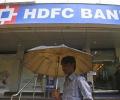
Foreign portfolio investors (FPIs) continue to cut their shareholding in both Housing Development Finance Corp (HDFC) and HDFC Bank. As per latest data, during the June 2022-23 quarter (Q1FY23), FPIs held 68.1 per cent and 65.96 per cent, respectively, in HDFC and HDFC Bank. Overseas shareholding is down 111/406 basis points (bps) and 260/412 bps on the quarter-on-quarter (QoQ)/year-to-date (YTD) basis in HDFC and HDFC Bank, respectively.

The recent currency volatility - rupee's depreciation against international currencies - may have given heartburns to automakers that rely on imports or pay royalty to parent companies abroad. But for Maruti Suzuki India, favourable movement of the yen - the currency that matters the most - against the Indian rupee, has given it reasons to cheer. The yen's sharp fall against the rupee and the rupee's depreciation against the US dollar, which in turn will bump up export realisations, are set to give a margin boost to the maker of Baleno and Brezza, said analysts. The softening of commodity prices and slew of new SUV launches in the coming months will also aid margins, they said.

Nikunj Saraf, Vice President Choice Wealth, answers your queries.

Sixteen merchant banks are in the fray to act as book running lead managers (BRLM) for the initial public offering of Life Insurance Corporation of India (LIC). These merchant banks will have to make a presentation before the Department of Investment and Public Asset Management (DIPAM) on August 24-25. The shortlisted banks are BNP Paribas, Citigroup Global Markets India, BofA Securities, Goldman Sachs (India) Securities, HSBC Securities and Capital Markets(India), J.P. Morgan India, Nomura Financial Advisory and Securities (India), Axis Capital, DAM Capital Advisors, HDFC Bank, ICICI Securities, IIFL Securities, JM Financial, Kotak Mahindra Capital, SBI Capital Market, and Yes Securities India.

Notwithstanding the inflation pinch, analysts believe the Indian retail sector is on the 'cusp of accelerated earnings growth' as consumer sentiment and discretionary purchases bounce back from the Covid-19 pandemic. "The shift in consumer preference from the unorganised sector to the organised, coupled with uptick in domestic demand as people resume work from office, will cheer the Indian retail sector," says Nishit Master, portfolio manager, Axis Securities. Shopping malls are witnessing increased footfall in lower tier towns and standalone stores as consumption picks up and mobility improves.

Despite a healthy March-May quarter (Q3FY22) show by global IT consulting firm Accenture, Indian IT companies shed up to 3 per cent on the National Stock Exchange (NSE) on Friday as analysts continued to highlight medium-term pain points for the sector. The Nifty IT index settled 0.9 per cent lower on Friday, as against a 0.9 per cent rise in the Nifty50 index. According to analysts at ICICI Securities, Accenture's Q3 saw moderation in year-on-year growth rate across verticals and US regions, which signals at likely normalisation in revenue momentum for Indian IT services going forward.

PB Fintech, the parent of Policybazaar and Paisabazaar, has set a price band of Rs 940-950 apiece for its initial public offering (IPO), which will open on November 1 and close on November 3. The company may be valued at around Rs 44,000 crore, and looking to raise an amount of around Rs 5,826 crore. The IPO comprises a fresh issue of Rs 3,750 crore, along with an offer for sale (OFS) of Rs 1959.72 crore by existing promoters and shareholders.

The stock, which is a play on the growth story of Indian Railways, has corrected 15 per cent from its 52-week high level of Rs 2,072.95 scaled on March 9. Yet, this has not deterred brokerages from holding a bullish view on the stock.
