
Retail inflation declined to 6.83 per cent in August after touching a 15-month high of 7.44 per cent in July, mainly due to softening prices of vegetables, but still remains above the Reserve Bank's comfort zone. The overall inflation in the food basket stood at 9.94 per cent in August as against 11.51 per cent in July, according to data released by the National Statistical Office (NSO) on Tuesday. Retail inflation based on the Consumer Price Index (CPI) was at 7 per cent in August 2022.
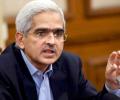
Reserve Bank of India (RBI) Governor Shaktikanta Das had stumped the market in the previous two policies - in August and in October - first with action and then with words. In August, it was the introduction of an incremental cash reserve ratio (I-CRR) to take out excess liquidity, which took the markets by surprise. In October, there was no action. Rather, what is known as "open mouth operation", Das' comment that the central bank might conduct open market operations (OMOs) by selling bonds tempered the euphoria in the bond markets after JP Morgan's inclusion of India in its Emerging Market Bond Index.

Domestic air passenger traffic jumped 57 per cent to around 49 lakh in July, reflecting a significant sequential as well as year-on-year growth amid a decline in coronavirus infections, according to a report. Recording continued recovery, traffic rose 56-57 per cent to 48-49 lakh in July compared to June this year when it was about 31.1 lakh. As against June 2020, the growth is 132 per cent, rating agency Icra said in the report on Thursday.

The economic growth may have slowed to 3.5 per cent in fourth quarter of 2021-22 from 5.4 per cent in the previous three-month period due to the impact of higher commodity prices on margins, decline in wheat yields and on higher base, Icra Ratings said on Monday. The agency said the hiccups in the recovery of the contact-intensive services attributable to the third wave of Covid-19 in the country may have also affected the economic growth in the quarter. Even the gross value added (GVA) at basic prices (at constant 2011-12 prices) in Q4 FY2022 seems to have eased to 2.7 per cent from 4.7 per cent in Q3 FY2022, it said.

Reflecting subdued global economic growth, India's outward foreign direct investment (FDI) fell by 33.3 per cent sequentially to $1.21 billion in August, compared to over $1.82 billion in July.

Listed housing finance companies (HFCs), as a group, posted a 3.7 per cent drop in second-quarter (Q2) profit year-on-year (YoY) to Rs 5,830 crore and 19 per cent sequentially on rise in interest expenses and uptick in provisions and write-offs. Operating income rose 13.7 per cent YoY to Rs 54,086 crore in Q2 of 2022-23 (FY23). Sequentially, income was up 62.3 per cent, from Rs 33,331 crore in the first quarter (Q1) of 2021-22 (FY22).

But the government will present a second tranche of Supplementary Demands for Grants during the Budget session of Parliament in February, when it can seek additional spending.

The second wave of the pandemic in the country has derailed the recovery momentum of the domestic auto industry, which was poised for a comeback in the current fiscal after witnessing the two consecutive challenging years, ratings agency ICRA said on Thursday. Unlike the first wave where infections were largely localised to urban clusters, the second wave has seen deeper and wider penetration, including into rural hinterlands. Accordingly, outlook for various segments has been revised downwards, it said.

Billionaire Gautam Adani's group is planning to build 10 GW of integrated solar manufacturing capacity by 2027, as it looks to capture energy transition business, sources close to the company said. Adani Group currently has a solar manufacturing capacity of 4 GW. Adani Solar has a confirmed order book of over 3,000 MW in exports that are to be serviced over the next 15 months, they said, adding Adani, recently, raised $394 million for solar manufacturing from Barclays PLC and Deutsche Banks AG through a trade finance facility.

The Union government's finances witnessed significant improvement in August after a stressful first four months of the current fiscal year. India's gross tax revenue, comprising both direct and indirect taxes, for the first five months of 2023-24 surged 16.5 per cent year-on-year (Y-o-Y) to Rs 11.8 trillion. During the April-July period, gross tax revenue increased by a mere 2.8 per cent compared to the Budget Estimate of 12.1 per cent growth for FY24.

Benefiting from higher credit off-take and loan repricing, listed commercial banks are expected to post 43.9 per cent year-on-year (YoY) growth in their net profit in the quarter ended June 30 (Q1FY24), analysts have said. Controlled credit costs due to a healthy asset quality profile and a steady treasury book will also support a strong bottom line for the lenders in the first quarter. However, net profit may shrink sequentially, according to analysts' estimates for 13 banks sourced from Bloomberg data.

India's domestic passenger traffic slipped to a 10-year low at an estimated 53.4 million in the just-concluded financial year, a report said. However, in the previous fiscal there were no passenger flight operations for almost two months due to the pandemic-induced lockdown. During the financial year 2010-11, all domestic air operators together had flown a total of 53.8 million passengers on local routes, according to ratings agency ICRA. The domestic passenger traffic in March 2021 has been estimated at around 77-78 lakh, a marginal decline of about 1 per cent over February during which airlines had flown around 78.30 lakh passengers, it said.
India's gross tax revenue, comprising both direct and indirect taxes between April and July, reported a growth rate of merely 2.8 per cent to Rs 8.9 trillion compared to the same period a year ago, as shown by government data on Thursday. This growth was dampened by direct tax figures, offsetting the healthy growth in goods and services tax collections and Customs duties. While net tax revenue contracted by 12.6 per cent to Rs 5.8 trillion up to July, accounting for 25 per cent of the Rs 23.3 trillion full-year target, this could be attributed to the increased tax devolution to states during the period.

The domestic passenger traffic in July 2021 was 51 lakh, ICRA said in a release. Domestic passenger traffic on a year-on-year basis, however, spiked around 131 per cent over August 2020 traffic of 28.3 lakh, it said. The ratings agency said despite the continued recovery in the previous month, there is continued stress on demand, driven largely by the second wave of the pandemic, limiting travel to only necessary travel.
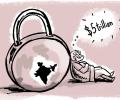
India decisively withstood global headwinds in 2023 and is likely to remain as the world's fastest-growing major economy on the back of growing demand, moderate inflation, stable interest rate regime and robust foreign exchange reserves. Despite widespread pessimism witnessed among the developed nations and the worsening geopolitical situation, India recorded a gross domestic product (GDP) expansion of 6.1 per cent in the March quarter. The growth moved up to 7.8 per cent in the June quarter and was 7.6 per cent in the September quarter. For the first six months of this fiscal, the growth was 7.7 per cent.

'Interim Budget has ignited the entrepreneurial spirit.'


On June 30, mining and metals giant Vedanta, announced that it had decided to initiate a strategic review of its steel and steel-making raw material businesses. The review would begin immediately and evaluate a broad range of options, including but not limited to a potential strategic sale of some or all of the steel businesses, the company said in its stock exchange filing. The signs have been there - approaches had been made to steel players over the past year. Last December, Anil Agarwal, chairman Vedanta group, told Business Standard that the steel plant capacity was about 3 million tonnes (mt).

Retail inflation jumped to a 15-month high of 7.44 per cent in July as prices of vegetables and other food items spiked, according to official data released on Monday. The Consumer Price Index (CPI) based inflation was at 4.87 in June and 6.71 per cent in July 2022. Previously, high inflation was recorded at 7.79 per cent in April 2022.

The share of slow-moving orders in the overall order book of Larsen & Toubro (L&T) is at a multi-year low. This has led to a renewed focus on fast-moving orders. A mix of factors such as commodity price fluctuations, robust order inflow and strong sectoral demand have put capital goods order book in the fast lane, analysts and company executives said. L&T, with its large presence in the capital goods sector, is often seen as the bellwether for trends in this space.

Investment growth moderated slightly in the economy during the first quarter (Q1) of the current financial year (2023-24, or FY24), notwithstanding the front-loading of capital expenditure (capex) by the Centre. This was also the case despite a pick-up in demand during the period after two dismal consecutive quarters. Although growth in gross fixed capital formation (GFCF), representing investment, fell to a five-quarter low of 7.96 per cent, the comparison with the first two quarters of the previous year is a bit askew due to the low year-on-year (Y-o-Y) base of those periods.

For the first time, the country's largest airline IndiGo will soon lease up to four wide-body Boeing 777 planes to cover the shortfall in its international operations, according to officials. The airline said the wet-leasing of "certain aircraft" will be done as an interim measure. IndiGo, which has so far only been operating narrow-body Airbus planes, ATRs and freighters, will now be having wide-body aircraft in its fleet.

Retail inflation rose to three-month high of 4.81 per cent in June, mainly on account of hardening prices of food, according to the government data. Inflation based on the Consumer Price Index (CPI) stood at 4.31 per per (revised upward from 4.25 per cent) in May and 7 per cent in June 2022. The inflation, however, remains within the RBI's comfort level of below 6 per cent.

The GST revenues for August 2023 have shown a growth of 11 per cent year on year due to increased compliance and less evasion, Revenue secretary Sanjay Malhotra said on Friday. The collection from Goods and Services Tax (GST) was Rs 1,43,612 crore in August 2022. "Roughly numbers are in the range of 11 per cent year on year growth as in earlier months," Malhotra told reporters.

India's climate change goals are turning combustible. On the one hand, a protracted dispute between the government and manufacturers over subsidies threatens to slow the pace of electric vehicle (EV) sales. On the other hand, repeated assertions by different arms of the government over banning sales of new fossil fuel-fired vehicles have queered the pitch for energy investments. Before we address the issue of the recommended diesel vehicle ban in the recent report on energy transition, issued months before the next round of global climate talks begin in Dubai in November, let's look at what's at stake.
Domestic air passenger traffic was back to the growth trajectory in June amid the falling number of COVID-19 cases in the country with around three million passengers flying on local routes in the previous month as against around two million in May, a report said on Tuesday. Though there is some recovery observed in June, stress on demand continues, driven largely by the second wave of the pandemic, limiting travel to only necessary travel, credit rating agency ICRA said in its report. On a sequential basis, domestic passenger traffic was up 41-42 per cent in June over May.

Lenders and shareholders of Reliance Industries Ltd (RIL) will meet on May 2 to demerge the firm's financial services business. This is expected to create a big player in segments including the NBFC (non-banking financial company) space with net worth of Rs 25,851 crore as of March 2022. According to the plan, RIL shareholders will get a share in the demerged entity for each one held in the company.

Moody's on Thursday upped India's growth projection for the next financial year beginning April 1, to 13.7 per cent, from 10.8 per cent estimated earlier, on the back of normalisation of activity and growing confidence in the market with the rollout of COVID-19 vaccine. For current fiscal, the US-based rating agency expects the economy to contract 7 per cent, lower than its previous estimate of 10.6 per cent contraction.
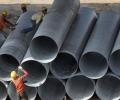
The festive season will mean business for the steel industry as it is the time when automotive and consumer appliance companies bump up demand to prepare for higher sales, experts have said. Ranjan Dhar, chief marketing officer at ArcelorMittal Nippon Steel India (AM/NS India), said that bookings by auto and consumer appliance industries are 20 per cent higher ahead of the festive season compared to last year. "While this could be for a couple of months, it could normalise later at approximately 10 per cent," he said.

The rupee depreciated 6 paise to 77.50 against the US dollar in the opening trade on Wednesday as a surging American currency in the overseas markets and persistent foreign fund outflows weighed on investor sentiment. Besides, rising global crude prices impacted the domestic unit, forex traders said. However, a higher opening in the domestic equity market restricted the rupee's fall, they added.
The second wave of the coronavirus pandemic is likely to delay recovery in air passenger traffic with an 80-85 per cent growth year-on-year this fiscal against the earlier estimate of 130-135 per cent, ratings agency ICRA said on Monday. The domestic passenger traffic, which witnessed a steady ramp-up after resumption of airport operations since May 25 last year and reached 64 per cent of the previous year levels in February, has again suffered a setback, the ratings agency said in a report. The spike in coronavirus infections towards March-end and April has resulted in several state governments implementing fresh restrictions, resulting in a marginal 0.7 per cent de-growth sequentially in traffic in March.

Personal loans have about 80 per cent share in exposures restructured under regulatory package 2.0 by eight banks who have declared results for the second quarter. The remaining 20 per cent are loans to individuals used for business and credit to MSMEs. The total recast exposure of these banks under One Time Restructuring (OTR 2.0) was Rs 27,708 crore.

India recorded economic growth of 7.8 per cent in the April-June quarter of 2023-24 against 13.1 per cent in the year-ago period, as per the National Statistical Office (NSO) data released on Thursday. India remains the fastest-growing major economy as China's GDP growth in the April-June quarter was 6.3 per cent.

"We will raise Rs 300 crore via bonds of two-, three- and five-year tenures. This will be our maiden bond issuance and is part of our effort to widen funding sources," says Vimal Bhandari, executive vice-chairman and chief executive officer (CEO), Arka Fincap. The firm, a subsidiary of Kirloskar Oil, is only five years old and small (assets of around Rs 5,000 crore with an "AA" rating), but the response to this float will be closely watched: It would be the first by a non-banking finance company (NBFC) after Mint Road upped the risk weights on bank exposures to them by 25 percentage points. The move by the Reserve Bank of India (RBI) has caught NBFCs off guard even though the issue had been flagged by Governor Shaktikanta Das with their corner-room occupants (and that of banks) in July and August 2023 - on consumer credit and the dependency on bank borrowings.

Production of eight infrastructure sectors increased by 5.4 per cent in November against a 3.2 per cent growth in the same month last year on a better show by coal, fertiliser, steel, cement and electricity segments, according to the official data released on Friday. Crude oil, natural gas and refinery products, however, recorded negative growth in November this year. The production growth of eight key sectors slowed down to 0.9 per cent in October.

The Reserve Bank is likely to maintain status-quo on the key interest rates for the third time in a row in its upcoming bi-monthly policy review despite the US Federal Reserve and the European Central Bank hiking benchmark rates, as domestic inflation is within the RBI's comfort zone, say experts. The borrowing cost which started rising in May last year has stabilised with RBI keeping the repo rate unchanged at 6.5 per cent since February when it was raised from 6.25 per cent. In the previous two bi-monthly policy reviews in April and June the benchmark rate was retained.
Retail inflation dipped marginally to 6.44 per cent in February, mainly on account of a slight easing in prices of food and fuel items though it remained above the Reserve Bank's comfort level of 6 per cent for the second month in a row. As per the government data released on Monday, the Consumer Price Index (CPI)-based inflation was at 6.52 per cent in January and 6.07 per cent in February 2022. The retail inflation rate for the food basket worked out to be 5.95 per cent in February, marginally lower than 6 per cent in January.

Private sector banks reported a robust profile with healthy growth in net interest income (NII), credit offtake and reduction in provision burden for the fourth quarter ended March 2023 (Q4 of FY23). However, as a pack, their net profit declined by 9.7 per cent year-on-year (YoY) at Rs 25,317 crore in Q4. This is because Axis Bank posted losses due to its one-time hefty charge for the acquisition of Citibank India's consumer business.

The surprise decision of OPEC and its allies, including Russia, to cut oil output may cause an immediate rise in prices, delaying revision in fuel prices in India, industry sources said. The grouping of Organisation of Petroleum Exporting Countries (OPEC) and its allies, called OPEC+, on Sunday decided to further cut oil output by around 1.16 million barrels. The move led to Brent rising by almost 6 per cent to $84.58 per barrel on Monday.

Domestic air travel demand contracted by 41 per cent year-on-year to around 76 lakh passengers in January with sequential growth also slowing down to 3.5 per cent during the month over December 2020, a report said on Monday. Indian carriers had flown a total of 1.27 crore passengers on domestic routes in January 2020. Indian aviation industry has witnessed a continued recovery in domestic passenger traffic in January 2021.
