
Reserve Bank of India (RBI) is unlikely to cut the benchmark interest rate at its upcoming monetary policy review meeting, taking place soon after the announcement of the Lok Sabha election results, amid inflation challenges, said experts. The Monetary Policy Committee (MPC) may also refrain from rate cut as economic growth is picking up, notwithstanding the elevated interest rate of 6.5 per cent (repo) prevailing since February 2023. The meeting of the Reserve Bank Governor Shaktikanta Das headed MPC is scheduled for June 5 to 7.

'In FY23, PV sales are expected to end the year at a record 3.8 million units, up 26 per cent. In FY24, however, the industry is expecting 5-7 per cent volume growth'

Retail inflation declined to a three-month low of 5.1 per cent in January, mainly due to subdued prices of vegetables, fruits and other food items, according to government data released on Monday. The fall indicates that retail inflation is inching towards the Reserve Bank's comfort level of 4 per cent. The Consumer Price Index (CPI) based inflation was on the rise for two straight months after touching a trough of 4.9 per cent in October 2023. In December, it stood at 5.69 per cent.

Tata Motors will soon submit a detailed report on the upcoming manufacturing plant in Tamil Nadu's Ranipet district and a decision, on whether the facility will churn out passenger or commercial vehicles, will be taken by the company on the basis of market trends, state's industries minister TRB Rajaa said on Thursday. "They are keeping the options open, and market trends will determine it (the type of vehicles the plant will make). "They will quickly come up with a detailed report on that," Rajaa said.

India's industrial production growth slowed to 3.8 per cent in December 2023, mainly due to poor performance of mining and power generation segments, according to official data released on Monday. The factory output growth measured in terms of the Index of Industrial Production (IIP) was at 5.1 per cent in December 2022. In November last year, IIP growth stood at 2.4 per cent.

The liquidity in the banking system moved into surplus almost after three months as the Reserve Bank of India (RBI) absorbed over Rs 40,000 crore from the market on Monday, predominantly on the back of increased government spending. However, this situation may be short-lived given the higher demand for funds to pay taxes and year-end targets, treasury executives said. Meanwhile, two variable reverse repo rate (VRRR) auctions held on Tuesday received weak response.

The Indian pharma industry is estimated to grow at 9-11 per cent in 2021-22 and in the next few quarters, it will be driven by domestic and emerging markets, according to ratings agency ICRA. In a sample of 21 Indian pharmaceutical companies, ICRA said revenue growth was moderate at 6.4 per cent in the second quarter of FY22, down from 16 per cent in the first quarter of 2021-22. The normalisation of the base and pricing pressures in the US market were the major reasons for slowing growth momentum in Q2 FY22, even as growth under domestic and emerging markets remained healthy, ICRA said in a statement.

Trouble started brewing after Cognizant announced that Ravi Kumar, former Infosys president, would take over as the Nasdaq-listed company's CEO.

The Monetary Policy Committee (MPC) is expected to maintain the status quo on policy rates for the fourth consecutive time in its October 4-6 review meeting. The incremental information available since its last meeting in August suggests that growth and inflation prints for the second quarter (Q2) of financial year 2023-24 (FY24) will exceed the committee's projections. However, the Consumer Price Index (CPI)-based inflation is expected to moderate in the second half (H2) of FY24.

24x7 power supply to farmers emerges as a political lightning rod in the state.
In recent months, several pharma multinational corporations (MNCs) are increasingly turning to Indian companies to expand market reach in the country's pharmaceuticals sector. Sanofi's partnerships with Dr Reddy's, Cipla, and Emcure, AstraZeneca and Mankind Pharma - teaming up for asthma medication distribution - are a few instances of this trend. This strategy allows MNCs to leverage established Indian networks and reach a wider audience. Indian companies also benefit from global brands and expertise, say analysts.

The growth of eight key infrastructure sectors slowed down to a 4-month low of 8.1 per cent in September 2023 against 8.3 per cent a year ago, according to the official data released on Tuesday. The growth rate in the output of refinery products, fertiliser, cement and electricity during the month under review has decelerated, while it was negative in the case of crude oil. The previous low was in May, when the growth rate of these sectors stood at 5.2 per cent.

Retail inflation declined to a 25-month low of 4.25 per cent in May mainly on account of softening prices of food and fuel items, with experts saying that RBI is expected to hold interest rates steady in the current fiscal. This is the fourth straight month when retail inflation has declined and the third straight month of Consumer Price Index (CPI) based inflation remaining within the RBI's comfort zone of below 6 per cent. CPI-based inflation stood at 4.7 per cent in April and 7.04 per cent in May 2022.

Domestic air passenger traffic remained 44 per cent lower in the April-December 2021 against the corresponding period of FY20, but saw a jump of 52 per cent year-on-year to 111 lakh in December 2021, according to rating agency ICRA. The total domestic passenger traffic had stood at 73 lakh in December 2020, according to a report by the rating agency. It also said that the emergence of new coronavirus variant and reactionary restrictions impacting air travel remain near term-challenges for the airline industry.

The Interim Budget for 2024-25 (FY25) to be presented on February 1 is likely to assume 10-10.5 per cent nominal gross domestic product (GDP) growth against 8.9 per cent estimated for FY24 by the National Statistical Office (NSO). "We were waiting for the First Advance Estimates GDP numbers for FY24. "We will finalise the nominal GDP growth assumption for FY25 Interim Budget in a couple of days.

Worried by a spike in Chinese imports, the Indian Steel Association (ISA) plans to take up the matter with the government and seek measures to fix "trade distortions". Alok Sahay, secretary general of the group that represents the country's steel producers, said systemic changes were needed. "In order to take any trade measure, it takes a minimum of 15 months' time, due to prevalence of lesser duty rule in India, making India an easy target. "We are going to write to the government on this," he said.

The deficit stood over Rs 8 trillion in the first seven months of the current financial year. Non-tax revenues, comprising transfers from the RBI and dividends of the public sector units, shored up the Centre's revenues.

Analysts and economists have hailed the fiscal projections in the interim Budget, saying the lower fiscal deficit forecast shows that the government, even in an election year, is serious about fiscal consolidation and that the numbers look achievable. According to Devendra Kumar Pant, the chief economist at India Ratings, the two broad themes of the interim Budget are fiscal consolidation and stepping up focus on agriculture/rural to course correct, to some extent, the differential benefits of the ongoing economic growth that's tilted in favour of upper-income bracket/urban households. The projected fiscal deficit numbers for FY24 and FY25 suggest that the government is serious about achieving the fiscal consolidation path of 4.5 per cent fiscal deficit by FY26, and given the nominal GDP growth assumption and revenue buoyancy, the target appears plausible, Pant said in a note.

'Every hospital now tracks length of stay closely.' 'More efficiency is brought into the system now.'

The interim Budget proposals that will be presented on February 1 in the backdrop of the general elections scheduled in April/May 2024 are likely to have a hint of populism, believe analysts, but are unlikely to derail the government from its path of fiscal prudence.

The growth of eight key infrastructure sectors rose to a 14-month high of 12.1 per cent in August 2023 against 4.2 per cent a year ago, mainly due to expansion in production of coal, crude oil, and natural gas, according to the official data released on Friday. The expansion in August is the highest since June 2022, when it was 13.2 per cent. The production of refinery products, steel, cement and electricity also grew in August, the data showed.
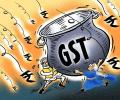
GST collections jumped 15 per cent to nearly Rs 1.68 lakh crore in November, the finance ministry said on Friday. Goods and Services Tax (GST) mop-up was over Rs 1.45 lakh crore in November 2022.

India's current account deficit declined sharply to 1 per cent of the GDP or $8.3 billion in the second quarter of this financial year, mainly due to lower merchandise trade deficit and growth in services exports, according to a RBI data released on Tuesday. The current account deficit (CAD), which represents the difference between the total amount of money sent abroad and money received from overseas across the economy, was 3.8 per cent of GDP or $30.9 billion in the July-September quarter in 2022-23. CAD was $9.2 billion or 1.1 per cent of GDP in the first quarter (April-June) of the current financial year 2023-24.

Snapping its declining trend, retail inflation rose to a three-month high of 5.55 per cent in November on firming food prices, including vegetables and cereals, though it remains within the RBI's comfort zone of less than 6 per cent. Inflation based on the Consumer Price Index (CPI) was 4.87 per cent in October and 5.88 per cent in November 2022, the government data released on Tuesday showed. The previous high was 6.83 per cent in August and inflation had been on a decline since then.

Corporate India is starting to step up its capital expenditure plans amid government incentives and signs of rising demand, company executives and analysts have indicated. This coincides with the Reserve Bank of India (RBI) recently citing a double-digit growth in private capital expenditure. Healthy balance sheets of banks and corporates, along with increasing capacity utilisation and improving business sentiment, are contributing to a favourable environment for sustained growth in private sector investments, the RBI said in its policy last week.

A strong appetite for gold on Friday's Dhanteras is expected this year due to auspicious reasons and geopolitical concerns, continuing the 2022 trend driven by pent-up COVID demand. Compared to last year's Dhanteras, gold prices have jumped 22 per cent and silver prices by 21 per cent, respectively. "Gold and silver are good for portfolio diversification, especially in times of geopolitical turbulence.

The government has cut windfall gains tax on domestically-produced crude oil to nil while continuing the rate at zero on the export of diesel and ATF. The government has slashed the special additional excise duty (SAED) on crude oil produced by companies such as Oil and Natural Gas Corporation (ONGC) to nil from Rs 4,100 per tonne with effect from Tuesday, an official order dated May 15 said. This is the second time that the levy, which was introduced in July last year in the form of a cess to tax supernormal gains of oil producers and fuel exporters, has been cut to nil for domestically-produced oil.

Tata Steel has built an iron ore chest of nearly 600 million tonnes (mt) and will look for more as it prepares for life beyond 2030 when its legacy captive mines come up for auction. The lease for four of its existing iron ore mines -- Joda East, Noamundi, Katamati, and Khondbond -- that feed the domestic operation with low-cost iron ore is going to expire in 2030, following changes in mining regulations. The year will also coincide with Tata Steel's ambitious target of doubling steelmaking capacity in India to 40 mt, increasing the need for iron ore. The company is pushing the pedal to ensure that it has enough resources to meet enhanced needs.

The government has brought back the windfall profit tax on domestically produced crude oil after international prices firmed up while the levy on export of diesel has been cut to nil, according to an official order. The levy on crude oil produced by companies such as Oil and Natural Gas Corporation (ONGC) is now Rs 6,400 per tonne with effect from Wednesday, the order dated April 18 said. At the last revision on April 4, windfall tax on domestically produced crude oil was cut to nil as international oil prices dipped below $75 per barrel.

Ratings agency ICRA on Wednesday revised downwards growth forecast for the domestic passenger vehicles industry to 8-11 per cent in the ongoing fiscal from the earlier estimate of 14-17 per cent on account of the ongoing semiconductor shortage. Similarly, for the two-wheeler segment, it said the volumes are expected to contract by 1-4 per cent in FY2022 against an earlier prediction of 6-8 per cent growth as affordability and demand sentiments of target clientele was hit sharply by the second wave of COVID-19 pandemic. With around 5 lakh units of production lost by various automakers in the passenger vehicles segment due to the semiconductor shortage, ICRA said the earnings loss for the OEMs (Original Equipment Manufacturers) could be around Rs 1,800 crore to Rs 2,000 crore for the ongoing fiscal.
Growth of eight key infrastructure sectors slowed down to 8.2 per cent in June 2023 compared to the year-ago month due to a decline in the production of crude oil, according to the official data released on Monday.

Highly-rated finance firms and housing finance companies are expected to benefit from the absence of Housing Development Finance Corp (HDFC) from the bond market once it merges with the HDFC Bank in early FY24. Post merger, the bond market is expected to become less crowded, which will ease fund raising conditions for other players in the field. It may perhaps also compress the spread for debt instruments floated by housing finance companies (HFCs) over 10-year government bonds, subject to demand and supply conditions.

The Union government is projected to share about 32 per cent of central taxes with states during the financial year 2024-25 against the 15th Finance Commission's recommendation of 41 per cent. The Revised Estimates (RE) for FY24, too, show a similar share of states in the central taxes at 32 per cent. In absolute terms, however, there has been an increase in the amount devolved to states compared to the Budget Estimates (BE) for FY24 at Rs 11 trillion.

If Tesla comes in, India's position as a manufacturing hub will rise many notches, as it will become only the second country, after China, to have both Apple as well as Tesla.
Retail inflation declined to an 18-month low of 4.7 per cent in April mainly due to falling prices of vegetables, oils and fats, and came closer to Reserve Bank's target of 4 per cent, showed government data released Friday. It was for the second month in a row that Consumer Price Index (CPI) based inflation remained within the RBI's comfort zone of below 6 per cent. The government has tasked the central bank to ensure retail inflation remains at 4 per cent with a margin of 2 per cent on either side.

The economy may grow by around 7 per cent this financial year as estimated by the Monetary Policy Committee (MPC) of the Reserve Bank of India (RBI), say economists with various organisations. The first advance estimates for 2023-24 will be released on Friday by the National Statistical Organisation (NSO), an exercise done for calculating ratios such as the fiscal deficit. The interim Budget will be presented on February 1.

Nirma has roped in BCG and KPMG to advise it on the fundraising options for the acquisition. The company had earlier informed banks that it would raise Rs 5,000 crore to Rs 7,000 crore in the current financial year for the acquisition. Bankers said the company will rely on its funds and future GLS dividend to repay its debt for acquisition.

Leading economists have pencilled in a high 13-15.7 per cent uptick in the economy in the first quarter of 2022-23 with an upward bias. Soumya Kanti Ghosh, the group chief economic adviser at State Bank of India, on Tuesday said he expects the GDP to clip past 15.7 per cent in the first quarter with more chances of the final numbers printing in higher, while Aditi Nayar, the chief economist at the rating agency Icra, said the economy will grow much lower at 13 per cent in the June quarter. The national statistical office will announce the first quarter GDP numbers later next week.

The government's regional connectivity scheme UDAN has witnessed a slow progress of implementation, as not even 50 per cent of the route have been operationalised and the second wave of the pandemic, which started from mid of March 2021, may impact it further going forward, according to a report. Rating agency ICRA in its report on Tuesday said that there is likely to be a further delay of two years in achieving the target of operationalising as many as 100 unserved and underserved airports and starting at least 1,000 RCS routes by 2024. Aimed at enhancing regional connectivity through fiscal support and infrastructure development, the maiden flight under the Ude Desh Ka Aam Nagrik (UDAN) scheme was flagged off by Prime Minister Narendra Modi from Shimla for Delhi on April 27, 2017.

Gold jewellery demand in India is likely to decline in the second and third quarters of this fiscal due to hike in import duty, high volatility in prices and inflationary pressure, according to a report. While demand is likely to contract by 8 per cent year-on-year in the second quarter of FY23, the decline is expected to be higher at 15 per cent in the third quarter due to the exceptionally high base in the same period of FY22, Icra said in a report. According to the report, the exceptional third quarter performance in FY22 was due to the post-Covid reopening of the economy and the substantially high demand in the wedding and festive seasons.
