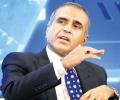
'The Rs 35,000 crore of capex every year, I don't get to sign 35 paise out of this.'

Indian equity benchmark indices, Sensex and Nifty, extended their losses for a second consecutive day, driven by elevated crude oil prices, persistent foreign institutional investor (FII) outflows, and high US Treasury yields.

Indian benchmark indices, Sensex and Nifty, traded marginally higher in early trade despite the US Federal Reserve's recent rate hike and indications of further tightening, with the National Stock Exchange's much-anticipated Rs 22,569-crore IPO also opening for subscription.

The Indian stock market experienced a significant downturn, with the Sensex crashing over 1,000 points and the Nifty hitting a fresh 52-week low, driven by sustained selling from foreign institutional investors, the RBI's monetary policy tightening, and elevated Brent crude prices.

The Union Cabinet has approved a significant increase in the mandatory EPFO wage ceiling from Rs 15,000 to Rs 25,000 per month, a move expected to bring over 51 lakh additional employees under mandatory social security coverage.

Reliance Industries Ltd (RIL) has successfully raised a total of Rs 25,000 crore through domestic bond issues in September, including a recent Rs 13,000 crore 10-year bond at 7.90 per cent, as it prioritises funding certainty amidst expectations of a possible RBI rate hike and rising borrowing costs.

IndiGo, India's largest airline, has recently increased charges for several ancillary services, including infant travel and unaccompanied minors, citing rising operational costs and higher fuel prices. Domestic infant travel charges have risen to Rs 3,000, while unaccompanied minor services are now Rs 5,999 for domestic and Rs 12,999 for international flights.

Fitch Ratings has increased India's GDP growth forecast for the current fiscal year (FY'27) to 6.9 per cent, up from 6.4 per cent, attributing the revision to robust economic growth in the June quarter and overall economic resilience. The agency also anticipates the Reserve Bank of India (RBI) will raise interest rates by 0.25 per cent in October.

India Inc's first-quarter earnings season was significantly impacted by the West Asia conflict, leading to rising costs, calibrated price increases, and margin pressures across various sectors including FMCG, automotive, steel, and cement. Companies are implementing price hikes to protect profitability, with many anticipating further escalations if input costs remain elevated.

India's leading IT companies are anticipated to report subdued revenue growth and largely stable margins for the July-September quarter, as clients maintain tight discretionary budgets, with analysts closely watching the conversion of strong bookings into revenue and the impact of AI on traditional services.

Rising bond yields in the US and other advanced economies are making it increasingly difficult for Indian equities to attract foreign portfolio investors (FPIs), leading to pressure on valuations and potentially lower returns for domestic investors.

HCLTech announced a robust 21.18 per cent increase in its Q2 FY27 consolidated net profit, reaching Rs 5,132 crore, largely propelled by the strong performance and higher margins from its advanced AI operations and a reduced tax burden.

Indian equities, particularly the Nifty 50, have significantly underperformed their Asian and global counterparts over the past year, with the index down 10.6 per cent. This lag is attributed to factors like rising global oil prices, rupee depreciation, and a lack of participation in the global chipmaker rally that boosted markets like South Korea and Taiwan.

After a significant 9.9% depreciation in FY26, the Indian rupee has shown comparative stability in the first half of FY27, depreciating by only 1.1%, attributed to regulatory interventions and measures to attract foreign capital, despite ongoing global pressures from rising crude oil prices and foreign investor outflows.

Monthly gold imports have declined to 25-30 tonnes from 70-80 tonnes while recycling of old jewellery has increased following the recent hike in import duties.

Fast-moving consumer goods (FMCG) companies in India are committed to maintaining current prices through the festive season, despite facing increased commodity costs and geopolitical disruptions. This strategy aims to protect consumer demand and sustain volume growth, even as margins remain under pressure.

Indian benchmark indices, Sensex and Nifty, experienced a sharp decline, with the Sensex tumbling 1,247.71 points and the Nifty settling below 23,100, primarily driven by a significant spike in crude oil prices and weak global market trends.

How India's Jumbo King Is Taking On McDonalds And Burger King Without Selling Chicken Burgers.

Indian stock markets, including the Sensex and Nifty, experienced their third consecutive day of declines, driven by a global selloff, escalating tensions in West Asia, and a subsequent rise in crude oil prices.

Indian factories saw an 8 per cent decline in gross fixed capital formation (GFCF) in FY25, marking the first drop since the pandemic, despite achieving record high employment generation, according to the latest Annual Survey of Industries (ASI) data.

The Supreme Court has ruled that an appellate court cannot unilaterally enhance a convict's sentence unless an appeal for enhancement is filed by the State, victim, or complainant. This significant observation came in a triple-murder case where the Madras High Court had enhanced a co-convict's life sentence to imprisonment for the remainder of his life without such an appeal.

Mumbaikars are set to face a significant financial burden as the prices of milk, CNG, and taxi-rickshaw fares have all seen a substantial increase from September 1, 2026, impacting household budgets ahead of the crucial festive season.

Gold prices in India extended their losing streak, falling by Rs 1,500 to Rs 1,60,900 per 10 grams, influenced by hawkish remarks from Federal Reserve Chair Kevin Warsh and rising oil prices, which have increased expectations of an interest rate hike.

Maruti Suzuki India will increase the prices of its vehicles by up to Rs 30,000 across all models from August 2026, citing a sustained increase in input costs.

Mahindra has managed to deliver all these updates while retaining the starting ex-showroom price of 10.32 Lakh. And, that's a value play you rarely see in today's market, says Rajesh Karkera.

'Separate needs from wants and minimise discretionary spending.'

Commuting by CNG-run black and yellow cabs and auto-rickshaws in Mumbai will become more expensive from September 1, with the Mumbai Metropolitan Region Transport Authority (MMRTA) approving a fare hike of Rs 2 for taxis and Rs 1 for auto-rickshaws.

ITC reported a 16.2 per cent year-on-year drop in consolidated net profit to 4,394.13 crore in Q1 FY27, primarily due to a significant increase in taxes on its cigarette business. Consolidated net revenues also declined by 11.1 per cent to 19,114 crore, missing analyst estimates.

US President Donald Trump has extended the USD 100,000 fee on employers for H-1B foreign workers for another year, citing a significant decrease in registrations from large IT outsourcing firms. This move, aimed at protecting American jobs and ensuring highly-skilled workers, also includes a separate proclamation for enhanced scrutiny of H-1B applications, particularly concerning potential layoffs of US workers.

Gold futures experienced their seventh consecutive daily decline, falling to Rs 1.5 lakh per 10 grams, driven by escalating military exchanges between the US and Iran which have pushed oil prices higher and intensified concerns over inflation and potential interest rate hikes.

Foreign Portfolio Investors (FPIs) have withdrawn Rs 20,974 crore from Indian equities in September, driven by global uncertainties, higher US interest rates and bond yields, elevated crude oil prices, and a weakening rupee.
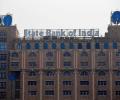
State Bank of India's latest report highlights a 'chalk and cheese' divide in the Reserve Bank of India's recent policy communications, with the Monetary Policy Committee minutes showing a hawkish tone while the Governor's statements are more data-dependent, leading to market uncertainty regarding future interest rate hikes.

A building collapse in Satya Niketan, near Delhi University, has prompted student and teacher organisations to demand a comprehensive safety audit of paying guest accommodations across the city. The incident has highlighted concerns over structural compliance, fire safety, illegal constructions, and inadequate living conditions for students.

Indian paint majors, including Asian Paints, Berger Paints, and Kansai Nerolac, reported better-than-expected performance in Q4FY26, driven by steady demand, improved product mix, and strategic price hikes. The sector is also benefiting from reduced competitive intensity as new players also increase prices, narrowing the gap with incumbents.

The benchmark BSE Sensex rebounded by 362 points, ending a four-day losing streak, driven by strong buying in metal, private banking, and oil and gas shares, while the broader NSE Nifty saw modest gains despite paring some advances in the closing session.

The BCCI has significantly revised the pay structure for umpires and match referees after a decade, introducing new categories and substantially increasing per-day fees. A merit-based promotion and relegation system has also been implemented to ensure high standards in domestic cricket officiating. Additionally, the board addressed its stance on the National Sports Governance Act, updated age-fraud policies, and called for support for physically challenged cricketers.

'While salary increments are moderating compared to last year, not all functions are moving at the same pace.'

Foreign Portfolio Investors (FPIs) withdrew Rs 13,138 crore from Indian equities in the first half of September, driven by heightened global uncertainty, rising crude oil prices, firm US bond yields, and a strong dollar, impacting risk appetite.
Indian stock markets closed lower due to selling in IT and FMCG shares, triggered by renewed tensions in West Asia which led to a rally in crude oil prices and concerns over inflation and interest rates.

Pakistan's government is exploring measures, including potential smart lockdowns and austerity, to reduce petroleum consumption. This comes after recent fuel price hikes driven by rising global oil prices and West Asia tensions, which have also raised concerns about oil supply disruptions. The government is also implementing a fuel relief scheme and faces public pressure over the price increases.
