
Indian authorities have requested additional information from the United States based on the interrogation of Tahawwur Rana, an accused in the 2008 Mumbai terror attacks. The request was made through the Mutual Legal Assistance Treaty (MLAT).

Tahawwur Hussain Rana, a jailed accused in the 2008 Mumbai terror attacks, has moved a court in New Delhi seeking permission to speak to his family. The 64-year-old Pakistani-origin Canadian businessman is currently in judicial custody and is accused of conspiring with David Coleman Headley and operatives of Lashkar-e-Taiba (LeT) and Harkat-ul-Jihadi Islami (HUJI) to carry out the terror attacks. Rana was brought to India after the American Supreme Court dismissed his review plea against his extradition.
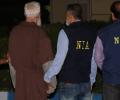
The National Investigation Agency (NIA) has begun questioning Tahawwur Hussain Rana, the mastermind behind the 2008 Mumbai terror attacks, to uncover the larger conspiracy behind the deadly strikes. Rana, who was extradited from the US, is being held at the NIA headquarters in New Delhi. The interrogation is focused on his possible connection with the Lashkar-e-Taiba (LeT) and his suspected links with the Pakistani spy agency Inter-Services Intelligence (ISI).
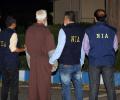
He was sent to judicial custody on May 9 and lodged in Tihar jail after his custodial interrogation by the NIA.
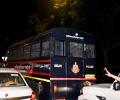
Tahawwur Hussain Rana, a key figure in the 2008 Mumbai terror attacks, has been extradited from the US to India and produced before a Delhi court. Rana, a close associate of David Coleman Headley, was brought to India after the US Supreme Court dismissed his review plea against extradition. The National Investigation Agency (NIA) has sought 20 days of custody to interrogate Rana, citing clinching evidence, including emails. The agency believes that Rana's interrogation is critical to understanding the larger conspiracy behind the attacks and his role in planning them.
The 64-year-old Pakistani-origin Canadian businessman would also be questioned on his suspected links with the officials of Pakistan spy agency Inter-Services Intelligence (ISI) and his association with terror group Lashkar-e-Taiba (LeT), which had orchestrated the attacks.
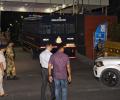
Tahawwur Hussain Rana, the key mastermind of the 2008 Mumbai terror attacks, is being interrogated for eight to ten hours daily by the National Investigation Agency (NIA) to unravel a larger conspiracy behind the strikes. Rana, who was extradited from the US, is being grilled by NIA investigators to probe a larger conspiracy behind the attacks, in which 166 people were killed and over 238 injured. He is being allowed to meet his lawyer and is being provided with basic necessities. The investigators hope to find some important leads on his travels in parts of northern and southern India days before the carnage in Mumbai on November 26, 2008.
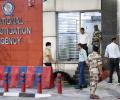
Tahawwur Hussain Rana, the mastermind behind the 2008 Mumbai terror attacks, has been taken into 18-day custody by the National Investigation Agency (NIA) in India. Rana was extradited from the United States after years of legal battles and will be questioned to unravel the complete conspiracy behind the attacks.
Tahawwur Hussain Rana, a Canadian national accused of involvement in the 2008 Mumbai terror attacks, has been extradited to India from the United States. Rana's interrogation is expected to shed light on the role of Pakistani state actors in the attacks, which claimed 166 lives. Indian authorities are particularly interested in his travels across India in the days leading up to the attacks, including visits to Hapur, Agra, Delhi, Kochi, Ahmedabad, and Mumbai. Rana's extradition follows a lengthy legal battle, with the US Supreme Court ultimately denying his application to challenge it. Rana is known to be associated with Pakistani-American terrorist David Coleman Headley, one of the main conspirators of the 26/11 attacks. The investigation into the Mumbai attacks has implicated senior members of terror outfits Lashkar-e-Taiba (LeT) and Harkat-ul Jihadi Islami (HuJI), as well as officials from Pakistan's Inter-Services Intelligence (ISI).
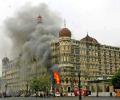
Tahawwur Rana, accused of involvement in the 2008 Mumbai terror attacks, is expected to be extradited to India from the United States soon. The US Supreme Court denied his last-ditch effort to stop his extradition, moving him closer to being handed over to Indian authorities. Rana's extradition is expected to help probe agencies expose the role of Pakistani state actors behind the attacks and shed new light on the investigation. He is associated with Pakistani-American terrorist David Coleman Headley, one of the main conspirators of the 26/11 attacks.
Tahawwur Hussain Rana, a key accused in the 26/11 Mumbai terror attacks, was brought to India on Thursday after being "successfully extradited " from the US, the National Investigation Agency (NIA) said. The 64-year-old Canadian citizen of Pakistani origin landed in Delhi in a special plane on Thursday evening, ending days of speculation of when and how he will be extradited, officials said. The NIA said in a statement that it had secured the successful extradition after years of sustained and concerted efforts to bring to justice the key conspirator behind the 2008 mayhem that claimed 166 lives. Rana is accused of conspiring with David Coleman Headley alias Daood Gilani, and operatives of designated terrorist organisations Lashkar-e-Taiba (LeT) and Harkat-ul-Jihadi Islami (HUJI) along with other Pakistan-based co-conspirators, to carry out the the three-day terror siege of India's financial capital.
Tahawwur Hussain Rana, a Pakistan-born Canadian national and close associate of David Coleman Headley, is set to be extradited to India from the US. Rana was involved in the planning and execution of the 2008 Mumbai terror attacks, which killed 166 people, including six Americans. He assisted Headley in obtaining a visa for India, established a front company in Mumbai, and helped in reconnaissance of targets in Mumbai and New Delhi. Rana was convicted in the US for providing material support to Lashkar-e-Taiba (LeT) and sentenced to 14 years in prison. His extradition to India will allow authorities to question him about his involvement in the Mumbai attacks and potentially uncover new information about the role of Pakistani state actors.

With funds for terror activities drying up due to intense crackdown by authorities, terror outfits are resorting to alternative means -- like carrying out robberies -- to raise money for their plans. Terror groups such as the People's Liberation Front of India, Indian Mujahideen and certain modules of the Harkat-ul-Jihadi in Kerala have all adopted this method. While acts of robbery may indicate sheer desperation.
Although the police have been associating the name of terror outfit Harkat-ul-Jihadi Islami with these youth, the investigations so far show that this was an independent group, which had a single point agenda -- to protect Islam and eliminate all those who appeared to be a threat to the religion.
The Bangalore police on Thursday claimed that they have busted a major module of the Lashkar-e-Tayiba and the Harkat-ul-Jihadi- Islami. Eleven suspects, five from Bangalore and six from Hubli, have been detained and one of them is a journalist with a leading daily in Karnataka, said the police.Director General of Police Lalrokhuma Pachau told the media that the suspects had planned a state-wide operation in which they were going to target Members of Parliament.

Mohammad Abdul Khwaja, the man whose arrest was made public on Monday has turned out to be a prized catch for investigating agencies.
As investigators struggled for a breakthrough five days after Delhi High Court blast, two men considered close to surrendered militants were detained in Kishtwar in Jammu and Kashmir from where an e-mail purportedly sent by Harkat-ul-Jihadi claiming responsibility was sent.
Police on Friday detained a teenage boy who purportedly sent the Harkat-ul-Jihadi-Islami email claiming responsibility for Wednesday's blast outside the Delhi high court from a cyber cafe in Kishtwar, police said.
Terror outfit Indian Mujahideen send a new mail on Thursday claiming responsibility for Wednesday's Delhi high court blast.
Riazul Sarkar, the man arrested in Bihar in connection with the Mumbai serial blasts, may have links with the Harkat-ul-Jihadi based in Bangladesh, according to sources in the Intelligence Bureau. But the agency doesn't have too many relevant details about the alleged link, they said. Riazul's remand may be extended since the National Investigation Agency wants to question him. Riazul, who is fluent in Kannada and Bengali, furnished a false address to the investigators.
Rediff.com's Vicky Nanjappa finds out why over a month after the blast near the Delhi High Court, investigators have not yet been able to pinpoint the terror outfit that carried out the operation.
Investigators are now looking for links between the 13/7 Mumbai serial blasts and the Delhi blast case. The Delhi blast case as per the investigations conducted by the National Investigating Agency points towards the Harkat-ul-Jihadi. Vicky Nanjappa reports.
As investigators try to piece the Delhi high court blast jigsaw questions still remains unanswered: Who planted the explosive and the motive behind the blast? Those involved in the probe say everyone's a suspect -- the Indian Mujahideen, the Students Islamic Movement of India, the Harkat-ul-Jihadi -- and the role of each of this outfit is being probed.
The email sent out allegedly by terror outfit Harkat-ul-Jihadi Islami claiming responsibility for the Delhi attack is under investigation.

Goa police have alerted their Mumbai counterparts about possible presence of a Harkat-ul-Jihadi-Islami terror suspect in the metropolis after he left the coastal state two days ago.
After their acquittal, the people demanded a Central Bureau of Investigation probe into the incident. After lot of deliberations, the case was finally handed over to the CBI. It was decided that the FIR pertaining to the exploded bomb would be handled by the CBI and the other FIR would be probed by the Hyderabad police.
Even as the investigations into the firing incident has just commenced, the Hyderabad police is suspecting the involvement of a man named Viqaruddin, who has been on the run for the last three years, in the Friday attack.
The Civil Liberties Monitoring Committee may have filed it report on the police firing that killed nine persons following the Mecca Masjid blasts in Hyderabad, but Vicky Nanjappa feels the matter appears to have gone in to cold storage.
Pakistan's latest claim -- about the Bangladesh-based Harkat-ul-Jihadi planning the terror attacks in Mumbai -- may have a boomerang effect. Sabahuddin Ahmed has revealed that the HuJI carries out its operations with the patronage of the Pakistan-based Lashkar-e-Tayiba. In his confessional statement, Sabahuddin clearly states that Lashkar operatives use the porous Bangladesh border whenever they are fleeing.
Khwaja is a self styled commander of the HuJI and had concentrated largely on operations in south India. The police say that he is likely to have information on the manner in which the HuJI had masterminded the Hyderabad twin blasts.
Terror outfit Lashkar-e-Tayiba has been trying for some time to let its partner Harkat-ul-Jihadi carry out subversive operations in India, as it wants to concentrate on staging a major strike in the United States. Lashkar is actively patronised by Pakistan's Inter Services Intelligence. After the 26/11 terror strikes, several Lashkar cadres wanted to cross over to Afghanistan and plan a strike in the US. But the ISI turned down this plan.
The Harkat-ul-Jihadi email has given a new twist to the Delhi high court blast. It is now being claimed that this outfit which operates out of Bangladesh had carried out these blasts in order to protest the hanging of Afzal Guru. Vicky Nanjappa reports.
The United States of America and the United Nations declaring the Harkat-ul-Jihadi Islami as a terrorist organisation recently has come as a welcome relief for India, especially where this dreaded outfit has been spreading its tentacles like cancer. Vicky Nanjappa takes a look at the inception of HuJI and also the major attacks that it has been involved in prior to this ban.
A local court in Ahmedabad on Thursday acquitted six persons accused of hatching terror conspiracy to avenge the 2002 communal riots.
Viqar, who as per the dossiers of the Hyderabad police, is a member of the Harkat-ul-Jihadi. His name has been cropping up several times, but the last time that the police stepped up the manhunt was after an incident in which one constable was shot dead recently.
The arrest of Shakatullah Ghauri, an Imam who was arrested from the Hyderabad Airport could help police join the dots relating to several cases of terror in the country, especially the attack on the Akshardham temple at Gujarat. Ghauri, the brother of hardcore militant Farhatullah Ghauri is said to have played a major role in financing outfits such as the Lashkar-e-Tayiba and the Harkat-ul-Jihadi.
According to the IB, SIMI has recruited nearly 25,000 members across the country, of which 6,000 were recruited through the new agency which has come in handy since the crackdown by security agencies and their constant monitoring had made things difficult for the SIMI cadres.
S R Darapuri, a retired Indian Police Service officer has been fighting for several innocents picked up and tortured by the police in several cases of terrorism,explains how the police force is beset with bias and what needs to be done to tackle it.
A Chicago taxi driver of Pakistani origin, who claims to have known HuJI chief Ilyas Kashmiri for 15 years and arrested on charges of providing material support and funds to Al-Qaida, was on Tuesday produced before a US court.

As the interrogation of self-styled Harkat-ul-Jihadi commander, Abdul Khwaja progresses, the Hyderabad police have stumbled on vital clues regarding his sinister plans for South India. Khwaja, it is learnt, has told the police that his main target was Chennai and the purpose behind his visit to India was also to recruit more youth for terror operations.
