
Fundraising via the initial public offering (IPO) route by companies may touch Rs 1 trillion in financial year 2024-25 (FY25), according to a recent note by Pantomath Group - a mid-market investment bank. During the financial year 2023-24 (FY24), 76 companies tapped the markets through mainboard IPOs, Pantomath said, raising nearly Rs 62,862 crore. This is a 21 per cent rise compared to FY23, the note added.

Just 14 companies raised Rs 35,456 crore through main-board primary share sales in the first half of the fiscal, down 32 per cent from the year-ago period when 25 issues had mopped up Rs 51,979 crore. But according to Prime Database, the IPO pipeline is strong with 71 issues worth Rs 1,05,000 crore having Sebi approvals and another 43 worth about Rs 70,000 crore are awaiting approval. Of these 114 planned issues, 10 are new-age tech companies, which are looking to raise roughly Rs 35,000 crore.

The filing of offer documents with the capital markets regulator - Securities and Exchange Board of India - has more than halved this financial year (2022-23, or FY23) as the outlook for new share sales has worsened, following correction in the secondary market. So far in FY23, 66 companies filed their draft red herring prospectus (DRHP), as opposed to 144 in the preceding financial year (2021-22, or FY22).

The fundraising through rights issues in the first 10 months of 2022 is the lowest since 2016 during a similar period.

The primary issue market has hit an all-time high with 63 corporates raising Rs 1,18,704 crore through main-board initial public offerings (IPOs) so far in 2021, which is nearly 4.5 times more than the Rs 26,613 crore raised through 15 issues in 2020 and almost double of the previous best of Rs 68,827 crore in 2017, according to a report. Pranav Haldea, managing director of Prime Database Group, said the IPO frenzy was driven by new-age loss-making technology start-ups along with strong retail participation, and the resultant massive listing gains were the key highlights of the year. Another highlight was only 51 per cent or Rs 103,621 crore of the total Rs 202,009 crore was fresh capital raising and the remaining Rs 98,388 crore were offers for sale.
Since the beginning of 2020, i-bankers have collected nearly Rs 1,800 crore by way of IPO fees. Interestingly, the India fees this year form just 1 per cent of the global fee pool of $13.7 billion from IPOs.
The initial public offering (IPO) market has come to a grinding halt due to sharp correction in the broader markets and uncertain outlook created by the Russia-Ukraine offensive. So far this year, only three companies have managed to launch their maiden share sales. In comparison, close to 10 companies were able to come out with their IPOs during the same period last year. Investment bankers say it will be challenging to launch a single deal in March as large institutional investors have turned extremely risk-averse and don't wish to commit any capital.

Mutual funds (MFs) have stepped up equity purchases after staying on the fence for over two months. Their net equity investments reached a four-month high of Rs 7,700 crore in July, rising for the fourth consecutive month after withdrawing a net of Rs 5,100 crore in April 2023. This trend continued in August, with net investments of Rs 3,400 crore in the first three trading sessions, according to data from the Securities and Exchange Board of India.
The expected interest rate hike in the US and the resultant volatility in the domestic secondary market could play a dampener to the over Rs 2-trillion initial public offering (IPO) pipeline in 2022. IPOs in 2022 look promising, with as many as 35 companies holding the Securities and Exchange Board of India's approval to raise roughly Rs 50,000 crore. Another 33 companies are waiting for the regulator's nod to raise around Rs 60,000 crore next year.
More companies are harbouring aspirations to go public, following a sharp market rebound after June's nadir. In August, seven companies expecting to raise a cumulative Rs 10,425 crore filed their draft red herring prospectus (DRHP) with the Securities and Exchange Board of India (Sebi). The amount they are looking to mop up is the highest since March, when 13 companies filed their DRHPs to raise a combined Rs 19,494 crore, reveals data provided by PRIME Database - a source of comprehensive information on all capital market offerings.

The ownership by domestic investors, individual as well as institutional, in companies listed on the National Stock Exchange (NSE) has breached the 25 per cent mark for the first time. The share stood at 25.72 per cent at the end of the March 2023 quarter, up from 24.44 per cent in the previous quarter, according to data from Prime Database. The share of foreign portfolio investors (FPIs), meanwhile, rose slightly to 20.56 per cent from 20.24 per cent as on December 31, 2022.
Fundraising activity in the upcoming financial year 2022-23 may even surpass FY22 when 52 Indian companies raised a record Rs 1.11 trillion via initial public offerings (IPOs). According to a note by PRIME Database, 54 companies (including LIC) plan to raise Rs 1.4 trillion and currently hold the Securities and Exchange Board of India's (Sebi's) approval. Another 43 companies, the note said, are looking to raise about Rs 81,000 crore but waiting for Sebi nod.
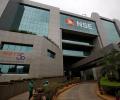
FPIs' ownership in NSE-listed companies reached a five-year high of 22.74 per cent in December 2020 on the back of huge net inflow of Rs 1.42 lakh crore by such investors in the third quarter.
The success of recent IPOs and the stability in the secondary market are propelling many firms and investment bankers to remove their IPO plans.
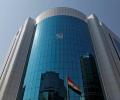
Sebi has restructured its advisory committee on market data that recommends policy measures pertaining to areas like securities market data access and privacy. Rejigging its market data advisory committee, Sebi has said the panel will now have 21 members, as per the latest information with the regulator. Earlier the committee had 20 members. The committee is chaired by M S Sahoo, Professor at National Law University, Delhi and former chairperson, Insolvency and Bankruptcy Board of India (IBBI).
LIC's $2.7-billion initial public offering (IPO) shall be the fifth-biggest globally in CY22. South Korean EV battery maker LG Energy Solution holds the record for the year's largest IPO at $10.8 billion, while Chinese mobile communications provider China Mobile IPO, which raised $8.6 billion, comes second. Dubai Electricity and Water Authority's (DEWA's) $6.1-billion IPO in March is currently the third biggest public offering for the year, followed by China National Offshore Oil Corporation's (CNOOC's) IPO; the firm had raised $5.1 billion by issuing shares in Mainland China after delisting from the American bourses.
At least five companies looking to raise a cumulative Rs 6,595 crore could launch their initial public offerings (IPOs) next month after a busy August that saw eight IPOs. On Thursday, south-based diagnostic chain Vijaya Diagnostics announced its plans for a Rs 1,895-crore IPO. Ami Organics will announce its plans for a Rs 600-crore issue on Friday.
It's raining IPOs, with eight issues hitting the market in a span of six days. However, the pace of new filings points to a deluge during the latter part of the year. So far this year, 58 companies have filed their draft red herring prospectus (DRHP) with the market regulator for initial public offerings (IPOs), exceeding the combined tally of 50 in the last two years. Industry participants said the filing count could cross 100 this year, setting a new benchmark in terms of amount mobilised in a calendar year.

Of the 59 IPOs for which the data is available, 36 IPOs received mega responses of more than 10x (of which, six IPOs more than 100x), while eight IPOs were oversubscribed more than 3x.
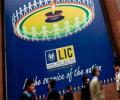
LIC owns 3.69 per cent of the total listed universe based on available disclosures, the lowest since at least June 2009.

Industry players estimate the average payouts to be in the range of 50-75 per cent of the bankers' annual salaries. For the top performers, the bonuses could be 100-125 per cent.

The total amount of money various entities have raised through the private placement route is at its lowest since 2014. They raised a total of Rs 1.96 trillion in the first five months of 2022, revealed the numbers from PRIME Database. It is down 23.4 per cent from the Rs 2.56 trillion raised in the corresponding period in 2021.

Sebi has asked intermediaries to stagger the offerings as much as possible, said people in the know and ensure adequate capacity building.

A total of 180 NSE-listed companies have not appointed a woman director.
Fresh capital raised by companies by way of initial public offerings (IPOs) is set to hit a 14-year high, thanks mainly to Zomato's maiden offering. India Inc has raised about Rs 19,300 crore in fresh capital by maiden offerings, including the Rs 9,000 crore the food delivery company will raise this week, so far in 2021. The best year in terms of fresh fund-raise was 2007, when companies had raised Rs 32,102 crore. With Paytm planning to issue fresh shares worth Rs 12,000 crore, the domestic market looks set to surpass that tally this year.

Indian Industry leaders are elated that the Congress government has returned to power. Here is a wishlist of Cabinet ministers.

Road developers hoping for early relief from the government will have to wait longer.

These include Great Eastern Energy Corporation and Shemaroo Entertainment.

The number of issues were the lowest since FY15, compared to 45 in FY18.

Year 2021 was another great year for fund-raising through equities. A total of Rs 1.8 trillion was raised through initial public offerings (IPOs), qualified institutional placements (QIPs), and rights issues, against the Rs 1.7 trillion raised in the previous year. Funds raised through IPOs quadrupled, while those from rights issues and QIPs reduced.

Experts said the 20 per cent drop in the market poses a challenge for companies that have set the ball rolling on their IPO plans as valuations will now have to realign. This could entail more dilution or lowering of the issue size.

The success of the DLF initial public offer might give more confidence to realty companies.
"The impact of Sebi action will be positive for retail investors as they will get greater allocation in IPOs," Prithvi Haldea of Prime Database told PTI.

Retail investors have gained significant heft in the past year amid a sustained uptick in Indian equities. The share of retail investors in companies listed on the NSE reached an all-time high of 7.32 per cent in the quarter ended December 31, 2021, up from 7.13 per cent in the previous quarter and 6.9 per cent a year ago, the data from PRIME Infobase shows. This was despite the Nifty's 1.5 per cent decline during the quarter.

The dozen firms to have listed following their IPOs have seen an average listing day gain of 49 per cent. IPO applicants have made money on all the deals, barring two, which saw modest declines on listing day.

Independent directors
Going ahead, experts say, the fundraising trend in the primary market will depend on how the secondary market performs against the backdrop of the outcome of general elections and global cues.

Sebi had given an extension last year for PSUs to meet 25% minimum public shareholding rule

Last week, govt sold shares worth Rs 220 crore in the open market without making a formal announcement. The deal came to light only this week.
