
ONGC, Hindustan Petroleum, Bharat Petroleum, Indian Oil and Oil India listed the spending as part of their mandatory CSR commitment, but CAG noted that the Sardar Patel statue did not qualify for CSR funding.


Helped by the Offer for Sale route, a whopping Rs 45,300 core was mobilised through public equity markets in 2013, a growth of 25 per cent over last year.

This year is set to be the third consecutive year when India's share of IPOs has fallen relative to the rest of the world.
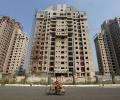
Property sales have been sluggish and the sector has been facing headwinds. So, firms are in wait-and-watch mode.

'It is a worrying trend as we are not seeing too much fresh capital being raised for new projects, plants, expansion or diversification. It's just private equity or venture capital or promoters cashing out.'

US, China and Japan have no quotas for women and have had the lowest increase in female directors.
Many are now hoping the markets remain in good stead as they look to finalise the dates for IPOs, such as UTI MF, Computer Age Management Services, Happiest Mind, and Angel Broking. Most of the issues are expected to come to the market in the second half of September.

Though retail investors accounted for a larger number of outstanding shares of the NSE-listed companies at 15.29 per cent, the combined value of their holding was Rs 9.16 trillion. This was much lower than the value of holding of FPIs and DIIs.

The Union finance ministry has endorsed the views of Gajendra Haldea, infrastructure advisor to the deputy chairman of the Planning Commission, who had objected to recent changes in bidding norms by the National Highways Authority of India.
His outburst has to rank among the most bizarre episodes of two arms of the government fighting in public.

Though stocks backed by private equity investirs are likely to have higher governance standards, investors should do their own due-diligence, experts tell Sanjay Kumar Singh
Haldea's report requires serious rethinking of the NHAI model, not an outburst by Kamal Nath.

The Planning Commission has projected that investment in infrastructure would almost double at $1025 billion in the 12th Plan, compared to $514 billion in the 11th Plan.

Market experts said disruptions caused by the pandemic - to businesses as well as the filing process - and the sharp decline in valuations were the reasons behind fewer new companies wanting to tap the capital markets.

The investor is voting for safe investment avenues and is not impressed by the lucre promised by Dalal Street, says Mahesh Vyas.

At present, seven companies are planning to raise Rs 2,965 crore (Rs 29.65 billion) and have Sebi's approval. Another 12 firms, intending to mop-up Rs 5,362 crore (Rs 53.62 billion), have filed draft documents with the capital market watchdog and are awaiting approval, Prime Database managing director Pranav Haldea said.

Indian companies are now more confident about the execution skills of local banks.

Over 900 listed firms yet to comply with new Sebi requirement due in less than 90 days

Primary market tracking firm Prime Database has said it is the best time for the government to divest its stake in PSUs and it should target at least 60 public offers in five years.
The Central Information Commission's decision to bring stock exchanges within the purview of Right to Information Act will keep the bourses on high alert and ensure that necessary information is made available to public in cases of manipulation.

The biggest spend (Rs 4,406 crore) was for Schedule VII (II), which involves "promoting education, including special education and employment enhancing vocation skills, especially among children, women, elderly and the differently abled and livelihood enhancement projects". The FY19 spend was 17.2 per cent higher than Rs 1,0128.3 crore spent during the previous year.

Operator syndicate could be behind stock hammering, suspects regulator.
Investors should not feel jittery over the stock market fall as it would only bring more sanity into issue pricing, according to an expert on the primary market.
The government is going to handover a lion's share of its road projects that runs into an order of Rs 1,50,000 crore (Rs 1500 billion) investment to private players by 2012. \n
Keeping pace with the strong economic growth, Indian companies are set to raise a record Rs 45,000 crore (Rs 450 billion) through public offer of shares in 2006 as they expand both domestically and globally.

As many as 56 firms collectively mopped up Rs 17,283 crores through IPOs during the April-September period of 2016-17.

Expect corporate houses to raise funds via IPO in second half of this year.
An alternative way is to make the Asba (Applications supported by blocked amount) facility compulsory for retail investors.

The Bombay Stock Exchange (BSE) has slapped fines on 530 listed companies for failing to meet a deadline to appoint a women director and boost gender diversity in their boardrooms.

With markets expected to remain volatile, promoters and lenders exposed to the industrials and materials space can face brunt of the price erosion of the pledged shares.

Pipeline leanest since 2004; bankers said to be cautious due to fear of rejection by Sebi.
.jpg)
Government divestment reached record figures after the financial crisis, at the same time as promoters were required to bring down their stake in companies to 75 per cent or less.

Move aimed at boosting retail investor participation in disinvestment.

Record equity divestment by the Reliance Group in its telecom and retail businesses garnering around $23 billion revved up the deal street in 2020, which otherwise would have gone down as one of the dullest on record, and dealmakers are seeing sunnier days in 2021 given the large scope for consolidation in a slew of sectors ravaged by the pandemic. With Jio Platforms alone garnering over $16 billion (Rs 1,18,318 crore) by selling 25.24 per cent stake and Reliance Retail notching up $6.4 billion (Rs 47,265 crore) by divesting around 9 per cent shareholding, the deal street signed off with $85 billion in the deal kitty across 1,270 transactions. This is higher by about 10 per cent over 2019. What is significant is that over a third of the total deal value came from Reliance transactions, say investment bankers.

Cyrus Mistry, who was replaced as chairman of Tata Sons last Monday, October 24, still serves as the chairman of Tata Steel, Tata Motors, Tata Consultancy Services, Indian Hotels, Tata Global Beverages, Tata Chemicals, Tata Industries and Tata Teleservices.

Companies that have a net worth of at least Rs 500 crore, a turnover of Rs 1,000 crore or a net profit of Rs 5 crore are required to spend 2 per cent of their net profits on corporate social responsibility programmes.
