
Had it not been for the slow but sure emergence of China as a threat to the western order, would India have been accepted as a near-equal partner by individual western nations, jointly and severally, questions N Sathiya Moorthy.

"PM Modi spoke to (Russian president Vladimir) Putin and (Ukraine president Volodymyr) Zelensky. He also spoke to (US president Joe) Biden when needed. The war stopped briefly so that more than 22,000 students stuck in Ukraine could be rescued and they returned home. Parents of these students were demanding that PM Modi rescue them."

Dominic Xavier offers his take on China fielding a soldier involved in the Galwan Valley clash as a torchbearer for the Beijing Winter Olympics.

You don't want to fight and do trade at the same time. Meanwhile, diplomacy is going on and sometimes solutions to difficult situations do not come in haste, Jaishankar asserted.

India and China made progress in five-six friction points along the Line of Actual Control in eastern Ladakh through talks in the last three years and efforts are underway to resolve the remaining issues, External Affairs Minister S Jaishankar said on Monday.

The Indian Army is one of the very few armies in the world that operates tanks at high altitudes up to 16,000 feet, and in large numbers.
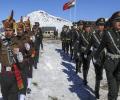
India and China held two days of military talks in an "open and constructive manner" for an early and mutually acceptable resolution of the remaining issues along the Line of Actual Control in eastern Ladakh and agreed to maintain peace on the ground.

Without mentioning the boundary dispute, the spokesperson said that China-India relations have been stable on the whole and "our two sides have maintained dialogue and communication at various levels".

The Tridents squadron which is now also known as the "Defender of the North" has replaced the MiG-21 squadron at the Srinagar air base which has traditionally been responsible for taking care of the threat from Pakistan.
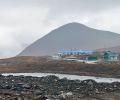
The move bears significance in view of the increased Chinese activities along the border and transgressions by China's People's Liberation Army (PLA).

'The Modi government is trying to suppress the matter only to save its political image'

It is on the exact spot where the Guru is said to have created 108 waterfalls, that the Yangtse clash took place between the Indian Army and the Chinese PLA on the night of December 9, 2022. As it had done in Ladakh in May 2020, the PLA tried to change the unmarked LAC in the Yangtse sector in Arunachal Pradesh. It was the most serious border incident since the Galwan Valley clash in June 2020, notes Claude Arpi.

India and China on Monday held a fresh round of military talks with a focus on disengagement of troops in the remaining friction points in eastern Ladakh and ease overall tensions in the region.

The talks between the two sides near Galwan Valley ended in a stalemate on Tuesday as well as Wednesday, the sources said.
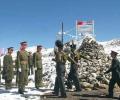
China on Wednesday said the latest round of the border talks with India was held in a "candid and pragmatic atmosphere" and the two sides had a "positive, constructive and in-depth discussion" on the resolution of the remaining issues along the Line of Actual Control in the Western Sector.

China on Friday said it will not attend the planned G20 tourism working group meeting in Jammu and Kashmir next week, asserting that it is "firmly opposed" to holding such meetings in the "disputed territory".
India on Monday pressed for early disengagement of troops in remaining friction points in eastern Ladakh during a fresh round of high-level military talks with China, people familiar with the matter said.
'Which will not happen.' 'Foreign Minister S Jaishankar has expressly refuted Beijing's statement that normalcy was returning to Sino-Indian relations.'
He alleged that India "lost access to 26 out of 65 Patrolling Points" which was not the case before May 2020, and questioned the Modi government's "silence" on the issue.

India is set to press for early disengagement of troops from the remaining friction points in eastern Ladakh at a fresh round of high-level military talks with China on August 14, people familiar with the matter said on Saturday.

'In the short term the relationship will get worse.'

The situation along the Line of Actual Control (LAC)in eastern Ladakh remained 'very fragile' and is 'quite dangerous' in military assessment because of close deployments of troops of both sides in some pockets though substantial progress has been made in the disengagement process in many areas, External Affairs Minister S Jaishankar said on Saturday.

A start-up firm in Noida said soon after the Galwan Valley clash, it was tasked by the Indian security forces to provide them equipment to be able to tackle the Chinese and they have provided them solutions in the form of non-lethal weapons inspired by the traditional Indian weapons like the 'Trishul' of Lord Shiva.

Chief of Defence Staff General Anil Chauhan on Tuesday said the deployment of the Chinese military on India's northern borders is not increasing day by day.

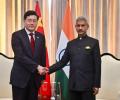
External Affairs Minister S Jaishankar on Thursday asserted that India's relationship with China cannot be normal unless there is peace in the border areas and there is no ambiguity in New Delhi's signalling to that country.
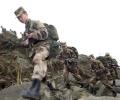
The Indian Army has been slow to react. Indian troops have deployed in the vicinity of PLA incursions, but there are no attempts to outflank Chinese positions.
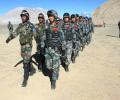
"We hope the Indian side will move towards China and through concrete actions implement the consensus and continue the close communication through military and diplomatic channels to jointly push for the de-escalation on the border region," Zhao said.

India has not yet received any confirmation on Chinese President Xi Jinping's in-person participation at the upcoming G20 summit, people familiar with the matter said on Thursday amid reports that he is likely skip the conclave.
The major general-level meeting discussed ways to implement the disengagement of troops from Galwan Valley as agreed during high-level military talks between the two sides on June 6. The Indian delegation at the talks was led by Leh-based 3 Infantry Division commander Major General Abhijit Bapat. The two sides held Major General-level talks on Tuesday as well.
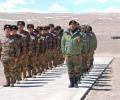
The Working Mechanism for Consultation and Coordination on India-China Border Affairs (WMCC) was established in 2012 as an institutional mechanism for consultation and coordination for the maintenance of peace and tranquillity in the border areas.
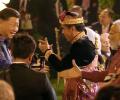
Two days ago, the Chinese foreign ministry following a meeting between NSA Ajit Doval and top Chinese diplomat Wang Yi in Johannesburg claimed that Xi and Modi had reached an 'important consensus' on stabilising bilateral ties at the interaction on the margins of the G20 Summit last November.
The development comes after the army said India lost an officer and two soldiers during the violent face-off, while there were casualties on the Chinese side as well in the Galwan Valley in eastern Ladakh on Monday night, the first such incident in the last 45 years that reflected massive escalation in the five-week border row.
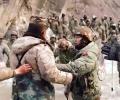
In his memoir Four Stars of Destiny, Naravane recounts Singh's direction as well as a flurry of phone calls between the defence minister, external affairs minister, the national security advisor and the chief of defence staff that night on the sensitive situation.

The defence minister also took an indirect dig at Gandhi for "doubting" the government's intention in the handling of the border row with China and said politics can not be done on the basis of "falsehood".
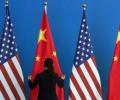
Throughout its standoff with India along the Line of Actual Control (LAC), Chinese officials sought to downplay the severity of the crisis, emphasising Beijing's intent to preserve border stability and prevent the standoff from harming other areas of its bilateral relationship with India, the Pentagon said in a report on Tuesday.

'In Eastern Ladakh the Chinese attempted salami slicing.' 'Our response has been superb. Our military has responded magnificently.'
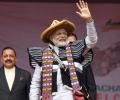
New Delhi's reaction came in response to Beijing announcing Chinese names for 11 more places in Arunachal Pradesh which the neighbouring country claims as southern part Tibet.
The last time the Chinese military had taken Indian soldiers captive was in July 1962 after a clash in Galwan Valley.
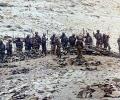
The US provided crucial intelligence to the Indian military last year that helped it successfully tackle the Chinese "incursions".

Senior officers recounted extreme Chinese brutality to the Indian prisoners, with some of them being pushed over cliffs and soldiers' bodies being recovered from the Galwan River.
