
In Globality*, authors Harold L Sirkin, James W Hemerling and Arindam K Bhattacharya from Boston Consulting Group, show how, over the past two decades, a range of corporations from the developing world have begun to disrupt traditional paradigm of development and tilted the balance of competition in their favour with their predilection for 'rapid-fire innovation'.
Nandan Nilekani, erstwhile CEO and a founder of Infosys Technologies Limited, who is currently co-chairman of its board of directors, offered a peek into his forthcoming book Imagining India, which he said attempts to alleviate a gap in understanding India, while delivering the kick-off Global Leader Lecture at Johns Hopkins University's School of Advanced International Studies.

Now comes news that, for the first time ever, a major Hollywood release will hit India's shores before it launches domestically in the US, a true milestone for conscious Indian moviegoers. The record-setting film? It's the next James Bond installment, Quantum of Solace, which premieres here on November 7.
The US athletes who arrived at the Beijing airport wearing face masks were identified on Wednesday as four track cyclists. A USA Cycling spokesman confirmed the identity of the four as Jennie Reed, Sarah Hammer, Bobby Lea and Michael Friedman -- all cyclists who compete indoors.
An interview with Rafiq Dossani, author, academic and entrepreneur.
West Asia is again boiling up. That is what Stratfor, a US-based think tank says after observing some of the recent developments in the trouble-torn region. Terming the situation ominous, its leading expert says the Arab-Israeli region is filled with rumours of a war.
As the world shrinks, international cybercrime is growing in scope and sophistication.
Thailand and Uganda were fighting AIDS successfully through clinical commitment and there is more need for it in India.

Parth J Shah is the man behind the The 100 Laws Project, a listing of the country's ludicrous but extant legislations.
Fortune 500 CEOs' vision of a flat world created by large and super efficient corporations without boundaries has hit a roadblock being posed by growing geopolitical and socio-cultural risks across the world, including India, a new study says.
The reasons why American journalism is against the Tata Nano are obvious. The Nano was 'not invented here (in the United States).'

India Inc was, perhaps, watching out for a repeat of the dot-com bubble burst of the early 2000s.
Global magazine Fortune on Friday said it is exploring possibilities to start an Indian edition.
In an interview to ABC news, Bush said pulling out from Iraq now would be akin to a surrender.
Experts disagree with the idea and the Reserve Bank of India (RBI), which has the sole right to print money, is not comfortable with it as well.
Ford India recently exported its 5000th container, thus despatching so far over 100,000 units of Ford Ikons in completely knocked down condition.
Ford India has entered the sports utility vehicle segment of the domestic car market by rolling out its globally popular SUV Endeavour at its manufacturing facility near Chennai on Wednesday.
Tendulkar told the doctors he hurt the side of his ring finger while catching the ball during a match in November.
Infosys Chairman N R Narayana Murthy and its CEO Nandan Nilekani have been named as Asia's Businessmen of the Year 2003 by international business magazine Fortune.
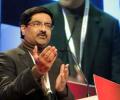
'While the march of globalisation is perhaps inevitable, what is certain is that the world is no longer flat as, the emerging pattern of trade is more regional. 'This new trend of 'slowbalisation' raises some questions that challenge conventional wisdom on how businesses should distribute their capacities,' Birla said.
Ford India Ltd on Tuesday drove into the growing sports utility vehicle market with the launch of its Endeavour model.
With the launch of 'Flair', the new variant of Ford Ikon, auto major Ford India entered the sub-Rs 500,000 mid-sized luxury car market.

French economist Jean Tirole won the 2014 economics Nobel Prize for his analysis of market power and regulation, the RoyalSwedishAcademy of Sciences said on Monday.

'In India, China's capacities to conduct new types of warfare is critically underestimated,' says Claude Arpi.

'Helicopter drop' was first proposed as an alternative to quantitative easing.

The reversal of Trump's policy with regard to Iran, like the withdrawal from the Paris Agreement, may not be a matter of just turning the clock back, but one of patient negotiations, with uncertain consequences in the post-COVID-19 world, observes Ambassador T P Sreenivasan.

Perhaps one aspect of the way modern media particularly print and news television works need some soul-searching: Their tendency to "frame" news stories as a conflict between two personalities, says Ajit Balakrishnan.

Prime Minister Modi made a strategic blunder of Nehruvian proportions -- presuming no war can happen now, and the Chinese won't be a military threat and risk their economic interests, observes Shekhar Gupta.

The Burning Man isn't your usual festival; it's a bustling makeshift metropolis dedicated to art and community wherein almost everything that happens is created entirely by its citizens, who are active participants in the experience.
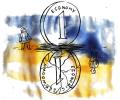
'There are companies that are losing and there are companies that are rising.' 'And the companies that are losing are positioning it as an economic slowdown.'

Buying Yahoo's assets would expand DailyMail.com's reach and improve its digital ad rev

Although the first woman to hold the position of chief economist at IMF, it would be wrong to see her appointment through the lens of gender
