
At a time when Apple delivered its flagship line of new products on schedule despite battling a year of supply-chain turmoil, India could account for at least 12 per cent of the free-on-board (FoB) value of Apple Inc's iPhones manufactured by its vendors globally by 2025-26 (FY26). The number represents a significant shift for the Cupertino-based company's over-dependence on China, where 95 per cent of its phones are still being made. India's growing importance can be seen from the fact that in 2021-22 (FY22) - the first year of the production-linked incentive (PLI) scheme (the scheme was extended by a year due to the pandemic) - the FoB value of iPhones made in the country was $1.75 billion, translating into less than 2 per cent of the global value.

Two of Apple Inc's global vendors -- Wistron and Foxconn (through Han Hoi), which already manufacture Apple phones in India -- and a third entity, Pegatron, which will be setting up a new plant, have applied to the government to be eligible under the PLI scheme for large-scale electronics manufacturers.

After the Gujarat and Himachal elections and the municipal polls in Mumbai and Delhi, Karnataka, Rajasthan, MP and Chhattisgarh will elect new assemblies next year leading up to the Lok Sabha election in April-May 2024, points out Virendra Kapoor.

Hemant Shivsaran lists the number of projects the Modi government has announced since August to woo Gujarat voters.

Xiaomi plans to bring global component suppliers to India and this could potentially bring investment of at least Rs 15000 crore

Within a year of selling its handset and services business to Microsoft, Nokia has again entered the mobile devices segment by unveiling a new tablet N1 in partnership with Taiwanese company Foxconn.

In a communication to the empowered committee on PLI recently, the Indian Cellular & Electronics Association (ICEA) has stated that except one player (Samsung), all the other eight players (which include vendors of Apple Inc) selected under the scheme were facing numerous challenges in fulfilling the qualification criteria.

The move is a show of faith from three of the world's biggest technology companies in fast-growing Snapdeal

Chinese e-commerce giant Alibaba has received anti-trust regulator CCI's approval for buying 4.14 per cent stake in Snapdeal.

With the spectrum auction now delayed till at least next May, the expected 5G orders for telecom equipment have not been sealed, the companies point out. Surajeet Das Gupta reports.

Local businesses are fretting over reform setbacks.

iPhone SE 2020 is one of the popular phones like Apple 11, which is the biggest seller in the domestic market.

An employee of Foxconn Technology Group jumped to death from a building at the company's plant in Shenzhen on Tuesday, adding one more to the latest in a string of such deaths, official Xinhua newsagency reported.

The cost of luring buyers and sellers to its platform means the new funds won't last long.

Apple sought exemption from mandatory local sourcing of components for its products

The government will undertake a detailed evaluation of applications it has received in response to the mega semiconductor scheme and expects to complete the entire process and sign agreements with companies in next 8-10 months, according to Union Minister for Electronics and IT Ashwini Vaishnaw. Vaishnaw said he is happy with the response that came in within a short period of time, when the ministry invited applications under the Rs 76,000 crore semiconductor programme. The government is confident of seeing one of the big global players in semiconductor industry coming in the next round, Vaishnaw told PTI in an interview. He asserted that many other players too are "seriously evaluating" India's semiconductor programme, and that the ministry is in discussions with several companies.

Sony Ericsson, a leading Japanese-Swedish mobile handset maker, is all set to produce its mobile handsets in Sriperumbudur through manufacturing agreements with Flextronics and Foxconn.

From real estate behemoths to infrastructure majors, from mobile device manufacturers to heavy engineering companies, they all made commitments to the tune of billions of dollars. Unfortunately, the reality has fallen far short.

In a major push towards 'Make in India', Apple Inc is manufacturing 70 per cent of the mobile phones, in value terms, that it sells in the domestic market, in India, according to sources aware of the development. This is a sharp rise from the figure of 30 per cent just two years ago and marks a major shift in Apple's strategy following the government's Production Linked Incentive (PLI) scheme that kicked off in FY'21. One of Apple's three vendors here, Foxconn, is currently manufacturing the best-selling model, the Apple 11, along with the Apple 10 and the Apple 12. Another contract manufacturer, Wistron, makes the Apple SE 2020. (The third, Pegatron, has yet to start production). The only models that are imported (they have limited volumes but high value) are the Apple 12 Pro and Pro Max.

To help 2G customers who have to buy a new phone to upgrade to 4G, the company had earlier introduced 4G feature phones, to make it affordable for them to make the switch.

The dispute arose after Nissan alleged that Tamil Nadu hadn't paid certain incentives under a 2008 agreement to set up a car plant at Oragadam, near Chennai.

OnePlus announces plans to make in India

Tech giant Apple on Monday said it is undertaking a detailed investigation following the violent incident at its supplier Wistron's Narasapura facility in Karnataka last week.
The sub-$100 smartphone market is dominated by Google's Android operating system, which has lower licensing costs, and runs cheaper hardware.

A week after violence broke out at its Narasapura facility in Karnataka, contract manufacturer Wistron on Saturday said it has fired its vice-president who was heading India operations even as iPhone maker Apple placed the Taiwanese firm on probation. Wistron, which assembles the latest version of the iPhone SE at the violence-hit plant, admitted that there were faults in its wage payment processes. A section of workers at Wistron Corporation's facility in Narasapura Industrial Area in Kolar district near Bengaluru went on rampage last week over non-payment of their wages.

While Nifty 50 reflects changes in 40 years, it also shows what is missing: Low-cost manufacturers at one end, and deep-value players at the other. Also missing are technology players, observes T N Ninan.

Chinese smartphone maker Xiaomi Inc has tied up with Taiwan's Foxconn to start assembling phones in India.

Apart from bringing new suppliers on board, Xiaomi is also hoping to take advantage of the newly launched PLI scheme that offers incentives on incremental production of smartphones with 2020 as the base year.

It is ramping up capacity in the second facility in Andhra Pradesh, run by Foxconn

Apple Inc has asked suppliers to manufacture between 70 million and 80 million of its two forthcoming large-screen iPhones by the end of the year, its largest initial production run of iPhones, the Wall Street Journal reported, citing people familiar with the matter.

Nokia has managed to enter the top-five list in the feature phone market within six months of its comeback
The Z3 is the first phone to be launched by BlackBerry since new Chief Executive John Chen took the helm late last year.


Lenovo Group Ltd said on Tuesday it was establishing a smartphone assembly unit in India.

Consumers can effectively make payments using UPI and other debit cards, credit cards and internet banking across 120 banks and over 120 billers, Xiaomi said.

Chinese companies keen to invest in Mumbai projects
Essentially, this is BlackBerry's cheapest device that runs its latest operating system, BlackBerry 10.

'One out of three phones sold in India is a Xiaomi phone.'
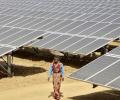
A billion dollars in renewable energy is huge.

Energy's exit is a cautionary tale for several foreign investors in India as close to 16 Gw of solar and wind power projects languish without any power purchase agreement, 24 Gw without transmission connectivity and around 2 Gw unilaterally cancelled by project developers.
