
India's foreign exchange reserves have surged by $12.42 billion, reaching a new all-time high of $729.33 billion for the week ended August 21, driven by increases in foreign currency assets and gold reserves.

RBI Deputy Governor Rohit Jain discussed the future of India's foreign exchange markets, highlighting the increasing role of local currencies in cross-border trade, the impact of technology, and existing challenges. He emphasised the need for market evolution to facilitate India's global engagement, absorb shocks, and serve all users efficiently. Jain also addressed concerns about unauthorised forex trading platforms and the importance of customer awareness.

India's foreign exchange reserves increased by $9.9 billion to $716.9 billion for the week ended August 14, as reported by the Reserve Bank of India (RBI). This surge follows a previous jump of $14.14 billion in the week prior, indicating a robust recovery after a period of decline earlier this year.

India's foreign exchange reserves saw one of their largest weekly expansions, surging by USD 14.136 billion to reach USD 707.002 billion during the week ended August 7, according to the Reserve Bank of India.
India's foreign exchange reserves saw a significant increase of $10.512 billion, reaching $692.866 billion for the week ending July 31, driven by a rise in foreign currency assets and gold reserves.

India's foreign exchange reserves increased by USD 1.08 billion to USD 676.237 billion for the week ended July 17, primarily due to a significant rise in foreign currency assets, despite a drop in gold reserves.

India's foreign exchange reserves increased by USD 6.118 billion, reaching USD 682.354 billion for the week ending July 24, according to the Reserve Bank of India.

The Reserve Bank of India's concessional swap facility, designed to boost foreign currency inflows, has successfully attracted USD 40.82 billion by July 31, 2026, with a significant portion coming from Foreign Currency Non-Resident (Bank) deposits.
India's foreign exchange reserves increased by USD 964 million to USD 675.157 billion in the week ending July 10, according to the Reserve Bank of India.

Despite large inflows of foreign funds mobilised through the Reserve Bank of India's (RBI's) concessional swap schemes, the rupee has seen little impact because the dollars have largely been absorbed into the central bank's reserves instead of being released into the spot market, according to market participants.
India's foreign exchange reserves increased by USD 7.26 billion to USD 674.193 billion for the week ending July 3, as reported by the Reserve Bank of India. This surge follows a previous week's drop and comes after Prime Minister Narendra Modi's appeals to conserve forex.

India's foreign exchange reserves saw a significant drop of USD 5.654 billion, settling at USD 666.933 billion for the week ending June 26, following interventions by the RBI and public appeals by Prime Minister Narendra Modi to conserve forex.
India's foreign exchange reserves saw a substantial decline of USD 9.985 billion, reaching USD 671.625 billion for the week ended June 12, primarily driven by a sharp decrease in gold reserves, according to the Reserve Bank of India (RBI).
India's foreign exchange reserves saw an increase of USD 963 million, reaching USD 672.587 billion for the week ending June 19, as reported by the RBI. This rise follows a previous week's drop. While foreign currency assets decreased, the value of gold reserves significantly increased, contributing to the overall growth.
India's foreign exchange reserves increased by USD 938 million to USD 682.321 billion during the week ended May 28, according to the Reserve Bank of India, following a previous week's drop.
India's foreign exchange reserves decreased by $711 million to $681.61 billion for the week ending June 5, primarily driven by a significant reduction in foreign currency assets, according to the Reserve Bank of India (RBI).

The Reserve Bank of India (RBI) net bought $561 million in June, marking its first net purchase since February, following three consecutive months of net sales. This move coincided with a series of government and RBI measures to attract foreign capital, leading to a 0.36 per cent appreciation of the rupee against the dollar.

Delhi Police busted an illegal forex trading call centre in Indore, arresting six individuals involved in defrauding victims nationwide through fake online investment schemes. The syndicate allegedly used a fake trading platform to lure people into investing in forex and online trading products, showing fabricated profits and gains.

A Thane resident was defrauded of Rs 93.30 lakh after being enticed into a forex trading scheme by two individuals, who have since been booked by the police.
The Reserve Bank of India (RBI) has prematurely closed its swap facility for foreign currency non-resident (bank) deposits, FCNR(B), one month ahead of schedule, after banks mobilised $52.3 billion under the scheme by August 13, indicating sufficient foreign currency reserves.
Reserve Bank Governor Sanjay Malhotra announced that India's foreign exchange reserves stand at a healthy $682.3 billion as of May 29, 2026, providing approximately 11 months of import cover and strong protection against external shocks.
India's foreign exchange reserves saw a significant drop of USD 7.511 billion, settling at USD 681.384 billion for the week ending May 22, as the Reserve Bank of India intervened in the forex market due to rupee pressure and the lingering effects of the Middle East conflict.

Private banks in India are aggressively mobilising Foreign Currency Non-Resident (Bank), or FCNR(B), deposits by raising interest rates and using website countdowns, as the Reserve Bank of India's swap window is set to close on August 31, earlier than initially planned.
India's foreign exchange reserves saw a significant drop of USD 8.094 billion, settling at USD 688.894 billion for the week ending May 15, as the Reserve Bank of India intervened in the forex market and global events like the Middle East conflict impacted the rupee.

Reserve Bank of India Deputy Governor Rohit Jain has stated that India cannot rely solely on bank balance sheets to fund the extensive investment required for its 'Viksit Bharat' (developed India) goal by 2047, emphasising the critical need for deeper corporate bond, foreign exchange, and derivatives markets.

Union Finance Minister Nirmala Sitharaman has urged an increased focus on '3Fs'-fuel, fertiliser, and forex-to maintain India's economic resilience amidst the West Asia crisis, while also criticising those who spread pessimism.
India's foreign exchange reserves saw a significant increase of USD 6.295 billion, reaching USD 696.988 billion for the week ending May 8, as reported by the Reserve Bank of India.
India's foreign exchange reserves increased by USD 2.362 billion to reach USD 703.308 billion for the week ending April 17, as reported by the Reserve Bank of India (RBI).
A businessman in Navi Mumbai is accused of defrauding four investors of Rs 28.4 lakh through a forex trading scheme promising high returns.
India's foreign exchange reserves saw a significant drop of USD 7.794 billion, settling at USD 690.693 billion for the week ending May 1, as reported by the RBI, reflecting the impact of global events and central bank interventions.

The contraction in total reserves was driven by a fall in gold reserves, which dropped $13.49 billion to $117.19 billion during the reported week.

'You have to get private investment to somewhere between 35% to 36% of GDP. It is hovering about 30%-31%.'
India's foreign exchange reserves have surged by $3.825 billion to reach $700.946 billion as of April 10, marking a significant milestone for the country's financial stability.
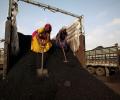
State-owned Coal India Ltd (CIL) and ArcelorMittal Nippon Steel India (AMNS) have signed an MoU to explore setting up a coal gasification plant near AMNS's Paradip pellet plant in Odisha. This initiative aims to produce synthesis gas for cleaner steel production, reduce reliance on imported fuels, and align with India's goal of gasifying 100 million tonnes of coal by 2030, supported by a Rs 37,500-crore government incentive scheme.

India's balance of payments (BoP) recorded an $8.1 billion deficit in the first quarter of 2026-27 (Q1FY27), a significant increase from a $4.5 billion surplus in the corresponding period of the previous year, primarily driven by a sharp reversal in portfolio flows.
India's foreign exchange reserves saw a substantial increase of USD 9.063 billion, reaching USD 697.121 billion for the week ended April 3, 2026, according to the Reserve Bank of India (RBI). This surge follows a previous week's decline and brings the reserves closer to their all-time high.

Repeated increases in new luxury-car prices, driven partly by the rupee's depreciation against the euro, are expanding the market for certified pre-owned vehicles.

The incident involved compromise of an employee's email account, resulting in unauthorised access to certain data.

Automobile manufacturers are increasingly vocal about the mounting paperwork and delays associated with India's Production-Linked Incentive (PLI) scheme for the automotive sector, arguing that compliance requirements are becoming as challenging as meeting technical eligibility conditions. They are pushing for a simpler, faster, and more predictable certification and compliance framework.
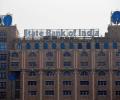
State Bank of India (SBI) reported a 13.73 per cent increase in its June quarter consolidated net profit, reaching Rs 24,113 crore, primarily due to improved core income and a decline in provisions for non-performing assets.
