
Petrol and diesel prices across the country will increase by 9-13 paise a litre with effect from Tuesday midnight, after the government decided to increase the commission to petrol pump dealers.

Indian rupee slipping below the record 88 level against the US dollar will enhance price competitiveness of Indian products in global markets and help exporters diversify beyond the US market, say exporters. However, import-dependent sectors such as gems and jewellery, petroleum and electronics may see lower benefits due to a rise in input costs, they stated.
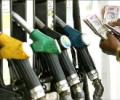
Move is aimed at providing better service to the customers.
Petrol pumps across the country are closed on Monday as the owners are on a day-long strike demanding an increase in commission on sale of petrol and diesel.
Petrol dealers called off the strike planned for Friday to protest against government not passing off the benefits of drop in prices of petroleum.
Petrol pumps on Monday did business as usual as the day-long strike call given by Federation of All India Petroleum Traders evoked no response from the fuel station owners.\n\n\n\n
Petrol pumps across the country will shut shop on Monday to demand increase in commission on sale of petrol and diesel.
Almost all petrol pumps across the country on Monday went on a day-long strike to press for hike in commission on sale of petrol and diesel even as handful of company-owned outlets tried to meet fuel needs of the people.
Petroleum retail outlet owners throughout the country have threatened to go on a 24-hour strike from midnight of 19th of this month if their commission is not increased.
Dealer-operated petrol pumps across the country would be open for business as usual on Wednesday, even as officers of state-owned oil companies plan to strike work.
About 32,000 petrol pump dealers across the country will go on a day-long strike on April 13 to press for their demands and have threatened to launch an indefinite shutdown from April 28 if their demands are not met by then.
Dealer-operated petrol stations across the country will remain closed on April 13 as part of a token strike to voice their demand for higher commission.

As many as 67 petrol pumps across Delhi, Noida, Gurgaon and Rohtak will offer 50 paise per litre discount on petrol to consumers who exercise their voting rights on April 10.
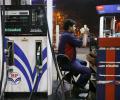
Oil Minister Dharmendra Pradhan said the new timing of the price change was agreeable to the dealers and so daily price revision will be implemented from June 16

As oil marketing companies (OMCs) stare at huge under-recoveries, India is facing fuel shortage across the country with states like Rajasthan, Madhya Pradesh, Karnataka Uttarakhand, Gujarat and Haryana being the worst hit. The under-recoveries suffered by OMCs are around Rs 20-25 a litre for diesel and Rs 14-18 a litre for petrol, said sources. Government and state-run companies denied reports of any crisis or supply-side issues on the availability of fuel.

'There exists a 'brotherhood' of sorts for a very long time and corrupt dealers and corrupt OMC officials are in it together,' Ashwani Attrish, founder, Empowering Petroleum Dealers Foundation, tells Sudhir Bisht, a veteran of the petroleum industry.

The faster-than-expected rise in interest rates by the US Federal Reserve (US Fed) shook global financial markets in early 2022. And now the ongoing war between Russia and Ukraine has lifted commodity prices, with Brent crude oil hitting a 14-year high of $139 a barrel in intraday trade. All these developments have sent the equity markets across the world into a tailspin.

The ministry had recently promised these dealers to increase their commission by Rs 397 per kilolitre (kl) on petrol and Rs 170 per kl on diesel. Dealers now get a commission of Rs 1,230 per kl on petrol and Rs 730 per kl on diesel.
The strike by the oil company executives under the umbrella of the Oil Sector Officers Association has brought the country to a grinding halt with over 90 per cent of petrol pumps across the country running dry.
The dealers claim that the oil marketing companies -- Indian Oil Corporation, Bharat Petroleum Corporation and Hindustan Petroleum Corporation -- are rationing normal petrol and diesel to their retail outlets. As a result, premium fuels make up almost 50 per cent of the sales of the 410 outlets in Delhi. Oil companies add certain additives to normal petrol and diesel that offer better performance of vehicle engines.

The rupee tumbled 19 paise to close at a fresh lifetime low of 77.93 against the US dollar on Friday as rising crude oil prices and unabated foreign capital outflows soured sentiment. A sell-off in equity markets and stronger greenback overseas also weighed on the domestic unit, forex traders said. At the interbank foreign exchange market, the local currency opened at 77.81 and witnessed an intra-day high of 77.79 and a low of 77.93 against the US dollar.
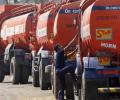
IOC said the daily price revision is an initiative for ensuring the best possible prices to the customers as well as improved transparency on the pricing mechanism.

The Shiv Sena has spurned Congress' request to participate in the bandh.

In this year's budget, Finance Minister Nirmala Sitharaman hiked tax on petrol and diesel, raised import duty on gold, levied additional surcharge on super rich and brought a tax on high value cash withdrawals as she sought to spur growth with reduction in corporate tax and sops to housing sector, startups and electric vehicles.

Shadow of elections may overshadow political consensus at GST Council meetings.

"To begin with, people could face some difficulties because any changeover has its own problems. But it will settle down and the country will benefit from the new indirect tax regime," Jaitley said at an event organised by ABP News.

A good monsoon could rein in food inflation. Largely good corporate results mean better days are ahead. Nifty may reach record levels, points out Devangshu Datta.

Sensex in green in afternoon trade.

'When I met the prime minister on November 15 there was no RBI report with the prime minister as to why this was done.' 'When I asked the PMO officer about this, he said the RBI did not bring this to the PM and did it independently.' 'When I asked how could the RBI ban DCCBs from accepting deposits from farmers in old notes when the government gazette released on November 9 allowed them to do so, this officer told me that not even senior PMO officials had any idea about this RBI ban.'

Modi is optimistic that the reforms will be passed soon.
 © 2026 Rediff.com - Advertise with us - Disclaimer - Privacy Policy - Sitemap - Feedback - About us - Terms of use - Grievances