
The finance ministry has initiated an internal survey of the faceless regime to examine its effectiveness.
The faceless authority has suggested a host of changes in the assessment process following conflicts and practical difficulties raised by taxpayers since the new regime was introduced. On August 3, the National Faceless Assessment Centre issued a set of standard operating procedures (SOPs) to address several anomalies in the regime. The faceless centre, constituted by the Central Board of Direct Taxes, is the nodal authority and works as an interface for the faceless regime.

Some of the proposals include redrafting transfer and placement policy for IRS officers, strengthening the cadre restructuring, rebranding of IRS, robust deputation policy and creation of encadred post in other ministries and government department.

Though the system is called faceless, it would have a room for inviting tax payers through video conferencing.
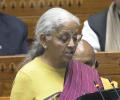
This Budget positions India's taxation ideology as not merely a revenue source but as a strategic catalyst for growth, inclusion and long-term confidence.

'The new Bill introduces no policy or rate changes, leaving financial planning strategies largely unaffected.'
'The considerations for choosing between the old and new tax regimes remain essentially unchanged.'

Three industry bodies suggested changes in India's tax regime in their pre-Budget discussions with Revenue Secretary Sanjay Malhotra in New Delhi on Tuesday. The bodies - Confederation of Indian Industry (CII), PHD Chamber of Commerce and Industry (PHDCCI), and Federation of Indian Chambers of Commerce & Industry (FICCI) - held separate meetings with Malhotra during the day and put across their suggestions for the upcoming Budget.

With the Union Budget three months away, major industry chambers have submitted to the government proposals on common taxes, seeking simpler compliance and a quicker resolution of tax disputes.

Apart from its enforceability through courts due to it being part of the I-T Act, two other factors will help ensure the taxpayers' charter is implemented, at least in letter (if not in spirit) this time around, points out Harsh Roongta.
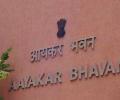
The new scheme came into effect on Thursday. However, even after a scrutiny assessment, appeals will continue to be done through personal representation.
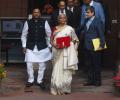
Finance Minister Nirmala Sitharaman on Saturday unveiled 'transformative' tax reforms that ranged from a simpler income tax law to higher TCS threshold for remittances and income tax benefits for middle class.
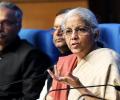
The eighth Budget of Finance Minister Nirmala Sitharaman continued to focus on 'GYAN' (Garib, Youth, Annadata, Nari) to maintain a consistent and coherent strategy initiated over the years in pursuing the government's vision for Viksit Bharat. The approach, characterised by incremental yet impactful steps, aims to create a compounding effect over time.

Tax evaders, BEWARE! The Income Tax department is using AI data analytics to bust fake deductions, flag HRA fraud, and trace digital footprints.

They were participating in a debate on the bill for giving effect to various compliance relief measures for taxpayers, including extending time limits for filing returns, in the wake of the coronavirus crisis and tax benefits for donations to PM CARES Fund.

In a bid to curb harassment of taxpayers, Sitharaman said, a faceless e-assessment scheme was launched in October to eliminate interface between an assessing officer and a taxpayer.

Finance Minister Nirmala Sitharaman on Monday reduced the time limit for reopening of income tax assessment cases to three years from six years, while for serious tax fraud cases where concealment of income is Rs 50 lakh or more it would be 10 years.

The department apparently suspects the use of shell firms or front entities in some aspects of such remittance. Money might, it suspects, have moved in some cases from tax-free jurisdictions or tax havens to accounts in the UAE and some South Asian countries.

India's tax pie seems to have undergone a subtle change with a sharp drop in direct tax collections resulting from a disproportionate impact of the COVID-19 carnage on incomes. The share of indirect taxes, which mainly comprise of levy on goods and services as well as import duty, has risen while that of direct taxes - made up of corporate and personal income tax - has gone down in 2020. In an interview with PTI, finance secretary Ajay Bhushan Pandey said in a pandemic like this where the economy has been impacted, any large scale changes impact direct taxes more severely, whereas indirect tax collection is mostly proportional to business turnover and compliance.

"The underlining theme with which we have been working till now is that we trust the taxpayers and from purely an enforcement agency, we are shifting our focus to being a service-oriented department," says CBDT chairman Pramod Chandra Mody.
The Vivaad se Vishwas scheme is a replica of the Sabka Vishwas (Legacy Dispute Regulation) Scheme, 2019 (SVLDRS) for indirect tax litigation. The hope is that this would unlock revenue blocked in long-drawn litigation at various forums. Sources in the department say the total value at stake in these disputes would be Rs 5-6 trillion.

The Budget proposed abolishing the under-performing, authority of advance ruling, to replace it with a two-member board of advance ruling.

Finance Minister Nirmala Sitharaman said: "This will cover 99.3 per cent of the companies. Now only 0.7 per cent of companies will remain outside this rate."

The income tax department has also launched a faceless e-assessment scheme to eliminate interface between an assessing officer and a taxpayer.

'Tax officials view most taxpayers as evaders.' 'The I-T department has a perverse incentive to raise unreasonable demands since the one-fifth tax collected counts towards officials' collection targets,' observes Harsh Roongta.

The two central premier investigative agencies - Central Bureau of Investigation and Enforcement Directorate - have asked their officials to focus more on digital evidence, e-forums and social media to crack down on offenders. These are a crucial part of prosecution amid the second wave of the pandemic. The Income Tax Department is going full throttle on data analytics to issue notices in time-bound cases. Further, sleuths have been given electronic devices including laptops with secure connections, which keep data encrypted and inaccessible.

A record GST tax collection, an overhaul of the income tax return filing portal and the landmark move to scrap retrospective taxation have set the stage for the next level of reforms in tax administration that include bringing a framework for cryptocurrencies and rationalising the GST rate structure. With tax reforms such as faceless assessment taking roots, 2021 will go down as the year that pivoted the tax administration in a country aspiring to become the world's favourite investment destination. The task ahead is going to be a tough one as the tax department would grapple with taxing cryptocurrencies, rationalising Goods and Services Tax (GST) rates to shore up revenues and post June 2022, the scenario of how the GST revenue plays out for states without the Centre's support of compensation.

Having a single point KYC that is automatically used across all financial and non-financial entities is a single piece of reform that should be an easy win to achieve, points out Harsh Roongta.

Some of the policy measures announced are expected to go a long way in removing current challenges on financing faced by businesses and also increasing economic activity, especially in areas of construction and manufacturing.

Finance Minister Nirmala Sitharaman on Monday assured the industry that momentum of economic reforms will continue to make India a hotspot of global investment. India has turned the crisis created by COVID-19 pandemic into an opportunity to push the economic reforms, which remained pending for decades, she said while addressing the National MNC's Conference 2020 organised by industry chamber CII.

'Wherever in the world there is political instability, those countries are beset with severe crises today. But India is in a much better position than the rest of the world due to the decisions taken by my government in the national interest,' President Droupadi Murmu said in her address to both Houses of Parliament.

The government wants new domestic companies to set up their manufacturing units fast and hence the concessional tax rate of 15 per cent has been extended by a year till March 2024, revenue secretary Tarun Bajaj said on Friday. Stating that direct and indirect tax collections are going up and have good buoyancy, Bajaj said it means that the corporate sector is also doing well, and India's tax to GDP ratio could be "highest ever" in the current year. The Budget 2022-23 presented on February 1 has proposed that the concessional 15 per cent corporate tax rate would be available for one more year till March 2024 for newly incorporated manufacturing units.

'I would like to convey the message to your readers that the prime minister himself is directly seized of the situation on the ground. He periodically reviews the situation on the ground and how it is moving forward, taking inputs from economists, business leaders, chambers of commerce.'

'Many enter the civil services with the desire to do good work but get beaten by the system, step back or become part of it.' 'Ten fantastic officers out of 100 can completely change the game.'

Of the seven surveys presented under Modi govt, predictions of three were quite close to the actual GDP growth rate, one saw the base year change in between, but the last three were way off the mark.

Even if the same party returns to power, what is important to debate is that having introduced an entitlement, how challenging it is to reverse such decisions, says Mukesh Butani.

Here's the full text of President Ram Nath Kovind's customary address to the joining sitting of Parliament on the first day of the budget session.
 © 2026 Rediff.com - Advertise with us - Disclaimer - Privacy Policy - Sitemap - Feedback - About us - Terms of use - Grievances