
After a sharp correction over the last few months, analysts seem to be turning cautiously optimistic on the information technology (IT) sector and suggest there could be trading opportunities in select counters despite revenue and growth concerns that still plague the sector. "IT stocks valuations have corrected 17 per cent-49 per cent and stock prices have corrected 9 - 42 per cent since mid-December 2021. Nifty IT index valuation has corrected by 27 per cent and price by 21 per cent. "About two quarters ago, we made a case that valuation drivers have peaked.

The Union government's revenue from securities transaction tax (STT) is on track to exceed its Budget projection for the current fiscal year, with the mop-up already surpassing 50 per cent of the annual estimate. Provisional figures reveal that the Centre has collected approximately Rs 14,000 crore in the first half of this fiscal year up to September, according to a government official. This amount exceeds half of the full-year target of Rs 27,625 crore set for FY24.

'Favourable product mix, sales recovery, and cost saving initiatives are expected to support margins going ahead while focus on debt reduction (target of debt free by FY24) will aid balance sheet strength'

Citing the massive surge in Omicron infections and the resultant impact on overall economic activities in the March quarter, Swiss brokerage UBS Securities has revised downwards its India's growth forecast for the current financial year to 9.1 per cent from 9.5 per cent earlier. However, UBS Securities does not see the third wave impact extending to the next financial year as it has revised upwards its real GDP forecast to 8.2 per cent, up from 7.7 per cent earlier, expecting the real GDP growth to remain well above the historical average. The World Bank pegs it at 8.3 per cent, unchanged from its June assessment, saying the recovery is not broad-based yet.

Small-cap stocks raked in big gains in fiscal 2021-22 by giving up to 36.64 per cent returns, outshining the bigger benchmark gauge and experts believe that they may continue to outperform in FY23. Markets faced many headwinds in the latter part of the last fiscal with the emergence of geopolitical tension, inflation concerns and FII selling. Analysts said that the first half of the last fiscal was very good, while the market entered into consolidation in the second half, combined with high volatility.

Riding on an improved show across parameters, TVS Motor (TVS) outperformed larger two-wheeler peers Hero MotoCorp (Hero) and Bajaj Auto (Bajaj) during the September (Q2 of FY23) quarter. The Chennai-based firm, which has the most-diversified portfolio among two-wheeler majors, posted a 28 per cent jump in revenues. This compares to 18 per cent growth for Bajaj Auto and single-digit uptick for Hero MotoCorp.
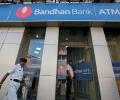
It is 10 years since Bandhan Financial Services became the first microfinance institution (MFI) to receive the universal bank licence. A year later, in 2015, it started operations. Bandhan's entry into banking was seen as a vote of confidence by the Reserve Bank of India (RBI) for the country's microfinance sector. Subsequently, the RBI awarded small finance bank licences to nine MFIs.

Many CEOs said they plan to give special leave to women employees so as to encourage their participation in the workforce.

The International Monetary Fund (IMF) has said India and China will account for half of the global economic growth in 2023, as the multilateral agency retained its growth forecast for Asia's third-largest economy for 2023-24 (FY24). "India remains a bright spot. Together with China, it will account for half of global growth this year, versus just a tenth for the US and euro area combined," the IMF said in its latest update to the biannual World Economic Outlook. Growth in India is set to decline from 6.8 per cent in 2022 (FY23) to 6.1 per cent in 2023 (FY24) before picking up to 6.8 per cent in 2024 (FY25), the global lender said while citing "resilient domestic demand despite external headwinds".

Ahead of the 2023-24 Union Budget, the thinking at the top level of the central government is clear: Gross domestic product (GDP) growth of 6-6.5 per cent is a comfortable enough target for FY24 and the focus should be on fiscal consolidation to ensure that the sovereign cost of borrowing does not become prohibitively expensive in a high-interest rate environment, according to people in the know. Those aware of deliberations between the Prime Minister's Office (PMO) and the Ministry of Finance said while the Budget would look to strike a balance between infrastructure investment and welfare schemes, it is unlikely to be populist, though it will be the last full-year Budget before the 2024 Lok Sabha election. Incidentally, 6-6.5 per cent GDP growth is what the upcoming 2022-23 Economic Survey is expected to project for FY24.

'We are expected to grow at above 28 per cent this year, higher than the industry.'

The recovering valuations, will lead to enhanced optimism among investors about funding startups.

General insurance companies are likely to see a surge in demand for health insurance in the coming months due to falling air quality in the country. The health insurance segment has registered a strong growth after the pandemic due to higher awareness. In the first half of financial year 2023-24, the segment grew by 24.4 per cent to Rs 54,713.52 crore from Rs 43,981.54 crore in H1FY23, driving growth of the non-life insurance industry.

Notwithstanding the inflation pinch, analysts believe the Indian retail sector is on the 'cusp of accelerated earnings growth' as consumer sentiment and discretionary purchases bounce back from the Covid-19 pandemic. "The shift in consumer preference from the unorganised sector to the organised, coupled with uptick in domestic demand as people resume work from office, will cheer the Indian retail sector," says Nishit Master, portfolio manager, Axis Securities. Shopping malls are witnessing increased footfall in lower tier towns and standalone stores as consumption picks up and mobility improves.

Trouble started brewing after Cognizant announced that Ravi Kumar, former Infosys president, would take over as the Nasdaq-listed company's CEO.

The Indian aviation sector is on the cusp of a change as airlines look to induct a record number of aircraft. This, analysts said, will put the sector on a growth runway, though keeping it viable for only long-term investors. According to Vinit Bolinjkar, head of research at Ventura Securities, expectations of strong air traffic, coupled with low penetration, is the prime reason for a solid long-term outlook.

'Hope they don't tinker around with capital gains tax in any way.'

Consolidated earnings of Bharat Forge in Q3FY23 missed estimates, largely due to higher-than-expected interest burden, although operational numbers (including standalone numbers) were close to consensus. Still, the management guidance was positive and appeared to be based on logic.

The past 18 months have seen a resurgence in the real estate industry, with developers regaining the ground lost to the Covid-19 pandemic. But it is once again adding inventory at a pace faster than sales. The industry's inventory rose by 28 per cent year-on-year (Y-o-Y) in H1FY24, com-pared to a 25.5 per cent year-on-year increase in net sales during the same period.

Despite multiple headwinds at the start of 2023, the Indian markets delivered a strong performance, posting 19-20 per cent growth for the year. Even as new records were set, investor sentiment remains strong going into 2024, given the lower inflation, expectations of steady to lower interest rates, higher economic growth, and strong inflows. However, the overriding concern for most brokerages is valuations.

The Indian equity market has been dancing to the tune of foreign portfolio investors (FPIs) for more than two decades now. Typically, when FPIs are net-buyers on Dalal Street (D-Street) and raise their ownership of Indian equities, the broader market rallies. Conversely, when FPIs turn net-sellers, the stock prices decline. FPIs have been net-sellers on D-Street for five quarters on the trot and the result has been predictable.

French energy giant TotalEnergies SE's $300 million investment in clean energy projects of Adani Green Energy Ltd has taken the total investments poured in by global investors in India's largest renewable power producer to $1.63 billion or about Rs 14,000 crore, sources close to the company said. Last week, Total announced it will hold a 50 per cent stake in the new joint venture firm where Adani Green Energy Ltd (AGEL) will hold the rest. The joint venture will hold a portfolio of 1,050 MW, including 300 MW of already operational capacity, 500 MW under construction and 250 MW under-development assets with a blend of solar and wind power.

At the same time, Rs 53.32 crore is for the President's Secretariat and Rs 36.22 crore for the expenditure on the President's household establishment, including staff salaries, which includes discretionary grants of the President.

HDFC Bank Q1FY24 results analysis: Shares of HDFC Bank, the world's seventh largest financial entity, have advanced 2 per cent in two days, as against 1 per cent rise in the benchmark S&P BSE Sensex, after the lender reported its April-June quarter (Q1) results for financial year 2023-24 (FY24) on July 17. The S&P BSE Bankex index, meanwhile, has gained 1.3 per cent. While the near-term stock performance may remain sideways due to merger-related hiccups, analysts remain bullish on the stock's long-term prospects.

Market participants attribute the stability to the Reserve Bank of India's timely intervention in the foreign exchange market, both in terms of selling and buying dollars.

Fintech companies believe that the impact of Reserve Bank of India's order last week on unsecured loans will be visible in six to 12 months and prompt them to diversify and strengthen their secured portfolio. Fintechs which source funds through banks or non-banking finance companies (NBFCs) are looking at quickly building their secured portfolio options to at least 40 per cent of their total portfolio. "Over the medium to long term, as part of our product strategy, we are evaluating secured products which can be enabled over a digital platform" said Yogi Sadana, the founder of Zype, a lending-focussed fintech.

Qatar Investment Authority (QIA) will acquire around 1 per cent stake in Reliance Retail Ventures Ltd (RRVL), the retail arm of billionaire Mukesh Ambani-led Reliance Industries, by investing Rs 8,278 crore ($1 billion). A QIA's wholly-owned subsidiary will make the investment in India's largest retailer at a valuation of Rs 8.278 lakh crore ($100 billion). Updating about the development, Reliance Industries in a regulatory filing said: "QIA's investment will translate into a minority equity stake of 0.99 per cent in RRVL on a fully-diluted basis." RRVL is the holding company for all retail businesses of Reliance Industries Ltd (RIL).

Prospective buyers must make a well-considered decision regarding whether this is the right time to buy a house, particularly with home loan rates at near-peak levels, and the risk of job losses looming in many sectors.

Credit card spending has hit a record high of Rs 1.4 lakh crore in May, the latest data from Reserver Bank of India showed. The total spending or outstanding dues on credit cards, which remained rang-bound throughout the year in the previous fiscal, have been rising by 5 per cent month on month this year. Similarly, the number of cards in use has also jumped by more than 5 million since January and crossed 87.4 million in the reporting month, making this also an all-time high in May, according to the RBI data.

By any economic theory or doctrine, this is no Budget that supports economic recovery, whether through supporting aggregate demand, or through expansionary stimulus, declares Rathin Roy.

However, the second quarter of FY24 is expected to be muted, and, with that, the hope of double-digit growth is now being pushed to FY25. However, analysts are expecting the momentum in the closure of record total contract values (TCVs) will continue, as has been the case over the last two quarters.

With rapid adoption of emerging technologies, the Information Technology and Business Process Management (IT-BPM) industry is expected to generate about 3 lakh jobs this fiscal year, according to a report. The IT-BPM workforce is on the trajectory to grow 7 per cent in FY23, with the overall headcount increasing from 5.1 million to 5.45 million (close to 3 lakh jobs being created), the report by TeamLease Digital, the specialised staffing division of TeamLease Services said. The 'Digital Employment Outlook Report for H1-2023' highlighted that the demand for digital skills will grow 8.4 per cent by the end of this fiscal year.

A prudent guideline for self-employed individuals is to target at least 10 to 15 times their actual annual income when determining life insurance coverage.

'Now that we are a pure-play India business, many investors are open to investing.'

The medium-term scenario for oil marketing companies (OMCs) is high risk due to the surging crude and gas prices. Apart from OPEC-plus cutting production, the Hamas-Israel conflict has caused fears of supply disruption. The July-September quarter of 2023-24 (Q2FY24) saw positive surprises for OMCs. Strong gross refining margins (GRMs) more than offset weak marketing margins.

The stock of State Bank of India (SBI) may re-rate soon, believe analysts, if the lender manages to safeguard its net interest margin (NIM) going ahead. This, along with controlled credit costs, should aid the outlook of the stock which has been underperforming the markets for some time now. "We believe delivery of growth on guided lines, sustenance of NIMs near current levels, and controlled asset quality parameters aiding controlled credit costs should lead to strong profitability and drive re-rating of the stock," said analysts at JM Financial.

Union finance secretary T V Somanathan recently said the Centre had saved Rs 10,000 crore in FY22 on interest payments after adopting new accounting mechanisms for central government agencies and centrally sponsored schemes (CSS) for state governments. Speaking at an event, Somanathan said due to these, there was an unspent balance of Rs 1.2 trillion with state agencies from CSS as on March 31, 2022. This means this amount will be reduced from the Centre's borrowing for now and it can be considered a short-term saving for the exchequer.

ICICI Prudential Life Insurance Company (IPru) is struggling to generate growth in the value of new business (VNB). This is due to a combination of weak growth through the parent bank's channels, a shifting product mix in favour of unit-linked life insurance policies (ULIPS), and higher payouts to third-party channels. Leverage from current investments, a further reduction in contributions from ICICI Bank, and a pick-up in non-participating policies from the end of the year is key for this metric in the near to medium term.

Wipro Ltd on Friday posted 2.8 per cent year-on-year rise in its consolidated net profit for December quarter, at about Rs 3,053 crore. The net profit stood at Rs 2,969 crore in the year-ago period. Revenue of the Bengaluru-headquartered IT company came in at Rs 23,229 crore in Q3FY23, 14.3 per cent higher than the same period of previous year.
The results of Indian IT services players in the just-concluded fourth quarter of 2021-22 are expected to reveal continuing growth momentum as demand surges on the back of digital transformations and the cloud shift, but analysts anticipate margins to be under pressure due to supply challenges. Analysts covering the sector expect revenue commentary should be strong despite the Russia-Ukraine conflict and inflation. Top-line growth will be driven by broad-based demand with a strong uptick for cloud, digital, cybersecurity, data analytics, and artificial intelligence, among other services.
