
Qatar Investment Authority (QIA) will acquire around 1 per cent stake in Reliance Retail Ventures Ltd (RRVL), the retail arm of billionaire Mukesh Ambani-led Reliance Industries, by investing Rs 8,278 crore ($1 billion). A QIA's wholly-owned subsidiary will make the investment in India's largest retailer at a valuation of Rs 8.278 lakh crore ($100 billion). Updating about the development, Reliance Industries in a regulatory filing said: "QIA's investment will translate into a minority equity stake of 0.99 per cent in RRVL on a fully-diluted basis." RRVL is the holding company for all retail businesses of Reliance Industries Ltd (RIL).

Credit card spending has hit a record high of Rs 1.4 lakh crore in May, the latest data from Reserver Bank of India showed. The total spending or outstanding dues on credit cards, which remained rang-bound throughout the year in the previous fiscal, have been rising by 5 per cent month on month this year. Similarly, the number of cards in use has also jumped by more than 5 million since January and crossed 87.4 million in the reporting month, making this also an all-time high in May, according to the RBI data.

The information technology (IT) services industry could see value investors taking selective punts in the near future. While growth remains visible, managements across the board have been cautious or measured in their guidance and have also complained about a combination of margin pressures and high churn. The two factors are related in that employee compensation is a large component of IT costs and high churn has forced firms to hike compensation packages and also invest more in hiring, training, and retention.

SpiceJet Ltd on Monday said it has hived off its cargo and logistics business SpiceXpress into a separate entity -- SpiceXpress and Logistics Pvt Ltd, from April 1. The move results in a one-time gain of Rs 2,555.77 crore for SpiceJet, substantially reducing its negative net worth, the company said. It also paves the way for SpiceXpress to raise funds independently, SpiceJet said.

The 2022-23 (FY23) January-March quarter performance of the country's largest listed paint companies was better than Street expectations. Asian Paints, Berger Paints, and Kansai Nerolac Paints (Kansai Nerolac) registered double-digit revenue growth, compared with the year-ago quarter, reinforced by strong volume/value growth. Falling raw material prices also helped the paint majors hoist their gross margins.

Trouble started brewing after Cognizant announced that Ravi Kumar, former Infosys president, would take over as the Nasdaq-listed company's CEO.

India's largest listed pharmaceutical (pharma) company - Sun Pharmaceutical Industries (Sun Pharma) - is expected to maintain its outperformance vis--vis the sector's, as its multiple bets on specialty products, improving product mix, recent acquisitions, and branded business are finding favour with brokerages. While it has gained 7 per cent over the past year, the Nifty Pharma Index is down 13.6 per cent. Its outperformance over two years has been fairly evident, with the market leader gaining 66 per cent to Nifty Pharma's minus 1.4 per cent.

The past 18 months have seen a resurgence in the real estate industry, with developers regaining the ground lost to the Covid-19 pandemic. But it is once again adding inventory at a pace faster than sales. The industry's inventory rose by 28 per cent year-on-year (Y-o-Y) in H1FY24, com-pared to a 25.5 per cent year-on-year increase in net sales during the same period.

Lump sum investments in equity and hybrid schemes of mutual funds (MFs) declined to Rs 17,900 crore in October - the lowest since January 2021. The fall in lump sum investments comes even as flows through systematic investment plans (SIPs) rose to a new all-time high of Rs 13,000 crore in October. The latest lump sum tally is just a third of the peak inflow of Rs 49,700 crore in July 2021.

Lead indicators suggest that domestic current account deficit (CAD) is likely to reduce in 2023, while macro-economic stability has received a boost from inflation being brought back to the official tolerance band, according to the Reserve Bank of India's (RBI's) January 2023 Bulletin. "With the merchandise trade deficit reaching an all-time high of $83.5 billion in a quarter, and a rise in net outgo from the income account, the current account deficit increased to 4.4 per cent of GDP in Q2FY23," the State of the Economy article in the bulletin said. "It is noteworthy, however, that the CAD for Q1 was revised down from 2.8 per cent to 2.2 per cent on account of downward adjustment in Customs data.
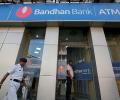
It is 10 years since Bandhan Financial Services became the first microfinance institution (MFI) to receive the universal bank licence. A year later, in 2015, it started operations. Bandhan's entry into banking was seen as a vote of confidence by the Reserve Bank of India (RBI) for the country's microfinance sector. Subsequently, the RBI awarded small finance bank licences to nine MFIs.

The government expects indirect tax collection to be lower than the Budget Estimate (BE) of Rs 13.38 trillion this fiscal year, despite prospects of netting goods and services tax (GST) in large amounts, Revenue Secretary Tarun Bajaj has said. "Indirect tax collection may see lower realisation than budgeted on account of cuts in excise and customs duties. "We could see a shortfall of about Rs 1.5 trillion on account of those," he told Business Standard.

Fintech companies believe that the impact of Reserve Bank of India's order last week on unsecured loans will be visible in six to 12 months and prompt them to diversify and strengthen their secured portfolio. Fintechs which source funds through banks or non-banking finance companies (NBFCs) are looking at quickly building their secured portfolio options to at least 40 per cent of their total portfolio. "Over the medium to long term, as part of our product strategy, we are evaluating secured products which can be enabled over a digital platform" said Yogi Sadana, the founder of Zype, a lending-focussed fintech.

Investors are pushing back more often against companies' resolutions on what is paid out to top executives. In the first four months of financial year 2022-23 (FY23), there have already been five such rejections, according to shareholder voting data from tracker Adrian, a platform maintained by the proxy advisory firm Institutional Investor Advisory Services India (IiAS). Two of these have been at multiplex chain PVR and direct-to-home company Dish TV India.

The country's current account deficit is likely to hit a three-year high of 1.8 per cent or $43.81 billion in FY22, as against a surplus of 0.9 per cent or $23.91 billion in FY21, a report said on Thursday. According to an assessment by India Ratings, the Current Account Deficit (CAD) has moderated to $17.3 billion or 1.96 per cent of GDP in the fourth quarter of FY22 as against $8.2 billion or 1.03 per cent in the year-ago period, and massively down from $23.02 billion or 2.74 per cent in Q3, which was a 13-quarter high. The improvement in the key numbers are due to the remarkable improvement in merchandise exports in FY22, when it grew 42.4 per cent as against a negative 7.5 per cent in the pandemic-hit FY121.

Despite multiple headwinds at the start of 2023, the Indian markets delivered a strong performance, posting 19-20 per cent growth for the year. Even as new records were set, investor sentiment remains strong going into 2024, given the lower inflation, expectations of steady to lower interest rates, higher economic growth, and strong inflows. However, the overriding concern for most brokerages is valuations.

Tata Motors on Monday launched the country's first CNG truck in the medium and heavy commercial (M&HCV) vehicle segment in the 28- and 19-tonne nodes. Most truck makers, including Tata Motors, currently offer CNG only in the small and light commercial vehicle segments. The company also launched a fleet of seven trucks in the intermediary and light commercial vehicle (I&LCV) segment, meant for varied applications.

However, the second quarter of FY24 is expected to be muted, and, with that, the hope of double-digit growth is now being pushed to FY25. However, analysts are expecting the momentum in the closure of record total contract values (TCVs) will continue, as has been the case over the last two quarters.

Only 80.6 per cent of the Rs 6-trillion allocation has been spent by February, data from the Controller General of Accounts shows.

Hindustan Zinc (HZL), a subsidiary of Vedanta, announced an interim dividend of Rs 21 per share last week, resulting in an outflow of Rs 8,863 crore. The announcement has turned the spotlight on India Inc's dividend-paying policy - more so for reasons driving the generosity of firms. An analysis of BSE 500 companies by Business Standard Research Bureau shows that some of the top 20 dividend-paying companies in 2021-22 (FY22) include Vedanta, Tata Consultancy Services, HZL, Oil and Natural Gas Corporation (ONGC), Indian Oil Corporation (IndianOil), Hindustan Unilever (HUL), Reliance Industries (RIL), and Bajaj Auto, among others.
Expenditure on new projects slowed down for the second quarter in a row amid an uncertain global environment and higher borrowing costs. There were new projects worth a cumulative Rs 3.26 trillion in the July-September period, according to data provided by project tracker Centre for Monitoring Indian Economy (CMIE). This figure is much less than Rs 4.39 trillion in the June quarter (Q1FY23) and Rs 8.46 trillion in the March quarter (Q4FY22).

Market participants attribute the stability to the Reserve Bank of India's timely intervention in the foreign exchange market, both in terms of selling and buying dollars.

Equity valuations are once again on the rise, after they cooled down in the second half of 2021 and the first half of 2022. The BSE Sensex trailing price-to-earnings (P/E) multiple has risen to a 17-month high of nearly 25x, from 23.7x at the end of December 2022 and 21.6x at the end of June 2022. Similarly, the index closed on Friday with a trailing price-to-book (P/B) value ratio of 3.6x, up from 3.4x at the end of December 2022; it is the highest since December 2021.
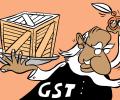
Taiwan in 1951 came up with an ingenious plan to improve tax compliance: citizens taking receipts for purchases could use them as lottery tickets. Customers were incentivized, and businesses found it hard to evade taxes. The plan's success prompted other countries, Slovakia and Greece among them, to launch similar initiatives. India doesn't seem to find the need yet for such schemes amid surging goods and services tax (GST) collections.

Days after Moody's cut its gross domestic product (GDP) forecast for financial year 2022-23 (FY23) after the official GDP print for the June quarter came in lower than expectations, the global ratings agency said it would maintain its long-term sovereign debt credit rating and outlook on Asia's third-largest economy. "The credit profile of India reflects key strengths, including its large and diversified economy with high growth potential, a relatively strong external position, and a stable domestic financing base for government debt," Moody's said on Tuesday. "We do not expect rising challenges to the global economy, including the impact of the Russia-Ukraine military conflict, higher inflation, and the tightening financial conditions on the back of policy tightening, to derail India's ongoing recovery from the pandemic in 2022 and 2023," it said.

India's budget for the fiscal beginning April focuses on giving a boost to the ongoing economic recovery through a sharp increase in capex spending but is short on major growth-enhancing structural reform announcements, Fitch Ratings said Wednesday. The deficit targets present in the Union budget 2022-23 by Finance Minister Nirmala Sitharaman on Tuesday "are a bit higher than our forecasts when we affirmed India's 'BBB'/Negative sovereign rating in November," said Jeremy Zook, director and primary sovereign analyst for India, Fitch Ratings. While it was widely expected that the fiscal deficit will be lower than the targeted 6.8 per cent of the GDP in the current fiscal year ending March 31, 2022, Sitharaman put the number at 6.9 per cent.

P&G Hygiene and Healthcare's June quarter numbers were better than Street estimates, led by strong sales and robust margins. The company, which owns leading consumer brands like Whisper, Vicks and Old Spice, posted a 12.6 per cent year-on-year (Y-o-Y) growth in sales at Rs 852.5 crore during the quarter. The double digit sales growth, led by expansion of its distribution reach, reverses a sluggish sales graph with three of the last four quarters reporting a fall in sales.

India's biggest non-bank finance company, Bajaj Finance (BAF), is set to raise capital after a gap of four years. On October 5, the board of directors will meet to approve the fund raise by way of preferential issue and/or qualified institutional placement (QIP) subject to regulatory and shareholder approvals. The move, analysts said, comes ahead of expectations, and could be in the wake of simmering competition in the consumer lending space, especially with the launch of Jio Financial Services (Jio Fin). "While we still do not have finer details on the game-plan of Jio Financial, it has plans to initially foray into consumer and merchant lending.

ICICI Prudential Life Insurance Company (IPru) is struggling to generate growth in the value of new business (VNB). This is due to a combination of weak growth through the parent bank's channels, a shifting product mix in favour of unit-linked life insurance policies (ULIPS), and higher payouts to third-party channels. Leverage from current investments, a further reduction in contributions from ICICI Bank, and a pick-up in non-participating policies from the end of the year is key for this metric in the near to medium term.

The medium-term scenario for oil marketing companies (OMCs) is high risk due to the surging crude and gas prices. Apart from OPEC-plus cutting production, the Hamas-Israel conflict has caused fears of supply disruption. The July-September quarter of 2023-24 (Q2FY24) saw positive surprises for OMCs. Strong gross refining margins (GRMs) more than offset weak marketing margins.

The stock of State Bank of India (SBI) may re-rate soon, believe analysts, if the lender manages to safeguard its net interest margin (NIM) going ahead. This, along with controlled credit costs, should aid the outlook of the stock which has been underperforming the markets for some time now. "We believe delivery of growth on guided lines, sustenance of NIMs near current levels, and controlled asset quality parameters aiding controlled credit costs should lead to strong profitability and drive re-rating of the stock," said analysts at JM Financial.

Wipro is betting on artificial intelligence (AI) and Cloud computing to earn more from its biggest contributor - the banking, financial services & insurance (BFSI) sector - which brought in 35 per cent of the revenue in FY23. The Bengaluru-headquartered firm also expects its consultancy arm Capco to aid in its vision. "Over the past few years, we have made significant investments in the BFSI sector and have improved our talent, capabilities, and processes in this space - both through organic investments and with the addition of Capco," Suzanne Dann, Wipro's chief executive officer for Americas 2 said.

The sector may be overcrowded with a fair number of large players and the entry of the Adani Group through its two key acquisitions, followed by the takeover of majority stake in Sanghi Industries via Ambuja Cements. Since every major player is in expansion mode, there could be a capacity surplus and hence, price wars.

They are both electronic manufacturing services (EMS) companies, also known as contract manufacturers. One is Taiwan's Foxconn group, the undisputed global number one in this business with revenues of $223 billion. The other is Dixon Technologies, the biggest domestic player with revenues of over Rs 10,500 crore.

Only 21 tonnes of gold have been mobilised in the last eight years under the gold monetisation scheme (GMS) which was announced by the Government of India in November 2015. This could be considered as a failure as the scheme has undergone several changes with a revamped GMS announced in April 2021 to improve collections. This figure was released by the World Gold Council (WGC) on Wednesday in its report titled 'Gold Investment Market and Financialisation, in India gold market series'.

Analysts have predicted a 23 per cent volume growth for the auto segment between FY22 and FY25, riding on the company's differentiated EV and SUV plan. M&M is already a market leader with a 36 per cent share in electric three-wheelers, and its Zaheerabad plant in Telangana is ready to cater to demand. In the farm segment, the company plans to focus on niche electric products.

The country's per capita income is likely to grow by close to 70 per cent to $4,000 by fiscal 2030 from $2,450 in fiscal 2023, helping it become a middle-income economy with $6-trillion GDP, more than half of which will be coming in from household consumption, says a research report. Per capita income/GDP has risen from $460 in fiscal 2001 to $1,413 in fiscal 2011 and further to $2,150 in fiscal 2021. The biggest growth driver will be external trade which may nearly double to $2.1 trillion by 2030 from $1.2 trillion in fiscal 2023 when the GDP printed in at $3.5 trillion, Standard Chartered Bank said in a weekend report which assumes a 10 per cent nominal GDP growth annually from now on.

There was an acceptable domestic performance in India but there continues to be concerns about the Europe business and that overshadows the local performance. The consolidated revenues for the Q2FY24 stood at Rs 55,682 crore with an operating profit of Rs 4,315 crore and an operating profit margin of 8 per cent.

Equity benchmarks climbed in early trade on Wednesday amid an overall positive trend in the global markets and ahead of the presentation of Union Budget 2023-24. The 30-share BSE benchmark Sensex jumped 516.97 points to 60,066.87. The broader NSE Nifty climbed 153.15 points to 17,815.30.

With the fate of the Development Enterprise and Services Hub (DESH) Bill in limbo, the commerce department is working towards tweaking some rules under the existing special economic zone (SEZ) law to allow use of unutilised spaces in IT/ITES for non-SEZ purposes. The move, when implemented, will free-up the land area that is not in demand through partial de-notification of certain floors or buildings, thereby allowing easier exit. "The department of commerce is discussing the matter with the revenue department before making changes in the Special Economic Zone Act, 2005," a person aware of the matter
