
Defying trends, the country's largest private sector lender, HDFC Bank, has shifted its asset mix significantly towards high-rated segments. As a result, its wholesale-to-retail mix has tilted heavily in favour of wholesale, even at the cost of margins. Further, it is even looking to ramp up its branch network, with an aim to service clients within a 1-2 km radius rather than the current 5-6 km radius.

RBI Governor Shaktikanta Das on Tuesday launched a new service, which will enable over 40 crore feature phone users to undertake digital payments in a secure way. The service christened UPI (unified payments interface) '123PAY' is a three-step method to initiate and execute services for users which will work on simple phones which do not have an internet connection. Das said, as of now, the multifaceted features of UPI are mostly available only on smartphones, which excludes people from the lower rung of the society from an economic perspective, especially in the rural areas, from accessing the popular service, even though the smartphone prices are going down.

'India's edtech and start-up story will be in danger.'

Ending its uncomfortable journey in India after eight years, Malaysia-based AirAsia Group on Wednesday said it has exited AirAsia India by selling its remaining 16.67 per cent stake to Tata Group-owned Air India for Rs 155.64 crore. Later in the day, Air India said it has begun the process of creating a single low-cost carrier subsidiary by merging AirAsia India and Air India Express. A working group consisting AirAsia India CEO Sunil Bhaskaran and Air India Express CEO Aloke Singh has been formed for the two carriers' integration, which is expected to take approximately 12 months, it added.

Maharashtra's "radical" lockdown move will have an economic impact of Rs 40,000 crore, with the trade, hotels and transport sector to bear the biggest dent, Care Ratings said on Monday. The rating agency said the loss of economic activity will have a 0.32 per cent impact on the gross value added (GVA) growth at the national level. It revised down its national GDP growth estimate to 10.7 - 10.9 per cent from the 11 - 11.2 per cent given a week ago. Maharashtra has been contributing nearly 60 per cent to the daily COVID-19 infections nationally and had over 57,000 new cases on Sunday.
The Reserve Bank will go for a "dovish pause" at Wednesday's policy review announcement amid developments such as a rise in inflation, government maintaining the inflation target band and a likely impact on growth due to local lockdowns on rising COVID-19 infections, analysts said on Monday. Economists at American brokerage Bofa Securities said price stability, growth and financial stability will become the prime focus areas for the central bank going forward. "The RBI MPC (Monetary Policy Committee) should deliver another dovish pause on Wednesday," it said. The policy announcement, the first for the fiscal, will come days after the government maintained the RBI's target to ensure inflation to be within 2-6 per cent band for five more years.

Despite strong AUM growth, MFs lag behind other popular investment avenues. MFs received only 6 per cent of total household savings in 2021-2022.
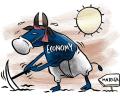
For the second month running, the demand for work under the flagship MGNREGA scheme has been lower than in 2020, which was an extraordinary year for the scheme. Latest data shows that around 35.1 million households have sought work under MGNREGA this June, or 21.48 per cent lower than the number that had sought work in the same month of 2020. This May, some 27.6 million households had sought work under the scheme, or 26.01 per cent lower than the same month last year.

Input shortages and low inventories, according to Nomura, will likely lead to production cuts and delayed shipments in the September 2021 quarter.

Officials were surprised at how quickly smugglers appraised the Covid situation to recruit jobless migrant workers to ship gold.

'I remain optimistic that 2021 will be better than 2020 because we have visibility of vaccinations this year.'
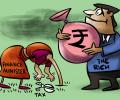
Ahead of the second instalment of advance tax, the revenue department is scrutinising entities that have registered negative growth in their tax deducted at source (TDS) payments, even when they reported healthy advance tax payments. According to sources, taxmen have observed a mismatch in TDS payments from at least 60-65 small to mid-sized companies. Officials said it is unusual for TDS to not increase, given the improved turnover and profits - if higher advance tax payments are any indication.

China's covid crisis could provoke a raw material crunch for India's EV industry later this year.

Fitch Ratings on Friday said it has revised the outlook on India's sovereign rating to 'stable' from 'negative' as downside risks to medium-term growth have diminished on rapid economic recovery. Fitch Ratings kept the rating unchanged at 'BBB-'.

Reliance has significant investments in telecom, consumer retail and media businesses in India.

Unified Payments Interface (UPI) clocked over 6 billion transactions in July: the highest ever by India's flagship digital payments platform since its inception in 2016. UPI reported 6.28 billion transactions amounting to Rs 10.62 trillion, according to data released by the National Payments Corporation of India (NPCI), which operates the platform. Month-on-month, the volume of transactions was up 7.16 per cent and value increased 4.76 per cent.

Adani Wilmar (AWL) joined the elite group of companies with market capitalisation (m-cap) of Rs 1 trillion after the stock of Gautam Adani-led edible oil company hit a new high of Rs 802.80, up 5 per cent on the BSE in Tuesday's trade.

It won't be easy for the banking sector to better its performance every quarter, predicts Tamal Bandyopadhyay.

'Investing in the stocks of holdcos can be a very efficient and inexpensive way of gaining exposure to the stocks of India's reputable growing business houses.'
ITC has been one of the best performing large-cap stock at the bourses thus far in calendar year 2022 (CY22), rallying nearly 52 per cent during this period and outperforming the sector benchmark - the S&P BSE FMCG index - by a wide margin that moved up around 17 per cent during this period. However, the counter has lost over 5 per cent from its recent high of Rs 346.25 hit on September 23, 2022 and has underperformed the S&P BSE Sensex, which has lost nearly 2 per cent since then. So, is the rally in the stock coming to an end, and is this a good time to book profit?

GST mop-up likely to fall in May, June after touching record levels in April and March.

However, Cipla was very clear it does not want to get into vaccine manufacturing.

Does this Budget deserve cheers or boos? You decide
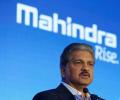
With increased consumer awareness and government support in place, it is the opportune time to enter the electric passenger vehicle segment, Mahindra Group Chairman Anand Mahindra said on Monday. With an eye on gaining leadership in the electric four-wheeler segment, the Indian auto major announced that it will launch five new electric Sports Utility Vehicles (SUVs) for both domestic and international markets, with the first four expected to hit the road between 2024 and 2026. The company would introduce the first of the five e-SUVs towards the end of 2024, starting with the Indian market.

Stocks of public sector companies, especially the oil refining and marketing companies (OMCs) - Bharat Petroleum Corporation Limited (BPCL), Hindustan Petroleum Corporation Limited (HPCL) and Indian Oil Corporation Limited (IOC) - logged gains on Tuesday in a weak market. While the Nifty lost nearly 1 per cent in trade on Tuesday, the Nifty CPSE index - a gauge of performance of central public sector enterprises on the National Stock Exchange (NSE) - gained over 3 per cent in intra-day trade. The rally in PSU stocks comes on the back of the BPCL chairman, Arun Kumar Singh suggesting in the company's annual general meeting (AGM) on Monday that the government intends to complete the divestment process in the OMC by March 2022.

Investors' wealth jumped Rs 2,93,054.25 crore on Thursday as markets returned to winning ways after falling for three straight sessions. The 30-share BSE benchmark Sensex zoomed 638.70 points or 1.22 per cent to close at 52,837.21. During the day, it gained 668.75 points to 52,867.26. Tracking the bullish trend, the market capitalisation of BSE-listed companies jumped Rs 2,93,054.25 crore to reach Rs 2,33,94,917.25 crore.

Shares of Yes Bank may face selling pressure as the Reserve Bank-mandated three-year lock-in period for individual investors and exchange-traded funds is ending on Monday, according to analysts. The analysts expect distress on the bank counter on Monday as they expect investors, primarily the nine banks led by State Bank, which picked up almost 49 per cent of its stocks in March 2020 for Rs 10 per share -- at a premium of Rs 8 on the face value as part of the RBI bailout, making an exit. Exchange-traded funds are also likely to press the exit button.

Public sector banks have raked in more profits in the three months ended June on the back of a persistent decline in bad loans and the trend may have a positive bearing on their balance sheets in the coming quarters. In the June quarter, Bank of Maharashtra (BoM) and State Bank of India (SBI) were in the lowest quartile as far as Gross Non Performing Assets (NPAs) and net NPAs were concerned, according to an analysis of the quarterly financial numbers published by the public sector lenders. Cumulatively, all the 12 public sector banks reported a profit of about Rs 15,306 crore in the three months ended June, registering an annual growth of 9.2 per cent. However, leading public sector lenders -- SBI and PNB -- posted lower profits in the June quarter.

The Budget kept away from mood dampeners such as an increase in taxes (capital gain taxes) and even the much-feared introduction of Covid cess and wealth taxes, says Nimesh Kampani, chairman, JM Financial.

'Large-caps are better placed to withstand the impact of higher input cost inflation, rising rates and withdrawal of excess global liquidity.'

Maruti's strategy for the SUV segment is to arrest the decline in customers for entry level hatchbacks.

The Nifty Bank index has come off 15 per cent from its peak in February, underperforming the benchmark Nifty which is down 6%.

India's GDP is estimated to grow at 7.4 per cent in the financial year 2022-23 with rising prices triggered by the Russia-Ukraine conflict posing as the biggest challenge to the global economic recovery, Ficci's Economic Outlook Survey released on Sunday said. According to the survey, the Reserve Bank of India (RBI) is likely to start a rate hike cycle in the second half of 2022, while a repo rate hike of 50-75 bps is expected by the end of the current fiscal. The RBI is expected to continue supporting the ongoing economic recovery by keeping the repo rate unchanged in its April policy review, the survey said.

Surplus liquidity in the banking system as measured by absorption of excess funds by the Reserve Bank of India (RBI) fell sharply at the end of the last week due to outflows on account of advance tax payments. According to the RBI data, the net liquidity absorbed by the central bank on September 16 was at Rs 3,243.57 crore, much lower than the average of Rs 56,809.92 crore in the preceding four days of the week. The average absorption of funds by the RBI so far in September is at Rs 1.13 trillion, against the average of Rs 1.2 trillion in the previous month, the data showed.

Of $90 billion remittances that India is expected to receive in 2022, only $27.4 billion has come in the first half of the year.

N Chandrasekaran, chairman of Tata Consultancy Services (TCS) and Tata Sons, believes that the Digital India Act is a necessity. "The Digital India Act is a necessity because so much has changed over the decades since the original Information Technology (IT) Act was put in place. I am glad the government is developing a participative approach to developing the Digital Act," he said, while answering shareholders at TCS' 27th annual general meeting. Minister of State for Electronics and IT Rajeev Chandrasekhar a few months ago had said that the government would shortly roll out the Digital India Act - a renewed policy for the digital ecosystem and cyberspace in the country.
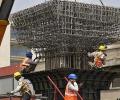
Growth might be impacted by up to 0.30 per cent in the March quarter as normal economic activities come under pressure due to restrictions being imposed by more states to curb rising Omicron cases, economists at the country's largest private sector lender HDFC Bank said on Tuesday. The economists said they were earlier estimating Q4 growth to come at 6.1 per cent, which can get impacted by 0.2-0.3 per cent because of the Omicron threat. "With states imposing Covid-related restrictions (night curfew on movement of people, restaurants allowed at 50 per cent capacity, offices to operate at 50 per cent capacity in various states), economic activity is likely to get impacted in Q4FY22," they said.

Britannia Industries will take higher grammage cuts instead of increasing prices in a bid to tackle rising inflation, the firm said. The biscuit major took a 10 per cent price hike in financial year 2021-22 (FY22) and resorted to reducing pack sizes as an indirect way of increasing prices. In the previous financial year, the ratio of grammage reduction was 65 per cent, which will be higher in FY23.

If there is no third wave of the pandemic, the fiscal position of the Centre and the states will be much better than budgeted for FY22 and the states may garner Rs 60,000 crore more in tax collections at Rs 8.27 lakh crore this fiscal year than they have budgeted, a report said. The report by SBI Research on Monday bases its optimism on GST collection so far this fiscal, which has been the best ever in spite of the fact that the two months bore the maximum brunt of the second wave -- with April setting a record Rs 1.41 lakh crore and May collection a tad low at Rs 1.03 lakh crore. The report also said overall government finances do not look overstretched as GST collections have continued to maintain pace so far and the additional fiscal impact arising from free vaccination and more food supplies will only be around Rs 28,512 crore.

The Reserve Bank of India on Wednesday expectedly left interest rates unchanged and maintained an accommodative stance as the economy faces a renewed threat to growth due to the resurgence of coronavirus cases.
