
Bank credit offtake is expected to pick up following normalisation of economic activities aided by the government thrust on public expenditure in current fiscal year, a report said. According to the Care Edge report, the gross non-performing assets (GNPA) ratio hit a six-year low of 5.9 per cent in FY22 but remained above the pre-asset quality review of 2015-16. However, it said, India's NPA ratio is one of the highest among the comparable countries despite gradual decline.

Agriculture activity, according to recent channel checks by Prabhudas Lilladher, is expected to continue at a strong pace in FY22.

Even as India's passenger-vehicle sales touched a record high of 3.9 million units in 2022-23, growing 27 per cent over the previous financial year, the country's largest carmaker, Maruti Suzuki India (MSIL), said on Monday uncertainties in the electronic-component supplies might affect production in FY24. MSIL said the shortage of electronic components had some impact on production in FY23. "The company took all possible measures to minimise the impact.

The government's move to freely supply coronavirus vaccines to the states for universal inoculation and extend free rations to help the poor tide over the pandemic will only add an additional 40 bps of GDP to fiscal deficit, says a report, which also called for more transparent vaccine distribution plan for efficient vaccine allocation to the states.

Tata Consultancy Services (TCS) is set to secure a $2 billion deal from Bharat Sanchar Nigam (BSNL) to roll out its 4G and 5G services across the country. However, the final approvals from the publicly-owned telco may take a couple of months, sources in the know said. As part of the deal, TCS will develop 4G core and Radio Access Network (RAN) technology for BSNL's telecom services.

Re-rating of Bharat Petroleum Corporation, Container Corporation, Shipping Corporation, SAIL, and Hindustan Copper, for which the government has already shown intent to divest its stake, possible now, say analysts.

Its production declined for the third consecutive year in financial year 2020-21 (FY21) to an 11-year low, while sales volume contracted for the second year to the lowest since FY15. The company manufactured around 1.08 million vehicles last fiscal, a decline from 1.17 million the previous year, and a steeper fall from its all-time high tally of 1.62 million reported in FY18.

Axis Bank has strengthened its positioning -- on both the assets and liability side -- and it may be set to deliver sustained improvement in performance. The valuation gap between Axis Bank (which trades at 1.4x core book value (or BV) and peers like ICICI Bank (valued at 2x BV) is expected to narrow.

The government expects to realise Rs 35,100 crore from the partial sale of Bharatnet fibre assets and around 13,500 mobile towers owned by state-run telecom firms as part of its national monetisation pipeline released on Monday. Government think tank Niti Aayog has valued over 2.86 lakh kilometre of optical fibre assets laid by BBNL and BSNL under rural broadband project Bharatnet at Rs 26,300 crore, according to the National Monetisation Pipeline (NMP) document. According to the document, BSNL's 13,567 mobile tower assets and MTNL's 1,350 towers have been valued at Rs 8,800 crore.

Analysts have predicted a 23 per cent volume growth for the auto segment between FY22 and FY25, riding on the company's differentiated EV and SUV plan. M&M is already a market leader with a 36 per cent share in electric three-wheelers, and its Zaheerabad plant in Telangana is ready to cater to demand. In the farm segment, the company plans to focus on niche electric products.

Brokerages expect India Inc to report an upturn in earnings for the March quarter of 2022-23, after a relatively muted showing in the previous two quarters. This growth is expected to be led by banking, financial services and insurance (BFSI) companies, FMCG firms, and automobile makers. The combined net profit of the Nifty50 companies (excluding Adani Enterprises) is expected to have grown 15.6 per cent to Rs 1.77 trillion in Q4FY23, from Rs 1.53 trillion a year ago.

The hospitality sector has been hit very hard by the pandemic. In the past 18 months, it has lost business, first because of the harsh lockdowns and after that because of lack of demand due to the ensuing economic slowdown. Most hospitality businesses have sustained low revenues and losses since April 2020. Is this the classic case of a beaten-down cyclical sector that may be close to bottoming out?

Leading FMCG companies in the country are expecting their sales growth numbers in high double digit in the April-June quarter, a period when the broader market was severely impacted by the second wave of the COVID-19 pandemic. FMCG companies such as Godrej Consumer Products Ltd (GCPL) and Marico, in their quarterly updates to bourses, informed about double-digit sales growth. While Tata Consumer Products Ltd (TCPL) MD and CEO Sunil D'Souza in an interview had told PTI, the Tata Group FMCG firm expects higher growth in the Q1/FY'22 over Q4/FY'21.
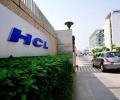
Shares of HCL Tech hit a fresh record high of Rs 1,118.55 on Friday, up 2 per cent on the BSE in intra-day trade, surpassing its previous high of Rs 1,101 touched on Thursday in intra-day deals.

Banks are gaining market share at the expense of non-bank lenders such as housing finance companies, retail lenders, and those giving gold loans. There has been a steady decline in the market share of non-banking financial companies (NBFCs) in the credit market as banks have stepped up lending. NBFCs' share declined to a five-year low of 19.8 per cent in the first half of FY23, down from 20.3 per cent in H1FY22, and an all-time high of 23.1 per cent in H1FY19.

The Centre is staring at a combined shortfall of up to Rs 1 trillion in excise and Customs revenues in the current financial year (FY23) compared to the Budget estimates (BE), mainly because of duty cuts on edible oil and petroleum products. The government set a target of Rs 3.35 trillion for excise and Rs 2.13 trillion for Customs mop-up for FY23 while presenting the Budget in February. "As excise duty collection is mainly driven by diesel volumes, we might see a clear gap in the level budgeted for FY23, following the reduction in cesses on petrol and diesel in May. We are expecting somewhere between Rs 80,000 crore and Rs 1 trillion dip in excise and customs duty collections," a senior government official told Business Standard.

Software major Tata Consultancy Services on Wednesday reported a 14.8 per cent rise in net income to Rs 11,392 crore for the fourth quarter of last fiscal against Rs 9,959 crore in the year-ago period. The country's largest technology services company by market value said its revenue rose 16.9 per cent to Rs 59,162 crore during the reporting season from Rs 50,591 crore a year ago.

Investors have become poorer by over Rs 10.36 lakh crore in the last four trading sessions as the domestic equity benchmarks extended their losses amid weak global trends. The Sensex and Nifty closed in the red for the fourth straight session on Friday amid continued selling by foreign institutional investors. The BSE Sensex ended 427.44 points or 0.72 per cent lower at 59,037.18.

With its new premium Primus and Ampere NXG, it is targeting buyers seeking a faster and more stylish ride

The two-wheeler sector has been underperforming its peers on the volumes front for over five quarters now. Even in the March quarter, Bajaj Auto and Hero MotoCorp posted a 17-24 per cent YoY decline in volumes, the sharpest in the listed auto universe. The ongoing impact of frequent price hikes, all-time high fuel prices, and muted rural sentiment has led to the lacklustre showing by two-wheeler makers. What has aggravated the situation for two-wheeler companies, which get almost all their sales from the internal combustion engine or ICE-based units, is the traction for electric two-wheelers (EV).

India Inc resorted to salary cuts to protect their profits in the June quarter, as revenues came under pressure due to the second pandemic wave that affected nearly the entire country, a report said on Wednesday. The "weak" wage growth will prove to be a drag on the overall economic recovery in the medium term as it will affect household consumption, the report by India Ratings and Research said. An environment of pandemic-led uncertainty and elevated inflation could impact the level of spending and hence the overall demand, it said.

Shobha Kapoor and Ekta Kapoor, managing director (MD) and joint MD of media firm Balaji Telefilms have failed to obtain requisite votes on resolutions pertaining to their remuneration. According to stock exchange disclosure made by the company, the two separate special resolutions on setting their salaries for the next years got 56.77 per cent and 55.45 per cent 'against' vote.

India will have 30 per cent of its two-wheeler industry turning electric by 2030 as new manufacturers lead the shift, said a report on Monday. Passenger vehicles will be 15 per cent electric and the three-wheeler segment 75 per cent electric by 2030, said the report by BNP Paribas called 'India Autos-Electric vehicles: Minutes to midnight'. "We see FY22 as the year of inflection for the two-wheeler EV industry, with an accelerated EV adoption helped by incentives, wider availability, model launches, rise in crude prices and improved general awareness. We see 30 per cent of the 2W industry turning electric by 2030; the pace of incentive withdrawal presents an upside/downside risk," the report (India Autos - Electric vehicles: Minutes to midnight) said.

The Tata group flagship has sold more sport utility vehicles (SUVs) in the domestic PV market in the past four months than any other automotive manufacturer, cementing its no.1 spot. It first grabbed pole position in the SUV segment in October 2021 after the launch of the Punch - a sub-compact SUV offering.

The bull run in the Indian equity markets is intact, said analysts at Morgan Stanley in a recent note. They expect the S&P BSE Sensex to hit 80,000 levels by December 2023 in their bull-case scenario, to which they have assigned a 30 per cent probability. From the current level, this translates into an upside of nearly 29 per cent.

Some states are taking a legal view on the state GST rate and the compensation rules ahead of the Goods and Services Tax (GST) Council meeting, which is likely to be held in mid-June, said people in the know. While the agenda is still being finalised, several states are likely to take up the matter related to GST compensation and may pitch for its continuation beyond the June 30 deadline. States would like to know how they would divide the compensation collected after June 2022 for payment of principal and interest of compensation shortfall borrowing and arrears to states, sources said.

Only five of India's top 20 car models have seen a reduction in wait times over the past year.

The Tata group is planning to invest $90 billion in new industries such as mobile components plant, semiconductor, electric vehicles, batteries, renewables energy and e-commerce by 2027. The Tata group's investment in India is far higher than the $75-billion investments planned by Mukesh Ambani-owned Reliance Industries and $55-billion investment planned by the Adani group in the next five years in the country, the Economist reported recently. The investment by the Tata group is a shift in its strategy to focus more in the home markets instead of international markets where the group lost money.

With just a month left in this financial year, electric two-wheeler sales, so far, are at just 62 per cent of the ambitious target of 1 million units set for 2022-23 by the NITI Aayog. According to VAHAN data, compiled by the Society of Manufacturers of Electric Vehicles (SMEV), 620,006 units of electric two-wheelers were sold across the country in FY23 until February 21. Though the industry may miss the 1-million target, sales in FY23 are already up 146 per cent from 249,621 units sold in FY22.

Domestic macroeconomic data, RBI policy and developments related to the Russia-Ukraine war would be major driving factors for the stock market this week, analysts said. Moreover, FPI investment and trends in crude oil would also influence the trading sentiment, they added. "This week, the RBI credit policy will be a critical factor for Indian markets.
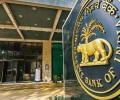
The Reserve Bank of India's (RBI's) outstanding net forward purchases of US dollars fell by more than 50 per cent from the last quarter of FY22 to $30.86 billion in the June quarter (Q1). The net forwards position was at $65.79 billion at the end of the last fiscal year. The purchases fell by $18.33 billion in June as the central bank intervened in both the forwards and the spot market in order to protect the rupee from excessive depreciation in the face of a widening trade deficit.

PSU divestment, LIC IPO, fiscal deficit: Budget 2021 marks a clear change in the Modi government's stance from fiscal conservatism to growth orientation.

'Today, the risks have risen.' 'So stars need good content and good content needs stars.' 'It is now X+Y (star + content) not that X is greater than Y or Y is greater than X.'

Oil Minister Hardeep Singh Puri on Thursday indicated that the much-delayed privatisation of oil major BPCL may not happen in the near future, saying there is "no proposal whatsoever" on his table for now. As part of its asset monetisation plan, the government had in November 2019 put Bharat Petroleum Corporation (BPCL) on the block and said it would completely sell its 52.98 per cent stake in the country's second largest state-run oil refiner and marketer. Though it had received three tentative bids, it got only one financial bid from Vedanta group, forcing it in May 2022 to shelve the plan pending a "comprehensive review".

Its association with India is over 70 years old and spans both civil and military aviation. The Douglas DC-3 transport aircraft used by the air force beginning the 1940s and the iconic Boeing 747 aircraft flown by Air India, both had Pratt & Whitney (P&W) engines. The Indian Air Force's present-day, heavy-lift C-17 Globemaster III and the yet-to-be-inducted C-295 planes, too, have P&W power plants.

Describing the recent two consecutive spikes in retail inflation beyond the 6 per cent as a 'transitory hump', a Wall Street brokerage on Monday said it expects the RBI to overlook it and unanimously stick to the dovish stance at the forthcoming policy review, even though a further upward revision of its already-revised inflation target is more likely. The Reserve Bank-led monetary policy panel is scheduled to announce the third monetary policy review on August 6, amidst the continuing spike in retail inflation that has breached the 6 per cent upper tolerance level for the past two consecutive months.

Tata Consultancy Services (TCS) on Friday reported a 14.1 per cent rise in consolidated net profit to Rs 9,624 crore in the September 2021 quarter, aided by broad-based growth across geographies and verticals. The Mumbai-based company had logged a net profit of Rs 8,433 crore (excluding adjustment towards a legal claim) in the year-ago period. Its revenue grew 16.7 per cent to Rs 46,867 crore for the September 2021 quarter from Rs 40,135 crore in the year-ago period.

Days after Moody's cut its gross domestic product (GDP) forecast for financial year 2022-23 (FY23) after the official GDP print for the June quarter came in lower than expectations, the global ratings agency said it would maintain its long-term sovereign debt credit rating and outlook on Asia's third-largest economy. "The credit profile of India reflects key strengths, including its large and diversified economy with high growth potential, a relatively strong external position, and a stable domestic financing base for government debt," Moody's said on Tuesday. "We do not expect rising challenges to the global economy, including the impact of the Russia-Ukraine military conflict, higher inflation, and the tightening financial conditions on the back of policy tightening, to derail India's ongoing recovery from the pandemic in 2022 and 2023," it said.

Slowing growth and execution challenges for Cognizant (CTSH) may well allow Infosys to overtake the former after a decade. Cognizant had marched ahead of Infosys in terms of revenue in the first quarter of financial year 2012-13. The Nasdaq-listed IT services firm's performance in Q3 and the guidance for Q4 and full-year 2022 suggest that it could take time for Cognizant to see the expected improvement in performance from its decision to restructure.
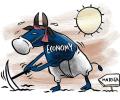
Around 31 million households have demanded work under the flagship MGNREGA in the month of May this year, which is almost 11 per cent more than the same period last year and much higher than the corresponding pre-Covid period, data sourced from the website showed today. In April 2022, around 23.26 million households have sought work under the scheme which as per the provisional data for May has risen to almost 31 million households. The April 2022 work demand was almost 11.15 per cent less than the corresponding period of April 2021.
