
Citing the impact of the second wave of the pandemic over the economy and consumer sentiment, Swiss brokerage Credit Suisse has lowered its nominal GDP growth forecast by 150-300 bps to 13-14 per cent, but expects a stronger recovery in the second half as it sees the lockdowns having limited impact on tax collections. Last month, Neelkanth Mishra, the co-head of equity strategy for Credit Suisse Asia Pacific, and India equity strategist, had told PTI that he expected the real GDP to fall to 8.5-9 per cent in FY22 due to the more severe pandemic attack. The virus case load has crossed the 25-million mark, death toll from the same is nearing 2.9 lakh mark, which is one of the highest in the world as the test positivity rate has been around 15 per cent for long.
The rating affirmation reflected RIL's strong business profile - a large-scale refinery with a capacity of around 1.2 million barrels a day and dominant market position in petrochemicals.
The economy is likely to register a 9.5 per cent growth this fiscal over 7.3 per cent contraction last year, as the ongoing recovery is faster and more credible than earlier foreseen, according to a foreign brokerage report. It will gather more momentum in the second half of the current fiscal, but will slow down to 7.7 per cent next financial year, it added. The government has budgeted for a 10.5 per cent growth this fiscal, but the Reserve Bank has scaled it down to 9.5 per cent.

Axis Bank was the top gainer in the Sensex pack, rallying over 6 per cent, followed by HDFC, IndusInd Bank, TCS, Asian Paints, Titan, HCL Tech and ICICI Bank. On the other hand, ONGC, Bajaj Finance, NTPC, M&M and Reliance Industries were among the laggards.

With Covid-19 cases across the country rising rapidly once again, demand for health insurance products has spiked. Insurers are seeing an uptick in inquiries for such products and underwriting more premiums in the segment. Already, health insurance was growing at a rapid pace since the onset of the pandemic as awareness around risk had heightened among consumers. But the country recorded more than 600,000 Covid-19 cases in the past week, which is almost a six-fold rise than the previous week. Owing to this, the spike in demand for health insurance products is inevitable, experts said.

The Economic Survey released before next year's Budget could become a single volume, reverting to the practice followed till FY14. "There is so much to write about the Indian economy's performance in the past year. "Most of the exciting themes will be covered in what used to be considered Part II," said a senior government official who is part of the preparations for the Survey.
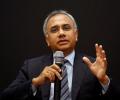
Under fire for technical glitches plaguing the new income tax return filing portal, Infosys CEO Salil Parekh on Wednesday said the new portal developed by his company is seeing "steady progress" and already 1.9 crore returns have been filed. He further said that taxpayers' concerns are being "progressively addressed". "We are seeing a steady progress on the income tax system. As of yesterday we had over 1.9 crore returns that have been filed using the new system.

The FPI holding in India's top 100 companies, which are part of the Nifty 100 index, declined to 24.23 per cent on average at the end of March this year, from a high of 27.5 per cent at the end of March 2021. This is the lowest FPI holdings in India's top listed companies in at least three years. A general sell-off by FPIs has weighed on stock prices and the benchmark S&P BSE Sensex is down 8.5 per cent, from its 52-week high made in October 2021. Most analysts expect FPI flows to remain weak in FY23 as well, given rising bond yields in the US and an expected earnings slowdown in India due to high inflation and commodity prices.
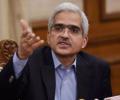
These are the highlights of RBI Governor Shaktikanta Das's statement and resolution of the Monetary Policy Committee (MPC):

Such a disruption will take the clock back by many years - in terms of passengers handled - for these airports, thus raising questions among some of the airport operators over a delay in expansion plans.

Large investors track high-frequency data that is immediately available today. That data has been bullish, points out Debashis Basu.

India's first unicorn Zomato will make its stock market debut on Friday, marking a historic moment for the domestic capital market. As per initial schedule, Zomato's listing was to take place on July 27. However, investment banks managed to complete the share allotment and listing formalities ahead of the deadline. Under the Sebi framework, the timeline between IPO closing and listing has to be six working days. Zomato's IPO had closed on July 16.

In the Sensex pack, HDFC, ONGC, Bharti Airtel, Titan, Asian Paints, Mahindra and Mahindra and TCS were the prominent gainers. On the other hand, ICICI Bank, IndusInd Bank, NTPC, UltraTech Cement, Tech Mahindra and SBI were among the major laggards. On the other hand, HCL Tech, Tech Mahindra, HUL, Bharti Airtel and ICICI Bank were trading in the red.

The early bird results for the January-March 2022 quarter (Q4FY22) hint at a slowdown in corporate sector growth in the upcoming quarters. The combined net sales of the 81 early bird companies in the Business Standard sample were up 15.1 per cent year-on-year in Q4FY22; this was less than the 15.9 per cent YoY jump reported in Q3FY22. The slowdown could be much stronger for the domestic market-focused companies, including those in the banking, finance, and insurance (BFSI) space.

Reports suggest state-owned banks have lapped up Rs 40,000 crore, so far, using both bonds and equity instruments. The question, though, is whether there will be a perceptional change for PSB stocks.

The anticipated adverse impact on the economy and consequent uncertainty around employment prospects is likely to result in lower purchasing power.

Stating that an economic recession gripped global economy following the lockdowns due to COVID-19 pandemic, Fitch Ratings on Friday said the initial disruptions to regional manufacturing supply chains in China have now broadened to include local discretionary spending and exports.

The country's largest private lender HDFC Bank's bad-loan write-offs doubled to Rs 3,100 crore in the April-June quarter (first quarter, or Q1) of 2021-22 (FY22), from the level of Rs 1,500 crore in the same quarter of 2020-21 (Q1FY21). It also offloaded its non-performing assets (NPAs) amounting to Rs 1,800 crore in Q1FY22 to maintain a robust asset quality profile. It had jettisoned NPAs worth Rs 1,000 crore in the last quarter. Lenders knock off stress assets from books after making full provisions. Their right to recover dues from delinquent borrowers remains intact after the write-downs.

In the upcoming round of privatisation, unviable airports are likely to be clubbed with six main airports and a prospective bidder may be restricted to bid for two airports.

A sharp sell-off in the Indian equities markets after a spike in crude oil prices should not be surprising. Historically there is a negative correlation between stock valuations in India and the price of Brent crude oil, which is the benchmark for the Indian crude oil basket. Between 2011 and 2014, crude oil traded above $100 a barrel for an extended period, the Sensex-trailing price/earnings (P/E) was 18X, on average, during the period, nearly 22 per cent lower than the current index P/E of 23X.

Oil-to-telecom conglomerate Reliance Industries (RIL) has emerged as the country's largest wealth creator, adding a staggering Rs 9.6 trillion over the past five years, according to Motilal Oswal's 26th Annual Wealth Creation Study. In doing so, the Mukesh Ambani-led company has beaten its own record of Rs 5.6 trillion generated in 2014-19. The study covered financial year 2015-16 (FY16) to FY21 and ranks the top 100 companies in descending order of absolute wealth created, subject to the company's stock price outperforming the BSE Sensex. The firms were also ranked according to speed (price CAGR during the period).
The company will raise $1.8 billion for the under construction and contracted portfolio of 12 GW, which includes the country's first manufacturing-linked solar power plant of 8 GW.

The retail industry's business is on the brink of full recovery as it achieved 93 per cent of the pre-COVID sales in February, according to a report. Segments such as consumer durables and quick service restaurants (QSR) have shown positive growth of 15 per cent and 18 per cent respectively in February 2021, the report from the Retailers Association of India (RAI) said. "The quantum of de-growth in retail sales has reduced as most segments in retail have started to show significant improvement," it said. Categories like footwear, beauty, wellness and personal care, sports goods and food and grocery are showing steady month-on-month recovery.

After ramping up production to meet the steep demand spike during the Covid-19 pandemic, Indian medical device makers are now struggling with idle capacity. According to industry estimates, around a third of the installed capacity, especially for consumables, disposables, small-ticket electronic items, etc., is lying unutilised. Sample this: India used to produce just 6.24 million pieces of PPE kits per annum before the pandemic, but by June this was ramped up to 233.87 million pieces per annum.

The total vehicle registrations in India fell by 29.85 per cent to 1,52,71,519 units in financial year 2020-21, the lowest in the last eight years, the Federation of Automobile Dealers Associations (FADA) said on Monday. Total vehicle registrations were at 2,17,68,502 units in fiscal year 2019-20. All categories of vehicles, except tractors were in red in FY21 with two-wheeler (2W), three-wheeler (3W), commercial vehicles (CV) and passenger vehicles (PV) falling by 31.51 per cent, 64.12 per cent, 49.05 per cent and 13.96 per cent respectively -- the lowest in last eight years and way below the FY13 levels, FADA said in a statement.

M&M was the top gainer in the Sensex pack, rallying around 6 per cent, followed by SBI, ITC, NTPC, Bharti Airtel and ONGC. On the other hand, Bajaj Finance, HDFC, Bajaj Finserv, Titan, Sun Pharma and Dr Reddy's were among the laggards. NSE Nifty inched up 1.40 points to its fresh closing record of 14,564.85.

Food delivery apps Zomato and Swiggy reported a nationwide outage on Wednesday. Both the platforms witnessed technical glitches and were unresponsive for almost an hour. Downdetector, a platform that collects status reports from a series of sources, recorded about 3,619 reports of outage against Zomato at 2:05 PM and about 771 reports of outage against Swiggy at around 2:21 PM. According to the sources, the outage was caused by Amazon Web Services (AWS), a cloud-services platform, which runs both platforms. Though Swiggy and Zomato are working now, some customers reported that the issue has not been solved completely and they are not able to place orders and there are payment related issues.

'Let's not get carried away by stocks like D-Mart, Jubilant Foods and all those companies that are trading at an expensive valuations.'

Moody's Investors Service on Monday said it has assigned a first-time B3 corporate family rating (CFR) to ANI Technologies, which operates ride hailing service Ola. Moody's CFRs are opinions of a corporate family's ability to honour all of its financial obligations. It has also assigned a B3 rating to the company's proposed senior secured term loan.

Tamil Nadu has cornered around 18.63 per cent of the fresh investments in Q1FY21 and topped the list of state-wise investments. These investments should help create over 67,212 jobs.

This demand comes at a time when the government is falling short of its revenue targets due to dwindling tax and low disinvestment receipts. It could account for the dividend in the upcoming Union Budget on February 1. RBI is, however, yet to take a final call on the government's demand and might decide on this at its central board meeting scheduled for February 15 in New Delhi.

The government's move to freely supply coronavirus vaccines to the states for universal inoculation and extend free rations to help the poor tide over the pandemic will only add an additional 40 bps of GDP to fiscal deficit, says a report, which also called for more transparent vaccine distribution plan for efficient vaccine allocation to the states.

Household indebtedness is higher in the southern states as compared to the other parts of the country, a report said on Tuesday. Citing the All India Debt and Investment Survey (AIDIS) data from 2013-2019, domestic agency India Ratings said household indebtedness both in rural and urban areas was higher in southern states than rest of India. In 2019, Telangana with 67.2 per cent had the highest proportion of its rural households indebted and Nagaland with 6.6 per cent had the lowest proportion of its rural households indebted.
About 50 per cent of the accounts that availed of the EMI moratorium amid the pandemic, which made things worse in an already slowing economy, are expected to be restructured, and of these accounts that would undergo restructuring, one-third, or Rs 6-9 trillion, could turn into NPAs.
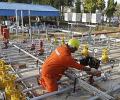
It is rare for Cabinet ministers to tick off state-owned companies publicly, yet that was what then petroleum and natural gas minister Dharmendra Pradhan did for ONGC. Speaking at an event on June 29, Pradhan said he has asked India's premier exploration company to find fresh oil acreages fast. "Do it yourself through some joint venture (or) through a new business model. But the government cannot permit you to hold resources for an indefinite time." The reason for this stricture is India's rising dependence on imported oil and gas. Or, to put it another way, falling domestic production (see chart: "Crude truth"), especially from ONGC, which faces a simple problem.

The Centre could better its fiscal deficit at 6.6 per cent of GDP in this financial year on stronger-than-expected revenue buoyancy, even if the budgeted disinvestment target is not met, Fitch Ratings has said. The international rating agency had last week kept the sovereign rating unchanged at 'BBB-' with a negative outlook, and said that the risks to India's medium-term growth outlook are narrowing with rapid economic recovery from the pandemic and easing financial sector pressures. In an email interview with PTI, Fitch Ratings Director (Asia-Pacific Sovereigns) Jeremy Zook said the two key positive triggers that could lead to a revision of the outlook to stable are implementation of a credible medium-term fiscal strategy to lower debt burden and higher medium-term investment and growth rates without the creation of macroeconomic imbalances, such as from successful structural reform implementation and a healthier financial sector.
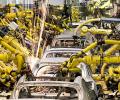
The sharp increase in commodity prices on account of the Russia-Ukraine war has put automakers in a fix. After the frequent price hikes in the current fiscal, manufacturers fear that any more price increases may further dent the already weak demand in certain segments. "We have taken several hikes and cannot immediately do it again. "We will have to closely watch the situation and act accordingly," said an official at an auto firm, declining to be identified. Even for companies like Tata Motors Passenger Vehicles, which has had a strong volume run and a robust order book, passing on the entire costs has been tough.

According to sources, government officials have asked industry bodies and manufacturers to submit key concerns and requirements to begin manufacturing activity.

The focus of the company would be to develop its capability across segments of injectables, vaccines, biosimilars, inhalation and APIs to drive growth.
Shares of HCL Tech hit a fresh record high of Rs 1,118.55 on Friday, up 2 per cent on the BSE in intra-day trade, surpassing its previous high of Rs 1,101 touched on Thursday in intra-day deals.
