
Automotive retail sales saw a 14 per cent rise in March on a year-on-year (YoY) basis, according to data released by the Federation of Automobile Dealers Associations (FADA). For the whole of financial year 2022-23 (FY23), sales grew 21 per cent YoY. For both March and the financial year, all categories, except for tractors, and including two-wheelers, three-wheelers, passenger vehicles (PVs), and commercial vehicles (CVs), posted double-digit growth. However, the total retail sales of 22.1 million for the financial year were still 12 per cent lower than the pre-Covid (FY20) level of 25 million, owing to an 18 per cent dip in the two-wheeler segment.

Wipro founder-chairman Azim Premji believes the Indian IT industry revenues will grow in double digits in the current financial year. Throughout the pandemic, which saw lockdown measures to curtail the spread of the virus, the information technology industry has kept the world running and has also adapted to the changes, Premji said, speaking at an event of the Bombay Chartered Accountants' Society on Tuesday evening. As per Nasscom, the IT industry revenues stood at $194 billion in FY21. The lobby group has ceased giving estimates of the topline growth a few years ago.
The country's second-largest IT services firm Infosys on Wednesday reported a 16.6 per cent rise in consolidated net profit at Rs 5,197 crore for the December 2020 quarter. The company had posted a net profit (after minority interest) of Rs 4,457 crore in the year-ago period, Infosys said in a regulatory filing. Its revenue grew 12.3 per cent to Rs 25,927 crore in the quarter under review from Rs 23,092 crore in the corresponding period last fiscal.

The Nifty IT Index, the gauge for the performance of information technology (IT) stocks, was the worst performer on the stock exchanges on July 29, a day after Infosys posted lower-than-expected earnings growth for the June quarter and sharply cut its revenue growth guidance for 2023-24 (FY24). The IT index was down 4.1 per cent, its biggest one-day fall in three months. The decline was led by Infosys, with its shares plunging nearly 8 per cent, followed by HCLTech (-3.2 per cent), Wipro (-3.0 per cent), and TCS (-2.7 per cent).

The stock of auto component major Bosch was up 2.5 per cent on Wednesday and in the process hit its 52-week high. Expectations of higher volumes of medium and heavy commercial vehicles' (M&HCV), rise in content supplies on account of BS VI stage 2 implementation from April, and improved profitability are some of the positives for the stock. In addition to this, the company appointed a new managing director and joint managing director last week, which will come into effect from July 1.

India Inc's quarterly net profit reached a record high of Rs 1.64 trillion in the third quarter ended December 31, 2020, mainly due to gains from higher commodity prices and a big swing in banks' earnings. The combined net profit of 3,323 listed companies that have declared results so far was up 68.6 per cent year-on-year (YoY). In comparison, earnings were up six times (534 per cent) in the second quarter and 6.5 per cent in the corresponding period last year.

Infrastructure assets worth over Rs 1.62 lakh crore are expected to be monetised during the current fiscal, Parliament was informed on Monday. The government had last year announced a Rs 6 lakh crore National Monetisation Pipeline (NMP) to unlock value in infrastructure assets across sectors, ranging from power to road and railways in four years till 2025. In a written reply to the Lok Sabha, Minister of State for Finance Pankaj Chaudhary said about Rs 97,000 crore worth of public assets were monetised in the last fiscal (2021-22).

Three senior executives have resigned from Byju's at a time when the most valuable edtech company has been trying to address challenges such as due diligence issues, legal battles with lenders, challenges in raising fresh capital, and a markdown in its valuation by investors. Prathyusha Agarwal, the chief business officer of Byju's, has quit, according to sources. They said Himanshu Bajaj, business head of Byju's tuition centres, and Mukut Deepak, business head for Class 4 to 10, have also moved on.

The facility, which will manufacture nicotine and nicotine salts, will conform to stringent US and EU pharmacopoeia standards that define purity levels at 99.2 per cent for nicotine meant for pharmaceutical products. ITC will leverage the institutional capabilities of its century-old leaf tobacco business for this. ITC's cigarettes business saw disruptions across the value chain with the onset of the Covid-19 pandemic. The company mentioned in its annual report that with easing of restrictions and improvement in mobility from September 2020 onwards, the business recovered progressively over the remainder of the year to reach nearly pre-Covid levels towards the close of the year.
Given the company's expansion into internet and retail, more investments including mergers and acquisitions seem highly likely.

The banking sector emerged as an outlier when the rest of India Inc witnessed a slowdown in earnings in FY23. The combined net profit of listed public and private sector banks was up 39.4 per cent year-on-year (YoY) last financial year and their share in India's gross value added (GVA) or gross domestic product (GDP) at factor cost rose to a record high of nearly 1 per cent up, from 0.8 per cent a year ago. Listed banks' combined net profit grew to Rs 2.36 trillion in FY23, from Rs 1.69 trillion a year ago. In comparison, India GVA at current prices was up 15.2 per cent YoY at Rs 247 trillion in FY23; it was around Rs 214 trillion a year ago.

Costlier vegetables and eggs pushed up retail inflation to a nearly six-and-a-half year high of 7.61 per cent in October, keeping it significantly above the comfort zone of the Reserve Bank.

The number of draft red herring prospectuses (DRHPs) filed with the markets regulator - Securities and Exchange Board of India (Sebi) - jumped nearly fivefold to 145 in 2021-22 (FY22), compared with just 30 in the preceding financial year (2020-21, or FY21). This was on account of companies rushing to take advantage of a favourable market sentiment towards initial public offerings (IPOs), triggered by an influx of new investors, surge in the secondary market, and encouraging performance of newly listed stocks. In fact, DRHPs filed in FY22 was 4x the previous 10-year average and the highest since 2007-08, according to primary market tracker PRIME Database.

Finance Minister Nirmala Sitharaman has brought down the budgetary allocation for the fertiliser subsidy for FY21 to Rs 71,309 crore, from the RE of Rs 79,998 crore for FY20, while increasing food subsidy to FCI through "ways and means advance" to Rs 50,000 crore for FY21, from Rs 36,000 crore in RE for FY20, and under the National Food Security Act (NFSA) to Rs 77,982 crore, from Rs 75,000 crore.

Supply chain constraints will keep plaguing automobile companies even though demand significantly improved resulting in a 13 per cent year-on-year (YoY) increase in sales in financial year 2021-22 (FY22). Executives at auto firms fear that the Russia-Ukraine war will further dent the sector's prospects of recovery as supply chains face more disruptions. "The visibility in the supply side is so hazy that it is difficult to give even one quarter projection. But all the parameters of demand like pending bookings and enquiries are increasing.

While there was a sharp drop in footfalls in malls in H1FY21, there was reasonable recovery in H2. However, the second wave derailed the recovery.

Freight earnings too saw a decline of Rs 8,284 crore to Rs 13,412 crore in the first two months of FY21, compared to Rs 21,696 crore during the same period last year.

'They have got the advisory council, a CEO has been appointed finally, and they have made some headway on the term loan B.'
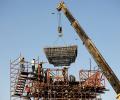
India's economy is unlikely to see double-digit growth and may grow between 8 per cent and 9 per cent this fiscal year (2021-22, or FY22), against the estimated 11.5 per cent, according to leading economists and rating agencies. The downward revision of growth projections to as low as 10 per cent is mostly on account of stringency in restrictions by states, relatively slow vaccination pace, and the possibility of a third wave of the pandemic. However, they say the impact will not be as severe as the first wave, and expect the first quarter to see positive growth.
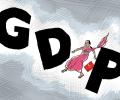
India's gross domestic product (GDP) growth slowed to 4.1 per cent in January-March 2022 period, while for the full year 2021-22 the growth stood at 8.7 per cent, according to the government data released on Tuesday. GDP at constant (2011-12) prices in Q4 2021-22 is estimated at Rs 40.78 lakh crore, as against Rs 39.18 lakh crore in Q4 2020-21, showing a growth of 4.1 per cent, as per the National Statistical Office (NSO) data. India's GDP growth has slowed for the third straight quarter.

To enable widen the fiscal deficit beyond the permissible limit under the present legislation, the government may have to propose amendment to the FRBM Act in the Finance Bill.

Domestic mutual funds (MFs) have kept their faith in the Indian stock market despite multiple headwinds all through 2022-23 (FY23), with their net flows into equities crossing the Rs 1.5-trillion mark for the second consecutive financial year. MFs pumped a net Rs 1.53 trillion into equities till March 1, 2023, the Securities and Exchange Board of India (Sebi) data shows, as compared to Rs 1.72 trillion in FY22. Since FY15, MFs have been net buyers of equities, except in FY21, when they sold a net Rs 1.21 trillion.

Maruti Suzuki is set to launch a new multi-purpose vehicle (MPV) -- Invicto -- next month. It will be the company's first passenger vehicle with an ex-showroom price tag of Rs 20 lakh or more, said Shashank Srivastava, executive director (sales), on Tuesday. The upcoming MPV will compete with the likes of Toyota Innova Hycross, Kia Carnival, Hyundai Alcazar, MG Hector Plus, Tata Safari, Mahindra & Mahindra XUV700, and Mahindra & Mahindra Scorpio-N - all having three rows of seats. Invicto will be based on the Hycross by Toyota, which will manufacture Maruti's most expensive car at its Bidadi plant in Karnataka.

The government, it would seem, is reserving its firepower to spend on big-ticket items that will be announced in the Budget, reports Subhomoy Bhattacharjee.

India has substantially increased its crude oil imports from the US, with the country's share in India's crude basket hitting a record 14.3 per cent in December, commerce ministry data showed.

The growing mismatch between Go First's losses and other group companies' profits was making it tough for the group to fund the losses of the airline venture.

While there were Rs 7.01 trillion worth of new assets in December 2019, this fell 88.6 per cent to Rs 80,000 crore for the three months ending December 2020, shows data from project tracker Centre for Monitoring Indian Economy (CMIE), reports Sachin P Mampatta.

'India has always been a bottom-up stock-picking market, and as growth recovers with higher liquidity, mid and small-caps always tend to outperform.'

In the longer-term, analysts expect IHCL to see revenue CAGR of 15 per cent between FY23 to FY25 and Ebitda CAGR of 20 per cent in the same period. Analysts are seeing targets of around Rs 375-Rs 380 for the stock, which is a significant upside from the current Rs 313.

The states will forego around Rs 44,000 crore of tax revenue after they reduced VAT on petrol and diesel in the reminder of the fiscal but higher central tax devolution of Rs 60,000 crore will offset the losses, according to a report. After months of calls for lowering the taxes on the fuels, the Centre on November 4 cut excise duty on diesel by Rs 10 a litre and by Rs 5 on petrol. Following this, as many as 25 states and Union territories have lowered value-added tax (VAT) on these fuels.

Accenture's Q1 FY22 results have sent a wave of cheer among analysts, as the company raised its revenue guidance and said it expects double-digit growth in outsourcing, up from single digit to low double-digit growth expected earlier. Accenture's financial year ends on August 31. The company raised its revenue outlook for FY22 to 19-22 per cent in local currency, up from 12-15 per cent earlier.

The Budget kept away from mood dampeners such as an increase in taxes (capital gain taxes) and even the much-feared introduction of Covid cess and wealth taxes, says Nimesh Kampani, chairman, JM Financial.

While most experts suggest the government loosen its purse strings and not worry about the fiscal deficit in a pandemic impacted year, it will be a tightrope walk for the government to increase spending without going overboard.

The revenue for Q1 FY21 came in at Rs 23,939 crore, up 15.4 per cent from year-ago period.
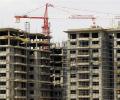
However, both developers as well as analysts are hopeful that these business metrics will pick up once activity resumes.

First-time buyers of cars and sport utility vehicles (SUVs) have made a comeback, shows last year's data from top passenger vehicle (PV) makers. If the trend persists, it may move the needle on the overall car penetration ratio. India's car penetration ratio is 32 per 1,000 people - one of the lowest, compared to mature car markets like the US and Europe.

The stock of the retail chain Avenue Supermarts (Dmart) was the biggest loser in the BSE 100 Index shedding 4.35 per cent on Thursday and added to these losses on Monday by falling an additional 1.3 per cent. The Street was reacting to lower than expected operational performance by the company in the March quarter. The country's largest listed retailer by market capitalisation reported a 20 per cent year-on-year (y-o-y) growth in its top line to Rs 10,337 crore.

Indian economy is likely to rebound with an 8.9 per cent growth in the fiscal year beginning April 2021 after economic activity showed significant improvement in the last quarter, IHS Markit said on Friday. The National Statistical Organisation (NSO) on Thursday predicted that the economy will contract 7.7 per cent in the current financial year ending in March, the worst performance in four decades.
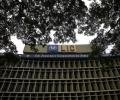
At a closed-door meeting with global investors, the largest asset manager in the country boasted of its nearly Rs 37 trillion assets under management (AUM) - 16.6 times that managed by the second-largest insurer SBI Life. The numbers are as of March 31, 2021. The assets of LIC are 1.2 times the net assets of the entire Indian mutual fund industry, which had AUM of Rs 31.43 trillion as of March 31, 2021 (about Rs 37.3 trillion until November this year). The standalone assets that LIC manages are equal to 18.7 per cent of India's GDP and worth more than gross domestic product (GDP) of the UAE, Bangladesh, Malaysia, Singapore, Hong Kong, South Africa, New Zealand, and Pakistan.

Transiting from "survival mode", which took most of the management time in FY21, the bank has been able to take a long-term view in terms of growth and preparing technology in the past 12 months.
