
The government's move to freely supply coronavirus vaccines to the states for universal inoculation and extend free rations to help the poor tide over the pandemic will only add an additional 40 bps of GDP to fiscal deficit, says a report, which also called for more transparent vaccine distribution plan for efficient vaccine allocation to the states.

The mop-up could have been much higher, but tax on imports fell 2 per cent y-o-y.

Food ordering platform Zomato, whose Rs 9,375 crore IPO opens on July 14, is planning to launch a grocery section on its app soon, a senior company official said. The company recently invested USD 100 million (around Rs 745 crore) for acquiring a minority stake in grocery delivery platform Grofers. "It (grocery) is a large opportunity. The online grocery is nascent right now but is growing rapidly not just in India but across the world... "We are actively experimenting in that space and recently invested $100 million for a minority stake in Grofers, with the idea of getting more exposure to that space and building our strategies and plan around that business," Zomato CFO Akshant Goyal said.

As even bigger road construction players are not willing to bet on BOT projects., NHAI will have to rethink its thrust on the BOT model.

The earnings are, however, expected to be down around 2 per cent on a sequential basis due to pent-up demand getting exhausted and the adverse impact of rising metals and energy prices on consumer goods and manufacturing companies.
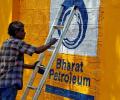
Fitch Ratings on Monday said uncertainty over the bidder consortiums and process complexity, including valuation, may lead to potential delays in privatisation of India's second-largest fuel retailer, Bharat Petroleum Corporation Ltd (BPCL). Affirming BPCL's rating at 'BBB-' with a negative outlook, Fitch said it continues to treat the potential divestment of the company by the Indian government as an event risk. "Bidders are conducting due diligence, but uncertainty over the bidder consortiums and process complexity, including valuation, may lead to potential delays.
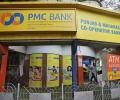
In its EoI document, the bank had said it was open to converting into a small finance bank.

TCS, Infosys ramp up onshore hiring; Infosys committed to hire 25,000 over 5 years.

This demand comes at a time when the government is falling short of its revenue targets due to dwindling tax and low disinvestment receipts. It could account for the dividend in the upcoming Union Budget on February 1. RBI is, however, yet to take a final call on the government's demand and might decide on this at its central board meeting scheduled for February 15 in New Delhi.
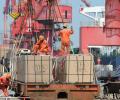
Exports to China saw sustained double-digit growth for the fourth straight month in August, led by eightfold rise in iron and steel shipments.
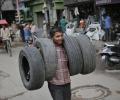
Domestic tyre demand is seen to grow by 7-9 per cent over the next five years.

Citing the massive surge in Omicron infections and the resultant impact on overall economic activities in the March quarter, Swiss brokerage UBS Securities has revised downwards its India's growth forecast for the current financial year to 9.1 per cent from 9.5 per cent earlier. However, UBS Securities does not see the third wave impact extending to the next financial year as it has revised upwards its real GDP forecast to 8.2 per cent, up from 7.7 per cent earlier, expecting the real GDP growth to remain well above the historical average. The World Bank pegs it at 8.3 per cent, unchanged from its June assessment, saying the recovery is not broad-based yet.

One thing is for sure: It smacks of the regulator's lack of confidence in the bank's board, points out Tamal Bandyopadhyay.

Measures that quickly boost demand and increase employment are needed to push up growth. Moreover, without announcing new planss, the government should strengthen schemes such as PM KISAN, MNREGA and programmes to build rural roads.

Revenue foregone on account of corporation tax exemptions is estimated to grow by 16 per cent in 2018-19 (FY19) versus 8.7 per cent in the previous year and 12 per cent in 2016-17, show the Budget documents.

The retail frenzy over initial public offers (IPOs) seen over the past few months is not without reason. Over the past two years, 61 companies have tapped the primary market and raised funds via IPOs. Of these, 24 companies (nearly 39 per cent companies) have more than doubled at the bourses with Happiest Minds, IndiaMart Intermesh, Indian Railway Catering and Tourism Corporation (IRCTC), Affle India and Route Mobile surging 468 per cent to 722 per cent since their listing date till now. Retail participation in the equity market, according to analysts, has just reached an inflection point due to the low interest rate regime amid lack of investment-worthy avenues that can generate a good return for investors.
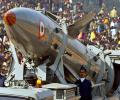
Free provision of food, cash transfers, and jobs in villages see enhanced flow of funds despite a precipitous fall in revenue. Till May, defence spend was nearly 30 per cent less than the previous year.
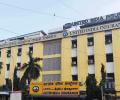
The NITI Aayog has recommended privatisation of state-owned insurer United India Insurance Company as the government aims to move ahead with its new public sector enterprise (PSE) policy for Atmanirbhar Bharat. The policy think tank has suggested that the public sector insurer be considered for privatisation in the banking, insurance and financial services sector, which has been classified as 'strategic' in the PSE policy, said an official. The policy proposes the "bare minimum" presence of government-owned companies in strategic sectors, and privatisation, merger or closure of remaining public sector undertakings (PSUs).
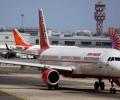
A court in Canada has ordered the seizure of amounts collected by the International Air Transport Association (IATA) on behalf of Air India and the Airports Authority of India (AAI). Separate orders were passed on November 24 and December 21 on pleas by shareholders of Devas Multimedia Private Limited who have filed multiple petitions to enforce arbitration awards against the Indian government. According to a Devas spokesperson, more than $30 million has been seized to date under the IATA action.

In November, DRL registered growth of 28 per cent year-on-year (YoY), which was the highest among peers and double that of the industry growth (14.5 per cent).

Several carmakers, including car market leader Maruti Suzuki India pulled the plug on diesel models citing higher costs for BSVI variants leaving buyers with limited options.

Though a weak dollar will lend some support to revenues and margins in FY21, the demand environment will outweigh any gain.

Campus recruits can also aim to double the existing entry level package by proving their skills through the TCS national qualifier tests.
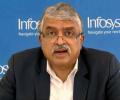
The annual meet also saw some shareholders of the country's second largest IT services company raising concerns over falling operating margins. But many congratulated the management for delivering good FY20 performance despite the tough economic conditions.

Infosys' up to Rs 9,200 crore buyback plan is scheduled to commence from June 25, wherein the IT major has proposed to buy back shares at a maximum price of Rs 1,750 apiece. The Board approval for the buyback was granted on April 14, 2021, and the shareholders' nod was received on June 19, 2021, at the company's 40th annual general meeting. The Bengaluru-based company has issued a public announcement on June 23 in various newspapers for the buyback of its equity shares from the open market through the stock exchange route, a regulatory filing said on Wednesday.

Multiple triggers such as asset sales, pickup in energy cash flows, increased traction in omni-channel retail, and rise in ARPUs could further drive the stock.

Many banks' profits will take a hit and a few of them could even end up being in the red because of treasury losses, triggered by a sudden spike in government bond yields in the rising interest rate cycle, notes Tamal Bandyopadhyay.

With a potential for a 10x growth in pre-tax profit from the business over the next decade, retail including e-commerce will be the next growth engine for Reliance Industries Ltd, Goldman Sachs said in a report. After growing 5x over FY16-FY20, RIL's core retail revenue growth has taken a pause in FY21 (April 2020 to March 2021) due to Covid related macro headwinds including lower footfalls. The oil-to-telecom conglomerate run by billionaire Mukesh Ambani used the period to build strong digital capabilities of the retail business while continuing to expand its physical reach.
Most listed corporate entities in the country are in a fix. With the sudden declaration in late March of a nationwide lockdown to tackle the Covid-19 pandemic, the final calculations of their financial results for the year 2019-20 (FY20) are hanging in limbo. Till April 19, only 41 of the 3,947 companies listed on the BSE have managed to finalise the dates for the declaration of their yearly financial results.

A look at six indicators shows all of them have collapsed from positive growth in April to contraction in September.

According to the global business information, knowledge and insight provider, India is likely to achieve an average growth rate of around 7.5 per cent during FY15-FY20.

The facility, which will manufacture nicotine and nicotine salts, will conform to stringent US and EU pharmacopoeia standards that define purity levels at 99.2 per cent for nicotine meant for pharmaceutical products. ITC will leverage the institutional capabilities of its century-old leaf tobacco business for this. ITC's cigarettes business saw disruptions across the value chain with the onset of the Covid-19 pandemic. The company mentioned in its annual report that with easing of restrictions and improvement in mobility from September 2020 onwards, the business recovered progressively over the remainder of the year to reach nearly pre-Covid levels towards the close of the year.
A query has been raised about the "missing" Rs 1.7 trillion fiscal hole in India's financial accounts. This is so because the Budget uses the revised estimates, a projection of how much the government was expected to earn, while the Economic Survey uses the first actual numbers.

'The move towards fiscal consolidation had to be diluted because of the relief to farmers as the government wants to appease the voters.'

With the government looking to divest loss-making steel assets, significant interest from secondary players is most likely this time apart from the anticipated list of large integrated primary steel producers, said industry experts. Rashtriya Ispat Nigam Limited (RINL), Neelachal Ispat Nigam Ltd (NINL), NMDC Integrated Steel Plant (NISP)-Nagarnar, Ferro Scrap Nigam Ltd and three units of Steel Authority of India (SAIL) - Alloy Steels Plant, Durgapur; Visvesvaraya Iron and Steel Plant, Bhadravati; and Salem Steel Plant, Salem - constitute the divestment list. All the three units of SAIL have been loss-making for more than five years.

The Indian IT industry will stage a "strong recovery" in 2021-22 with a revenue growth of up to 11 per cent, ratings agency Crisil said on Wednesday. The recovery will be led by increasing outsourcing and accelerating digital transformation services mainly in sectors such as banking, financial services and insurance (BFSI), healthcare, retail and manufacturing, it said. As per Nasscom, the IT services industry grew 2.7 per cent to $99 billion in 2020-21.

The company, backed by China's Ant Group, is planning to issue fresh shares worth Rs 7,500 crore in the IPO. This will make this India's third-largest offering after Reliance Power and DLF.

The RBI governor's assurance should give investors enough confidence to start believing in the NBFC sector again, say bankers.
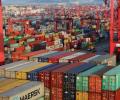
Since January this year, Indian exporters have begun to dread the shipping news. That's because most of it would be about another lot of shipping companies deciding to avoid Indian ports on account of delays.

Besides lining up Bali, Nairobi and Toronto flights, the airline is also planning flights from Mumbai to Hong Kong. The network expansion will help the national carrier grow its market share and capitalise on the capacity vaccum created by the collapse of Jet Airways.
