
The Indian economy is growing at a robust pace, driven by strong domestic demand, low inflation, and the healthy balance sheets of banks, said a Reserve Bank report released on Wednesday.

State Bank of India has embarked on a drive to cut the Know Your Customer (KYC) process to a single one across its branches, a top official said on Tuesday.

Fraud in Citibank's Gurgaon branch broke out in December involving nearly Rs. 400 crore being siphoned out from 20 accounts of high net-worth individuals.

The government and financial sector regulators buried their differences on the proposed Financial Stability & Development Council (FSDC) after Finance Minister Pranab Mukherjee offered the Reserve Bank of India governor a sweetener.
The government today said the proposed Financial Stability and Development Council, an inter-regulatory agency headed by the finance minister, would not act as a super regulator.

Given that a sizeable part of this money is part of the coveted current accounts and savings accounts, it is surprising that banks are not in a hurry to revive these accounts, notes Tamal Bandyopdhyay.

Drawing parallel with the Financial Stability Oversight Council in the US, the sources maintained that the proposed FSDC in India will not breach the autonomy of the regulators, a concern which has been voiced by the RBI.

'The committee has been constituted. Different government departments and FSDC members are part of it.'

'Spend, but create assets, spend but make sure that people benefit from it.' 'This has been a beautiful guiding principle. And I think as a finance minister I owe so much to the prime minister for keeping this path clear before us.'
The Reserve Bank on Monday said asset quality of banks improved further and their gross non-performing assets (GNPA) or bad loans ratio declined to a 12-year low of 2.6 per cent in September 2024 on the back of falling slippages and steady credit demand. The RBI also flagged concern over a sharp rise in write-offs, especially among private sector banks (PVBs), which could be partly masking worsening asset quality in unsecured lending segment and dilution in underwriting standards.

The bad assets or gross NPAs of commercial banks fell to a 12-year low of 2.8 per cent in March 2024 and may go down further to 2.5 per cent by the end of the current fiscal, said the RBI's Financial Stability Report (FSR) released on Thursday. Scheduled Commercial Banks' (SCBs) gross non-performing assets (GNPA) ratio fell to 2.8 per cent, and the net non-performing assets (NNPA) ratio to 0.6 per cent at the end of March 2024. "The asset quality of SCBs recorded sustained improvement, and their GNPA ratio moderated to a 12-year low in March 2024. Their NNPA ratio too improved to a record low," said the June FSR.

Finance Minister Nirmala Sitharaman on Tuesday said the Russia-Ukraine crisis and the ensuing jump in global crude prices are a challenge to financial stability in India. The two issues were discussed at the meeting of Financial Stability Development Council (FSDC), which comprises all the financial sector regulators, Sitharaman told reporters in Mumbai. "It is difficult to say how it (crude prices) will go.

Madhabi Puri Buch, the first female chairperson of Sebi, doesn't plan to rest on her laurels in her third and final year in office and has set out an ambitious goal, such as moving towards a same-day and instantaneous settlement cycle for the secondary market.

Borrowing from a fraudulent loan app subjects the borrower to a variety of risks.
The meeting will review the current global and domestic economic situation and financial stability issues, including those concerning banking and NBFCs.

The 21st meeting of FSDC comes against the backdrop of the economy hitting a six-year low growth rate of 5 per cent in the first quarter of 2019-20. Even some of the macroeconomic data for the second quarter does not portray an encouraging picture of the economy.

'Das is friendly, but he finally does what he does. The quality of engagement is very good.'

Will take their views on improving investment climate and boosting economy.

Amid decelerating manufacturing growth, the Reserve Bank wants the government to come out with measures in the Budget to give a boost to the sector, which can employ surplus labour from agriculture.

The Financial Stability and Development Council meeting on Tuesday started with an air of tension in the room. An official present described the participants' body language as "tetchy". However, once presentations and discussions begun, the mood considerably eased.

India is better prepared to deal with any further US Fed tapering, but the country needs to remain vigilant to face eventualities, Reserve Bank Governor Raghuram Rajan said.

In 2009, FinMin proposed to move regulators' reserves into public account. These accounts were finally opened in 2013-14. However, no funds have been deposited in it so far.

The Financial Stability and Development Council members include heads of regulatory bodies like RBI, Sebi and Insurance Regulatory Development Authority.
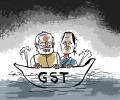
Retaining the GST rate assumes importance since states are under pressure to increase their revenues, hit hard by lockdown. Also, the Centre has not fully compensated states for their revenue losses on account of GST for 2019-20.

Economy improving but long way to full recovery, says FSDC.
RBI unveiled a few weeks ago its discussion paper on the proposed holding company structure for financial conglomerates, there were no murmurs of protest from any of the other regulators.

Finance Secretary Ashok Chawla, in an impromptu chat with reporters, sided with Sebi, while Planning Commission Deputy Chairman Montek Singh Ahluwalia cited the spat to make a case for setting up a Financial Development and Stability Council (FSDC).

Finance Minister Pranab Mukherjee on Friday discussed the economic situation with financial sector regulators, including Reserve Bank of India Governor and Sebi chief, and sought their inputs for the 2011-12 budget that will be unveiled on February 28.

Indian regulators have identified certain groups as 'financial conglomerates' and they are being monitored closely for any systemic risks they may pose.

The finance ministry has put out a revised draft in public domain.

The rate hike in the future is set to be 'calibrated and cautious'.

The Financial Sector Legislative Reforms Commission, chaired by Justice B N Srikrishna, has suggested a non-sectoral, principle-based approach to revamp the existing framework.
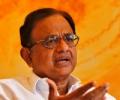
This was at a meeting of the Financial Stability and Development Council, chaired by him. Chidambaram, set to resign on Friday to make way for his successor, called upon the regulators and the ministry to be ready and take necessary action.

Officials said Sebi first proposed to the FinMin to amend the relevant provisions in the Sebi Act to discontinue RBI's representation on its board, as it already has adequate presence of government nominees and in its over 25 years of existence the regulator has evolved as an "effective and one of the best in the world".

Thanks to the recapitalisation by the government and measures taken by the central bank, collapse of any large housing finance company won't pose as big a risk as it had six months ago.

As households age, they pile up debt, a peculiarity unique to Indians, a Financial Stability and Development Council report has found. Here are the key takeaways.
'The PCA framework was revised and tightened in April 2017, but there was no discussion in any board meeting. The government does not know the rationale behind revising the framework and how the RBI arrived at it. Similarly, there was no discussion in the board meeting on the revised NPA framework,' said an official.

The three main regulators have different approaches to grievance redressal and different standards to stop harmful from coming pitched at the consumer.
