
A single application and a plethora of services for passenger cars - that is what myTVS, a brand that operates under Ki Mobility Solutions and is part of the TVS family, is set to bring to customers, in a bid to disrupt the concept of "super apps" in India. Starting July 15, myTVS will launch its connected car platform or super app called myTVS Life360 for aftermarket passenger cars. Through it, customers will be able to avail themselves of a range of services like maintenance, diagnostics, roadside assistance, accessories, payments, insurance, and so on.

Ulhas Joshi, Head -- Sales, Rank MF, a mutual fund investment platform, answers your queries.

HUL was the top gainer in the Sensex pack, spurting around 3 per cent, followed by Infosys, M&M, ITC, SBI, IndusInd Bank, Bajaj Finance, Asian Paints, TCS and Bharti Airtel. On the other hand, Titan, PowerGrid and NTPC were among the laggards.

IndusInd Bank, L&T, ITC, HUL, Reliance Industries and Sun Pharma were among the gainers. On the other hand, HCL Tech, Axis Bank, Asian Paints, UltraTech Cement and Infosys were among the laggards.


ONGC was the top gainer in the Sensex pack, rallying around 6 per cent, followed by NTPC, Tata Steel, ICICI Bank, ITC, Titan and Bajaj Auto. On the other hand, Axis Bank, M&M, Tech Mahindra, Asian Paints and Bajaj Finserv were among the laggards.

Ramdev made nature-to-goodness products popular, and reaped benefits. Then he seemed to lose focus and the last thing it needs is more distraction, like the passionate founder shooting his mouth off yet again

On the Sensex chart, HDFC, L&T, SBI, Axis Bank, Bajaj FinServ and HDFC Bank were major laggards - dropping up to 2.62 per cent. NSE Nifty closed with a loss of 164.85 points at 15,080.75.

ICICI Bank was the top gainer in the Sensex pack, surging over 3 per cent, followed by HDFC, Bajaj Auto, HDFC Bank, SBI, Kotak Bank and Bajaj Finance. NSE Nifty jumped 109.75 points to 14,406.15.

Patanjali, to a large extent, has penetrated the target group for its products. As a result, increasing the consumer base and revenue by 100 per cent in FY18 will be a stiff challenge.

Pitch Madison says advertising expenditure will grow 13.5% this calendar year

Group is planning to reduce its dependence on power generation business by expanding in other areas

Experts say Biyani will now become a contract manufacturer of fashion and FMCG products, with the Reliance group being one of his customers.

Located in a small township in the eastern part of Bengaluru is IBM's new Security Command Centre, which is surrounded by offices of multinational tech companies. This unit is the centrepiece of IBM's multi-million dollar investment to help businesses prepare for the growing threat of cyberattacks across the Asia-Pacific (APAC) region. This facility is the first of its kind in the region. It helps train in cybersecurity response techniques through highly realistic and simulated cyberattacks.
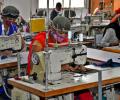
'The approach today is, instead of giving loans to 100 MSMEs, let us give one loan to a big-ticket corporate.' 'And so many of these big fish deceived the banks and the banks are in the doldrums now with high NPAs.'

From fast food and athleisure to ACs, the demand for several non-discretionary items has spiked since May 17, when Lockdown 4.0 was extended till May 31.

Bajaj Finserv was the top gainer in the Sensex pack, rising around 4 per cent, followed by Tata Steel, ICICI Bank, Axis Bank, Bajaj Finance and SBI. On the other hand, L&T, HDFC twins, Tech Mahindra, Bharti Airtel, M&M and TCS were among the laggards.

Most companies reporting an improvement in operating margins in Q1 as they cut ad spends and other expenses.

In May, Satpal Singh, who runs a dairy business with three buffaloes in Jewar, near Noida, was worried about the steep spike in input costs. Singh said dry fodder rates, which cost Rs 1,500-2000 per tractor trolley last year, were quoting at Rs 4,500-5,000. The price of other cattle feed ingredients (that include mustard meal and similar mixes) had also gone up from Rs 2,000 per quintal to Rs 3,100-3,200 per quintal.

The operating margin of India Inc is likely to drop in the December quarter with a 100-120 bps year-on-year decline, as 27/40 sectors are set to see crimped margins despite higher revenue, according to a report. Surging commodity prices and price hikes may help companies report a healthy 16-17 per cent revenue growth to Rs 9.1 lakh crore during the quarter ending December, the Crisil report said on Tuesday. Software major TCS will open the earnings season Wednesday.

Banking and financial stocks got more than their fair share of foreign portfolio investor (FPI) flows in February. Overseas investors pumped in $3.56 billion into domestic equities last month. Of this $1.96 billion went into financial stocks, data analysed by Edelweiss shows. "The sector now has 34.8 per cent of FPI assets, up from 33.8 per cent in January.
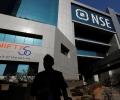
The firm is on course to replace state-owned Gail India in the widely-followed index during the semi-annual review set for March.

On the Sensex chart, IndusInd Bank, SBI, Dr Reddy's, NTPC, ICICI Bank, HCL Tech and Bajaj FinServ emerged as major laggards.

Baba Ramdev's brand is pivoting away from franchise outlets and expanding its retail presence through the tried-and-tested channel distribution route of FMCG companies. Arnab Dutta reports.

'For the next two years, we expect the bulk of earnings growth contribution from sectors like financials and energy, where the outlook remains positive, while the sectors which are linked to domestic consumption and are currently witnessing strains on margins have low salience for Nifty earnings.'

The bigger threat for DMart is that the Reliance-Future combine now has grocery revenues that are nearly 2.5 times of it, putting pressure on the former to improve stickiness of its consumers.

The hospitality sector has been hit very hard by the pandemic. In the past 18 months, it has lost business, first because of the harsh lockdowns and after that because of lack of demand due to the ensuing economic slowdown. Most hospitality businesses have sustained low revenues and losses since April 2020. Is this the classic case of a beaten-down cyclical sector that may be close to bottoming out?

Television as a category would see a lower rate of growth at 8% vis-a-vis 10% last year.

The lockdown that crippled the entire logistics, delivery and supply chain network to near zero, was enough to deal a body blow to India's fastest growing unicorn whose very business model saw a severe disruption, like several other firms and sectors.

The power of the small neighbourhood retailer can barely be ignored as organised players look to leverage their last-mile connectivity and reach, luring them by promising support in technology, inventory and tax management.
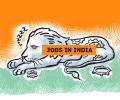
Job postings activity in April witnessed 3 per cent decline sequentially as the country is hit with the second wave of the pandemic leading to lockdowns, according to a report. The data indicates that the employment index saw a decline in job posting activity in April compared to March, by 3 per cent, according to the Monster Employment Index. The overall job postings also witnessed a decline of 4 per cent year-on-year as of April 2021, compared to April 2020.

Kotak Bank was the top loser in the Sensex pack, shedding over 2 per cent, followed by ICICI Bank, PowerGrid, HDFC, IndusInd Bank and Axis Bank. NSE Nifty declined 45.75 points to 16,568.85.

Sectorally, BSE metal, basic materials, energy, realty, power, oil and gas, finance, FMCG, bankex and telecom indices fell up to 1.71 per cent.

After stepping down from the board with effect from September 30, he will remain as Chairman Emeritus of the FMCG firm, according to a statement issued on Wednesday. The 79-year-old industrialist passed on the baton of GCPL to his younger daughter Nisaba Godrej in 2017 after leading the company for 17 years.

HR guru Mayank Rautela provides a three-point plan.

But return on equity deteriorated for 7 of the 12 firms analysed.
Godrej Consumer Products Ltd is trying to make sure it does not overload shops with stocks. And Marico is teaching store owners to use computers.
