
Telecom operator Bharti Airtel will start rolling out 5G services later this month as it signed requisite agreements with Ericsson, Nokia and Samsung. At the recently held much-awaited spectrum auction for 5G services by the Department of Telecom, Airtel bid for and acquired 19867.8 MHZ spectrum in 900 MHz, 1800 MHz, 2100 MHz, 3300 MHz, and 26 GHz frequencies. "We are delighted to announce that Airtel will commence roll out of 5G services in August.

India must integrate more with East Asia by getting into regional trade arrangements, lower its tariff walls, and improve the quality of its workforce, suggests T N Ninan.

Based on industry estimates, telecom companies, including Bharti Airtel, Reliance Jio, Vodafone Idea and BSNL, are expected to invest over $10 billion on buying 5G telecom equipment in the next five years as they transition from non-standalone networks to standalone 5G networks.

The government is planning to roll out 5G testbed in early January to enable small and medium enterprises and other industry players to test their solutions on a working platform, a top Department of Telecom official said on Thursday. For the promotion of 5G indigenous technology, DoT in March 2018, had approved a multi-institute collaborative project to set up an indigenous 5G Test Bed at a total cost of Rs 224 crore. A testbed consists of a specific environment including hardware, software, operating system, and network configuration to test a product or service.
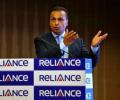
Supreme Court had asked the government to issue RCom a NoC for spectrum sale to Reliance Jio Infocomm by December 9 if it furnishes a corporate guarantee of Rs 1,400 crore

The Department of Telecommunications (DOT) on Wednesday received over Rs 17,873 crore from companies towards 5G spectrum dues. Nearly half the amount (Rs 8312.4 crore) was paid by Bharti Airtel, which made advance payments for four years to free up cash for future investments. Reliance Jio and Vodafone Idea paid Rs 7,864 crore and Rs 1,680 crore, respectively.

Ericsson filed a case claiming Xiaomi has been violating eight of its patents.

Revenue decline has left the operators with little money to service their mostly 3G and partly 4G infrastructure leading to poor data and voice quality.

Reliance Jio may not ask for a premium for its 5G services in the initial stages of the launch, according to sources in the company. The company will roll out 5G commercial services in four cities -Delhi, Mumbai, Chennai, and Kolkata - around Diwali this month and slowly ramp up the processes for other cities, too. A senior executive, when asked whether Jio will charge higher tariffs for 5G against 4G, said: "In the initial stages, customers have to adopt 5G, then they will have to find value in the service, and then one can look at monetisation."

Handset maker Sony Ericson on Friday launched a new portfolio of high-end mobile phones priced between Rs 25,695 and Rs 35,795 in India.

The Delhi High Court on Tuesday permitted Chinese mobile phone maker Xiaomi to sell and import Qualcomm chipset based handsets till January 8, as a temporary measure.

Led by falling cost of handsets and increased data consumption, new mobile subscriptions have grown the fastest in India with 18 million net additions in the third quarter of 2014, telecom gear maker Ericsson said on Tuesday.

The Department of Telecom on Tuesday approved applications of telecom companies -- Reliance Jio, Bharti Airtel, Vodafone Idea and MTNL -- for conducting 5G trials but none of them will be using technologies of Chinese entities. The list of telecom gear makers approved for trials include Ericsson, Nokia, Samsung, C-DOT and Reliance Jio's indigenously developed technologies.

Will open radio access network technology (O-RAN) disrupt the way 5G networks roll out in the country? After all, it promises to offer a substantially lower capital cost, enables the choice of an array of vendors, and provides more network flexibility - all very important for telcos who expect to invest over Rs 60,000 crore to roll out a pan-India 5G network and that's without spectrum costs. But more importantly, it counters the stranglehold of global telecom gear makers such as Ericsson, Nokia, and Samsung over telcos to whom they sell propriety technology and bundled hardware and software.

It is estimated that RCom has been reeling under debt of over Rs 46,000 crore.

Swiss-based Sauber have parted company with principal Monisha Kaltenborn, the first woman to run a Formula One outfit, the team's owners said.

In the not too distant future, you could see 5G technology being used for functions such as remotely-performed robotic surgeries, mine equipment operated remotely or cars driven by someone sitting hundreds of miles away. While these ideas will certainly find application globally, the urgent need for them in India could spur swifter adoption here than elsewhere.

The government is looking at a time frame within the first two weeks of July to kick off and complete the upcoming 5G auctions, according to discussions between officials and stakeholders. It is expected that the Telecom Regulatory Authority of India (TRAI) will give its recommendations on the base price by March, after which the necessary cabinet clearances will be given. The Department of Telecommunications (DoT) had earlier looked at undertaking the auction in the first quarter of 2022 but decided to push it back. Communications Minister Ashwini Vaishnaw had also said that the auctions are likely to take place in April-May.
The Cellular Operators Association of India (COAI) has bluntly told the government there is no reason for its members to roll out 5G networks as they will be unviable if 'captive private wireless networks' are allowed to be run by enterprises. The COAI, which has Bharti Airtel, Reliance Jio and Vodafone Idea as its key members, has written to Communications Minister Ashwini Vaishnaw saying there is 'no business case for the roll out of 5G networks'. Permitting such captive networks will 'diminish the revenue so much that there will be no viable business case left for the telecom service providers and there will not remain any need for 5G network roll out by telecom service providers (TSPs)'.
The government is engaged in talks with telecom firms for a launch of commercial 5G services in some cities by Independence Day and has assured them that spectrum auction will take place in April-May, providing them a three to four-month window for the rollout. A top executive of a leading telecom gear company said the deadline was feasible in some cases. "It can be achieved in some cities as it will take us 4-6 weeks to deploy a network, once the equipment or components have reached India.

According to the Ericsson Mobility Report, total mobile subscription in China stood at 1.26 billion, while in India it was 713 million in 2012. The net additions in the fourth quarter of 2012 was 140 million.

The Ericsson Consumer Lab study was conducted among 4,000 smartphone users across 18 urban cities in India.

The announcement quells fears among some telcos that Chinese players might be banned from participating in 5G trials and roll outs.
Huawei came under a cloud after allegations that the firm's electronic and telecom devices helped China spy on US corporations and agencies.
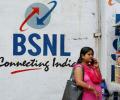
Just a few weeks ago, Communications Minister Ashwini Vaishnaw did some tough talking with the senior managers of Bharat Sanchar Nigam Ltd, the ailing state-owned telecom service provider. The message was clear: They had to perform, quit by taking the voluntary retirement package or be compulsorily retired from service. The terse message from an otherwise polite and soft-spoken minister came just days after he announced a second and bigger package of Rs 1.64 trillion as part of a four-year turnaround plan for BSNL.
The move comes against the backdrop of the US and some of its allies banning the purchase of Chinese telecom gear over security concerns and pressuring other countries to follow suit.

Jio and Ericsson tested the limits of 5G by demonstrating multi-gigabit speeds and super-low latency capabilities that are making new offerings such as remote control of machines and 360-degree 4K video streaming.
Given the security dilemma prevailing between India and China, India should curb the operation of Chinese telecom companies in India, asserts Dr Rup Narayan Das.

The apex court has settled the long-pending dispute between companies such as Samsung, IBM, HP & others and the tax department.
While the government has not barred procurement of equipment from Chinese companies, the process to amend the general financial rules (GFR) 2017 has started. This will impose restrictions on bidders in public procurement from countries that share a land border with India, reports Megha Manchanda.

Sony Ericsson just unveiled six new phones in the Indian market, phones it describes as entertainment-packed. They are: Xperia X8 (previously known as Shakira), the affordable GreenHeart Cedar, the QWERTY messenger Aspen, and three Walkman phones -- Yendo, Spiro, and Zylo. Unfortunately, no pricing details have been revealed yet.
It has invested $2 billion and spent $200 million on its R&D centre in Bengaluru, the largest such centre outside China where some core technologies are under development.

Jio has been allocated spectrum in 28 gigahertz to run 5G trials.

While RCom owes Indian banks close to Rs 45,000 crore, Ambani has lost close to $408 million of personal wealth year-to-date until Tuesday.

Bharti Airtel chairman Sunil Mittal has expressed hope that the government and regulators will step in to ensure the sector remains a viable place for continued investments and asserted that the industry requires "long overdue" support to maintain its current 3+1 structure. In the latest annual report of Airtel, Mittal said as the sector's role in the economy becomes more pervasive, its challenges loom larger. Issues such as unsustainable pricing and low returns in a highly capital-intensive environment, coupled with legacy legal issues, "have extracted their toll", Mittal observed.

In a bizarre mix-up, Swedish police raided an apartment after a couple hung 21-shaped balloons to celebrate a birthday but it was mistaken for 'IS' in a reverse image from outside and considered as the Islamic State propaganda.

Team by team analysis of Sunday's Russian Grand Prix (listed in championship order):

The move is expected to help Nokia expand its presence in the key US market.
State-run telecom major BSNL's plans to expand the GSM network has again come across a hurdle with Nokia Siemens Networks (NSN) refusing to accept its share of the 22.5-million-lines contract due to price differences.

A year after Bharti Airtel launched 4G services, there are only 6.5 mn users in the country
