
'Gold prices thrive on volatility and more so when the stock markets trend downward.'

'Investing abroad helps mitigate currency risk for foreign-currency denominated goals, such as children's higher education and international travel.'
A strong appetite for gold on Friday's Dhanteras is expected this year due to auspicious reasons and geopolitical concerns, continuing the 2022 trend driven by pent-up COVID demand. Compared to last year's Dhanteras, gold prices have jumped 22 per cent and silver prices by 21 per cent, respectively. "Gold and silver are good for portfolio diversification, especially in times of geopolitical turbulence.

The Indian equity markets have significantly increased in importance within the emerging market (EM) basket of stocks in recent years. Since 2018, India's weighting in the Morgan Stanley Capital International (MSCI) EM Index - tracked by passive funds with assets of nearly $500 billion - has doubled, while the number of domestic stocks has grown by almost 70 per cent.

The newest entrant to the Rs 46-trillion mutual fund (MF) space - Zerodha - plans to focus strictly on the low-cost passive segment and offer its products solely through the commission-free digital route, as it aims to replicate its broking success in the MF space. "We will offer an array of exchange-traded funds (ETFs) and index funds that would help investors take varied exposures and build portfolios based on their financial needs and risk tolerance. "Zerodha Fund House (FH) products will be exclusively distributed online and available as direct plans to engage directly with individual investors and consumers, taking advantage of the pronounced shift from physical to digital interactions," said Vishal Jain, chief executive officer, Zerodha FH.

In May, MFs were the net sellers in several PSUs, as they deployed Rs 47,600 crore in equities during the month.

A portfolio can be rebalanced by either selling a portion of the outperforming asset class or by buying more of the underperforming asset class.

'It makes sense to have gold in one's portfolio keeping the political and economic risks of 2024 in mind.'

The net inflow in equity mutual funds plunged 76 per cent to Rs 2,258 crore in November over the preceding month amid a sharp up move in the stock market that made investors wary of higher valuation. This also marks the 21st straight month of inflows into equity schemes. Overall, the mutual fund industry registered net inflows of Rs 13,263 crore in November, slightly lower from Rs 14,045 crore seen in the previous month, data released by the Association of Mutual Funds in India (Amfi) showed on Friday.

After Bandhan MF's US Treasury Bond 0-1 year Fund of Fund (FoF), Aditya Birla Sun Life (ABSL) MF has come out with US Treasury 1-3 Year Bond ETFs FoF and 3-10 Year Bond ETFs FoF. US bonds, which generally offer low yields, have turned attractive post the 525-basis point hike in US interest rates. According to Bloomberg data, the 1-year and 2-year US treasury yields now stand at 5.4 per cent and 5.1 per cent, respectively. Although the yields remain lower than what Indian government bonds offer, the differential has come down steeply.

In 2022, gold emerged as the top performer among all conventional asset classes with over 14 per cent returns mainly owing to the depreciation of the rupee.

There is widening gap between what the government's premier retirement fund makes on its investments and what it offers to employees. The Employees' Provident Fund Organisation (EPFO) makes the bulk of its investments in government-related securities. In other words, it lends to central and state governments and related entities. The interest it gets from these instruments is largely what it uses to pay interest to its subscribers.

rediffGURU and financial planning expert Colonel Sanjeev Govila (retd) answers your personal finance-related questions.

The rally in silver may continue if the global economic recovery remains on course.

Gold prices have been on an uptrend in the last few months, rising nearly 28 per cent to $2387 per ounce now. This rise in gold price, according to Christopher Wood, global head of equity strategy at Jefferies, is attributed to the demand from China amid lack of investor euphoria as regards the yellow metal. "Recent developments show a distinct lack of investor euphoria as regards gold, the question remains what is driving the current rally.

rediffGURU Dev Ashish answers your personal finance and mutual fund queries.

The joint venture of Jio Financial Services and BlackRock to foray into India's asset management space could be disruptive but not disastrous for incumbent industry players, analysts said on Thursday. As an investment strategy, analysts suggest investors stay put in shares of those AMCs that consistently improve business metrics, and where market capitalisation-to-asset under management (AUM) valuation is not stretched. However, growth expectations of incumbent players may get trimmed in the medium-to-long term, analysts said, once the Jio-BlackRock JV unveils its plans, discounting the looming challenge as significant enough to dent their profitability.

'Like every Budget, this time, too, there is chatter around tinkering with the long-term capital gains tax.' 'Investors may not want to jump into the markets until there is clarity on this front.'

Mutual fund (MF) houses have started realigning their overseas product offerings after the Securities and Exchange Board of India (Sebi) advised them to stop subscriptions. PPFAS Asset Management has decided to suspend transactions in Parag Parikh Flexi Cap Fund with effect from February 2, 2022. Though new lump-sum and systematic investment plans (SIPs) will not be accepted, existing SIPs and systematic transfer plans (STPs) will continue.

Rediff.com spoke to registered investment advisors to figure out how best the extra Rs 17,500 saved ever year can be invested to create a decent corpus in the years ahead. This is what they said.

Treat silver as part of the procyclical or growth assets in your portfolio, advises Sanjay Kumar Singh.

FMPs remain an option for investors who believe interest rates could head downward over time and wish to lock in the current rates. TMFs have very low expense ratios, which makes them cost-efficient.

'We suggest an equity strategy of 5% to 10% exposure to cash, 5% to Gold ETF, close to 50% to Sensex/Nifty/large mid-cap stocks.'

Only a fifth of foreign portfolio investors (FPIs) in breach of the market regulator-specified thresholds may need to provide enhanced disclosure on ultimate beneficiaries, thanks to exemptions being provided, according to people in the know. The ultimate beneficial ownership (UBO) disclosures, for FPIs with over 50 per cent holding in a single corporate group or over Rs 25,000 crore exposure to Indian assets, will be required from February 1. But, depending on their category, FPIs will have 10-30 working days to submit these granular details.

An allocation to ESG theme funds can bring down the overall risk of an equity portfolio. Investors with long-term financial goals, such as retirement, should not ignore sustainable investing.

It has mostly been a one-way street for smallcap stocks that have taken it on their chin thus far in February. The Nifty Smallcap 250 index has shed 3.2 per cent in the current month as compared to the 1.8 per cent decline in the Nifty Midcap 100 and the 0.5 per cent drop in the Nifty 50 index, data showed. Technically, the index has slipped below its 20-day moving average (DMA) placed at 14,800 levels on Monday, and is currently testing the 50-DMA, and is placed at 14,278 levels.

The mutual fund (MF) industry had an action-packed 2023 as it tackled the scrapping of tax benefits for debt fund investors and surging flows into equity funds.

Ajit Mishra, vice president, Research, Religare Broking, answers your queries.

Actively-managed large-cap mutual fund (MF) schemes have managed to regain some lost sheen this year after faring poorly in the 2022 calendar year (CY22). At the end of the first six months (H1) of CY23, 78 per cent of the active large-cap schemes were ahead of the Nifty50 index funds as against just 26 per cent in 2022. When compared to the Sensex index funds, 61 per cent active funds have delivered better returns, shows an analysis of Value Research data.

The Securities and Exchange Board of India (Sebi) could soon issue interim orders imposing a market ban on the two former fund managers of Axis Mutual Fund (MF) for suspected front-running of trades, said people with knowledge of the development. "The market regulator has gathered prima facie evidence that demonstrates that the duo has violated the integrity of the market. "While a detailed investigation is still pending in the matter, Sebi could take action under Section 11 (4) to prevent further harm to the investors and the securities market," said a source.
Mutual funds' equity buying remained elevated for the fifth consecutive month in December, taking the net equity purchase past Rs 1.7 trillion in 2023. The aggressive buying in December indicates that flows into equity funds are likely to have remained unaffected by the sharp run-up in the market last month. Mutual funds (MFs) bought equities worth Rs 23,000 crore last month (until December 28) compared to Rs 18,000 crore in November, shows data from the Securities and Exchange Board of India (Sebi).

Actively managed mutual fund (MF) schemes had been at the receiving end over the past few years for their inability to beat their benchmarks. However, the slump in shares of Adani Group companies - two of which are part of the benchmark National Stock Exchange Nifty50 index - have helped them improve their performance vis--vis exchange-traded funds (ETFs) or index funds.
According to sources, the two fund managers allegedly made illicit gains worth Rs 150 crore to Rs 200 crore through front-running.

The global semiconductor shortage is turning into a headache for automotive (auto) and appliance manufacturers. But it is proving to be a boon for equity investors. Semiconductor stocks are among the best performers this year. The PHLX Semiconductor Index has gained more than 35 per cent year-to-date.
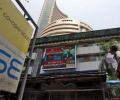
The BSE's arm Asia Index has announced Wipro will replace Bajaj Auto in the 30-share Sensex. The move is part of a semi-annual rebalancing exercise and will take effect when the market opens for trading on December 20. On account of the rejig, Wipro will see buying by passive funds to the tune of Rs1,300 crore, while Bajaj Auto will see selling of Rs 636 crore, estimate analysts.

The contribution from asset management companies (AMCs) has surpassed the Rs 3,000 crore target for the creation of a Rs 33,000 crore backstop facility for debt mutual funds (MFs). The initial corpus for the Corporate Debt Market Development Fund (CDMDF) is nearly Rs 3,100 crore, according to multiple government officials and AMC executives. "The fund is operational now. "The required corpus has been raised by AMCs and the remaining part (Rs 30,000 crore) is in the form of a guarantee from the government which will be activated only in case of a credit event," explained D P Singh, joint CEO and deputy MD, SBI MF.

rediffGURU and financial planning expert Colonel Sanjeev Govila (retd) answers your personal finance-related questions.

The total number of unique investors directly investing in the stock market has surged to 80 million for the first time, with the latest 10 million additions taking place in just eight months, according to data shared by the National Stock Exchange (NSE), the country's largest bourse. "The 80 million unique PAN (permanent account number) investors correspond approximately to around 50 million unique households in India amounting to around 17 per cent households directly investing in the Indian stock market via NSE's extensive nationwide network of trading members," said the exchange. In 2021, the number of domestic households were pegged at 300 million.

Dwaipayan Bose simplifies the whys and hows of revisiting your financial goals

Active largecap funds, which have the toughest job in terms of outperforming the benchmark, did better in 2023 as their bets in the mid and smallcap stocks paid off.
