
The Supreme Court of India has agreed to examine petitions challenging the constitutional validity of the Digital Personal Data Protection (DPDP) Act, 2023, focusing on concerns about its impact on the Right to Information Act.

The draft rules have been issued after Parliament approved the Digital Data Protection Bill 2023 about 14 months back.

'One has to be very mindful because it will be applicable for big tech platforms and even for banks and insurers, whose business is completely different.'

The United States Trade Representative (USTR) has expressed concerns that India's Digital Personal Data Protection (DPDP) Act, particularly the lack of a deemed consent mechanism for credit information companies, and the Information Technology (IT) Rules of 2021, along with frequent internet shutdowns, could negatively impact the ability of US companies to operate and trade in India.

The "construct of the DPDP Act" cannot be changed at this stage, though there may be some minor tweaks in the language of the Rules and formats in certain legitimate cases.

The new rules allow for a staggered implementation road map, giving companies, data fiduciaries, data principals, and other stakeholders up to 18 months to comply with the administrative guidelines under the DPDP Act.

Entities may be given about a year to tune their systems to comply with norms of Digital Personal Data Protection Act, 2023, Minister of State for Electronics and IT Rajeev Chandrasekhar said on Wednesday. Speaking to reporters on the sidelines of consultation with the industry, Chandrasekhar said the Data Protection Board and guidelines for the eight rules, including consent management, will be put in place within a month. "Industry wants some more time for age-gating, different timelines for transition for different data fiduciaries.

Prime Minister Narendra Modi is promoting India as a global hub for digital infrastructure and artificial intelligence, highlighting the government's incentives for data center investments and inviting the world's data to reside in India.

'We are in touch with industry to further compress the timelines.'

The government on Thursday tabled the Digital Personal Data Protection Bill 2023 in the Lok Sabha with an aim to protect the privacy of Indian citizens, while proposing a penalty of up to Rs 250 crore on entities for misusing or failing to protect digital data of individuals.

DPDP Act (2023) gives individuals the right to decide how their personal data is collected and used. For many businesses, this means reworking longstanding data practices, notes Ravi Duvvuru.

Companies, particularly those that are notified as Significant Data Fiduciaries, will have to make extensive investments in data mapping, process modification, consent management tools, tools to enable Data Principal Rights, and establish a well-structured Data Privacy Officer organisation.
After withdrawing the personal data protection bill, the government is hopeful of getting a new legislation passed by the next Budget session of Parliament, Union Minister Ashwini Vaishnaw has said.

'There were two options before the government -- create a complex, cumbersome law, which will cause a tremendous amount of compliance challenges for startups or say let's go back and do a clean slate, where we do a framework of laws and policies'

Hours after Congress leader Manish Tewari on Thursday said the government might get the Digital Data Protection Bill classified as a money bill, Union IT Minister Ashwini Vaishnaw refuted the charge and termed it a "normal bill".

The Registrar General and Census Commissioner of India, Mritunjay Kumar Narayan, has reassured the public that individual data collected during the upcoming census will remain confidential and cannot be used for any purpose other than statistical aggregation.

From April 1, 2026, the Reserve Bank of India's new authentication directions modernise how every digital payment you make must be verified -- and place the burden of security squarely on your bank, not on you.

'We do have some concerns with the timeline being shortened from 18 to 12 months.'

"All they have done in their entire report is privacy regulation," counsel appearing for WhatsApp told the appellate tribunal.

After withdrawing the personal data protection bill, the government is hopeful of getting a new legislation passed by the next Budget session of Parliament, Union minister Ashwini Vaishnaw has said. The government on Wednesday withdrew the Personal Data Protection Bill from the Lok Sabha. The Joint Committee on Personal Data Protection Bill, 2019, headed by BJP member P P Chaudhary, had tabled its report in Lok Sabha on December 16, 2021.

Microsoft CEO Satya Nadella on Tuesday announced plans to invest $17.5 billion in India to help build infrastructure and sovereign capabilities for the country's AI-first future, marking the third major AI-driven investment in the country in the past two months. Microsoft said that the $17.5 billion (around Rs 1.58 lakh crore) investment builds on the $3 billion (around Rs 26,955 crore) funding announced earlier this year, which the company is on track to spend by the end of CY (calendar year) 2026.
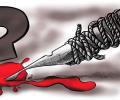
'By extending the definition of 'personal' to include institutions and not just individuals, the State has equipped itself with a tool to block access to most kinds of information.'

The DPDP rules, which have come into effect, require companies to implement a data protection and consent management system by November 2026.
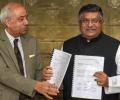
The report touches on variety of issues including consent, rights of children, data protection authority and right to recall data.
The court is hearing appeals against a CCI order imposing a penalty on Meta and WhatsApp.

Sarvam's LLM will have more than 17 trillion tokens with 17 to 20 per cent coming from Indian data

Since the deadline for Justice B N Srikrishna Committee's feedback is December 31, the government is unlikely to table a data protection Bill in the winter session of Parliament.

Rahul Gandhi claims the Indo-US trade deal will compromise the data security of 1.5 billion Indians, alleging Prime Minister Modi is surrendering India's data resources to the US. He warns of potential job losses in the IT sector due to AI and the importance of controlling India's data pool.
'By leveraging user data from WhatsApp, Meta can enhance its technology.' 'It (user data) is collected by me, it's my personal property. Shall I give it to my competitors?'

'The impact will be minimal and it will only increase compliance cost on consent, data flows, localisation timelines, internal audits, data mapping, and new tooling.'

Recently, an Air India flyer sent a legal notice to the airline seeking damages of Rs 30 lakh for the breach of personal data of 4.5 million passengers, including her husband and herself. Air India had informed the complainant of the data leak a month earlier, after it emerged that its passenger service system provider fell prey to a cyberattack in February. However, in the absence of a data protection law, India lacks a mechanism for compensation or grievance redress of consumers in such cases, say experts. Advocate Virag Gupta, a New Delhi-based cyber law expert, explains that a legal notice is a good beginning in the Air India case, but it raises many questions. These include whether sensitive personal information has been leaked and whether the airline is responsible or not, given that a passenger service system provider was also involved.
Significant controls and exemptions to the government under the proposed Digital Personal Data Protection bill 2022 are likely to make it harder for companies to invest in data centres and data processing activities in India, according to global technology industry body ITI. The ministry of electronics and IT has floated draft Digital Personal Data Protection (DPDP) Bill 2022 and has invited comments on the same till January 2. "The Bill grants significant controls to the executive arm of GOI (Government of India) and delegates much of the detailed rulemaking authority to separate, as yet undefined processes.

'Companies will need to revisit compensation structures, contracts, staffing models, and human resources system.'

'The nepotism, corruption, bad governance and 15 years of rampant crime that has happened across West Bengal under her rule led to her ouster.'

'Instead of the government and telecom operators solving the mess of their own creation, they're telling us we need to give access to our phones perpetually.'

The draft digital personal data protection (DPDP) rules, which require banks to obtain explicit consent from their customers before using their data for purposes beyond the original intent, although is being followed in spirit, leaves no room for regulatory arbitrage, experts said. They said that the potential business impact is difficult to assess at this stage, but the formalisation of these rules will mean banks now need to establish clear data processing agreements with third-party entities to ensure compliance.

The government will "notify such countries or territories outside India to which a data fiduciary may transfer personal data", according to the draft unveiled on Friday for public feedback.

The Dhurandhar movies will undoubtedly shape the minds of the audience much more than news reports, court investigations, books and documentaries. But it is worth remembering that Pakistan's irridentist claims against India's national security have succeeded due to strategic planning, diplomacy, and the unsung heroines and heroes across government agencies, not due to a single maverick leader, points out Shweta Desai.But it is worth to remember that Pakistan's irredentist claims against India's national security have succeeded due to strategic planning, diplomacy, and the unsung heroines and heroes across government agencies -- not a single maverick, points out Shweta Desai.
'Unless the government comes up with the rulebook, the technical requirements will not be clear to us.' 'Going by the Act, non-technical provisions can be complied with within six months.' 'But we need up to 24 months for provisions like parental consent.'

'Look at what kind of sites the child is visiting, what kind of games they are playing and then tell them about the pitfalls.' 'After the child sleeps, parents can check the history of sites visited and block sites that could be dangerous or inappropriate.'
 © 2026 Rediff.com - Advertise with us - Disclaimer - Privacy Policy - Sitemap - Feedback - About us - Terms of use - Grievances