
Under the TMC, Bengal has seen expansion of welfare, but not big-ticket private investment.

Companies have been approached to set up incubation centres that will offer financial and non-financial support to manufacturing startups at various levels.

Also, a dedicated cell, headed by a member of the Central Board for Direct Taxes (CBDT), will be set up to address concerns faced by start-ups.

'80% of start ups fail because they don't have a support system to help them in the very early phase.' 'It's not just an idea that takes an entrepreneur through the initial three years of journey.' 'What plays a definitive role in making a start-up successful is idea+team+capital+mentors+access to a larger ecosystem.'

From the launch of the 'Startup India' initiative in 2016, to the abolition of angel tax and easing of reverse flipping norms, the startup ecosystem is evolving.

The government is at a "fairly advanced stage" of finalising a well-coordinated e-commerce policy and consumer protection rules, which will incorporate provisions of Open Network for Digital Commerce (ONDC), Department for Promotion of Industry and Internal Trade (DPIIT) secretary Rajesh Kumar Singh said on Thursday. "E-commerce rules and e-commerce policy will be congruent with each other... That exercise is at a fairly advanced stage," Singh told reporters. The remarks come on a day the number of daily transactions on the platform has gone up 500 times since the beginning of this year with the number of retail merchants added to its roster growing 40-fold.

The credit guarantee cover under the scheme would be both transaction-based (for single eligible borrowers) and umbrella-based (for a group of eligible borrowers).

The government on Saturday announced a host of measures such as setting up of a new Fund of Funds Scheme (FFS) with Rs 10,000 crore corpus; and extension of period of incorporation by five years with a view to promote growth of budding entrepreneurs.

'I tell young entrepreneurs if you don't have a great idea, if you don't have a good business model, don't think of a start-up.'

'It is the responsibility of industry to take the very bright talent whose knowledge of software engineering basics is very high, and then give them additional skills.'

'Before you work on your business plan, before you build your team, you should have a clear idea about what your product is, who your customer is, how valuable the product is, and whether the market is deep and wide.'

The course comprises 36 weeks of classroom study, which includes lectures, case studies, tutorials, lab sessions, videos, individual and team assignments, guest lectures from the Japanese faculty, industry experts and business leaders, totalling 1,173 interaction hours.

The Modi government's flagship initiative 'Make in India' launched 10 years ago has helped the country boost exports, push investments and promote manufacturing. Under the initiative, launched on September 25, 2014, a series of measures have been taken by the government to boost local manufacturing. These initiatives include the rollout of production linked incentive (PLI) schemes for 14 sectors, easing foreign direct investment (FDI) norms, reducing compliance burden to improve business climate, all approvals through single window, and rolling out of the national logistics policy.

The government is planning to tweak its procurement policy to give a fillip to domestic manufacturing. The industry department has floated a proposal to raise the minimum local content requirement for public procurement for Class-I and -II suppliers from 50 per cent currently to 70 per cent, and 20 per cent as of now to 50 per cent, respectively.
The move followed after certain startups complained about facing harassment and the taxman breathing down their neck on the angel tax issue.

Gujarat and Karnataka have been ranked as the best performers in developing startup ecosystem for budding entrepreneurs, according to the ranking of states and Union territories by the Department for Promotion of Industry and Internal Trade (DPIIT). Among smaller states having population of less than one crore, Meghalaya has been adjudged as the best performer. The rankings are based on the initiatives taken to develop the startup ecosystem for promoting budding entrepreneurs.

Nearly five months after its soft launch, the government's e-portal, the National Single Window System (NSWS), is seeing a significant increase in the number of investors using it to get a bunch of approvals for their ventures. The first clearance was granted on 18 January. Since then, the progress has been good. Out of the 1,258 registered users on the portal, 378 were registered in the last one week.

Commerce and Industry Minister Piyush Goyal urged start-ups to focus on three Ps - product, process, people - for building Aatmnirbhar Bharat.

The message is clear: The 60-year-old wise uncles need to handhold the 40-year-old entrepreneurs when, obsessed with ambition and greed for growth, they become a victim of hubris, points out Tamal Bandyopadhyay.

In a big push to the production-linked incentive (PLI) scheme, the government has nearly doubled (increase of 81 per cent) the allocation in five key industry segments from Rs 8,405 crore in the Revised Estimate of FY24 to Rs 15,198 crore in the Interim Budget for FY25. The segments cover over eight PLI schemes, including mobile phones, IT hardware, pharma (PLIs for medical devices, intermediates and pharmaceuticals), food processing, telecom hardware and, auto and auto components. In FY24, DPIIT officials, however, said that the disbursements would be much higher at around Rs 11,000 crore than what has been budgeted for the year.

To resolve the so-called 'angel tax' issue, the start-ups and their investors who file requisite declarations and provide information in their returns will not be subjected to any kind of scrutiny in respect of valuations of share premiums, she said.

A strong start-up ecosystem can propel investment, jobs, and demand creation, and for that, substantial growth capital is required.
The government is working towards further review and simplification of the foreign direct investment (FDI) policy to facilitate the proposed initial public offering (IPO) of the Life Insurance Corporation (LIC), Department for Promotion of Industry and Internal Trade (DPIIT) secretary Anurag Jain said on Thursday. The final decision will be taken by the Cabinet. The industry department is working together with the finance ministry's department of financial services (DFS) and department of investment and public asset management (DIPAM) towards a successful listing of the life insurer on the domestic bourses, which is expected to be the largest in India.
The government will develop a mechanism to ensure that e-commerce companies and entities that have adopted Open Network for Digital Commerce (ONDC) architecture are compliant with the rules. Non-compliance may result in a penalty. "We will have our own evaluation system, and if we find any player is not sticking to it, then we will take action. "Participants will have to be compliant with the rule of the land," Sanjiv, joint secretary at the Department for Promotion of Industry and Internal Trade (DPIIT), told reporters on Thursday.

The Department for Promotion of Industry and Internal Trade (DPIIT) will soon start public consultation for a national retail trade policy, which is likely to include an insurance scheme aimed at providing financial protection against losses caused by theft, accidents or natural calamities. The policy will also spell out ways to give traders access to low-cost finance, promote digital inclusion, and create necessary infrastructure to support them, a senior government official told Business Standard. This is expected to offer relief especially to traditional traders, who are facing stiff competition from large e-commerce players.

The Indian startup ecosystem has lauded the inclusion of startups in the New Delhi Leaders' Declaration for the first time ever in the history of G20. Industry stakeholders say that the move will lead to easier access to capital, reduce regulatory hurdles, and may revive funding activity. The Declaration, through the Startup20 initiative, recognised startups as "natural engines of growth" and key to socio-economic transformation by driving innovation and creating employment.

While 100 per cent FDI is allowed in single-brand retail, if the foreign investment exceeds 51 per cent, the 30 per cent mandatory local sourcing norm kicks in.

The Centre on Tuesday said it will not seek disclosure of flash sales from e-commerce players to regulate the fraudulent sale of goods and services but will take appropriate action as per the law on consumer complaints. Discount sales that benefit maximum to consumers will continue, but not fraudulent flash sales on the e-commerce platforms, the government said, adding that the e-tailers need not be "anxious" about the draft rules. Ban on fraudulent flash sales, mis-selling and appointment of chief compliance officer/grievance redressal officer -- are among key amendments proposed to the Consumer Protection (e-commerce) Rules, 2020, on which the government has sought public comments by July 6.
The department for promotion of industry and internal trade (DPIIT) has suggested to the home ministry to allow limited activity in certain sectors such as heavy electricals and telecom equipment with reasonable safeguards. In a letter to Home Secretary Ajay Kumar Bhalla, the department said that these activities are essential to improve the economic situation and provide liquidity in the hands of the people.

In its new avatar as the Department for Promotion of Industry and Internal Trade (DPIIT), it will directly be responsible for 'the welfare of traders and their employees'.

Three years and Rs 28,710 crore worth of transactions later, it has more than double the number of sellers than Flipkart.

State minister Nawab Malik said the Centre has written to the Maharashtra chief secretary, saying the proposed Metro-3 car shed land in suburban Kanjurmarg belongs to it, as he accused the opposition BJP of conspiring to stall the project through the Union government.
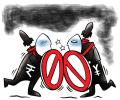
In 2020-2021, the amount of foreign direct investment into India from China and Hong Kong plummeted to just $200 million -- its lowest in the recent past. In the first half of 2021-2022, FDI investments through these two nations stood at just $36 million.

The government on Saturday made its prior approval mandatory for foreign investments from countries that share land border with India to curb 'opportunistic takeovers' of domestic firms following the COVID-19 pandemic, a move which will restrict Foreign Direct Investment from China.

Work on a dozen decisions to start by next week.

After witnessing cloudy skies this year, the country's renewable energy sector is expected to boom with a likely investment of over $15 billion in 2022 as the government focuses on electric vehicles, green hydrogen, manufacturing of solar equipment as well as achieving the ambitious 175 GW renewable capacity target. India, which has an installed renewable energy generation capacity of a little over 150 GW, aims to reach 175 GW in 2022. Out of the total mix, 100 GW would be from solar, 60 GW from wind, 10 GW from bio-power and 5 GW from small hydro power projects.
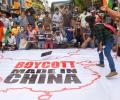
The Government of India amended the General Financial Rules 2017 to enable imposition of restrictions on bidders from countries which share a land border with India on grounds of defence of India, or matters directly or indirectly related thereto including national security, an official statement said.
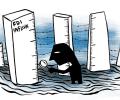
A series of steps taken by the government to promote ease of doing business and liberalisation of foreign direct investment norms have helped India receive record FDI inflows so far this year, and implementation of measures like PM Gati Shakti, single window clearance and GIS-mapped land bank are expected to further push investments in 2022. Notwithstanding the global slowdown and the COVID-19 pandemic, total foreign direct investments into India rose to a record $81.72 billion in 2020-21. During April-July this fiscal, FDI (foreign direct investment) into the country increased by 62 per cent to $27.37 billion.

Prime Minister Narendra Modi on Friday said production linked incentive (PLI) scheme, which is aimed at boosting domestic manufacturing and exports, is expected to increase the country's production by $520 billion in the next five years. Addressing a webinar on PLI scheme, organised by Department of Industry and International Trade (DPIIT) and NITI Aayog, through video conference, Modi said the government is continuously carrying out reforms to boost domestic manufacturing. In this year's Budget, about Rs 2 lakh crore was earmarked for the PLI scheme for the next five years and "there is an expectation that the scheme would result in increasing the production by about $520 billion in the next five years", he said. He added that there is also an expectation that the current workforce in the sectors, which will avail the benefits of the PLI scheme, will be doubled and job creation will also increase.

Embargo on imports from a neighbouring country would send a chilling signal to foreign investors who look for transparency and companies with manufacturing units in India had requested the government to publish any change in port policy "to provide the business community with the visibility they need to function", says United States-India Strategic Partnership Forum.
 © 2026 Rediff.com - Advertise with us - Disclaimer - Privacy Policy - Sitemap - Feedback - About us - Terms of use - Grievances