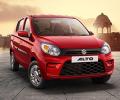
The company, which sells every second car in the domestic market, said it expected production and sales to grow between 4 per cent and 8 per cent for the financial year started in April.

Besides their country of origin, General Motors, Ford Motor and Harley-Davidson have another trait in common: all three have failed in India, the world's fifth largest automobile market. All three of them took a tough call to de-prioritise India as a market amid disruption from heightened regulations and sharper focus on capital allocation by the parent.

'The same thing takes place in the Congress and we have to call it democracy'

Analysts said the demand recovery in two-wheeler and car segments was skewed towards the semi-urban and rural markets.

The country's largest carmaker Maruti Suzuki India (MSI) aims to sell 4-6 lakh CNG units in the current fiscal year depending upon supply situation of essential components, as per a senior company official. The company sold about 2.3 lakh CNG units in 2021-22. MSI currently sells nine of its 15 models with CNG powertrain and is looking to drive in more models with such technology in the coming days.

With rising petrol and diesel prices driving up demand for its CNG vehicles, the country's largest carmaker Maruti Suzuki India plans to widen its CNG portfolio by offering the fuel option in four more models 'very shortly', according to a senior company official. The company, which plans to launch an electric vehicle (EV) in the Indian market by 2025, is also currently keeping a close watch on the country's EV ecosystem "to find out what is the best way of evolution" to be able to offer affordable EVs with hassle free charging infrastructure in order to clock high volumes for a sustainable business.
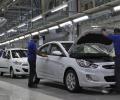
The country's leading automakers Maruti Suzuki and Hyundai Motor reported a decline in dispatches to dealers in March as shortage of electronic components impacted production. On the other hand, Tata Motors, Skoda and Kia India posted their highest ever monthly wholesales last month. Toyota Kirloskar Motor said its dispatches in March were the highest in the last five years while Mahindra & Mahindra also reported a robust increase in its passenger vehicle dispatches in March.

Former managing director of Maruti Suzuki India, Jagdish Khattar, passed away on Monday morning following a cardiac arrest, according to people close to him. Khattar (79), a former bureaucrat, was considered as one of the most high profile leaders of the Indian automotive industry, laying the foundation for Maruti's future growth after the government began its disinvestment in 2002 and gradually exited from its joint venture with Suzuki Motor Corporation (SMC). He had joined the then Maruti Udyog Ltd in July 1993 as director (marketing) and went on to become executive director (marketing) in the next six years.

A number of companies, including Maruti Suzuki, Renault and Nissan, are giving gold coins to buyers who book cars by the month-end. There are other benefits as well, reports Ajay Modi.

The country's largest carmaker Maruti Suzuki India (MSI) is planning to invest around Rs 18,000 crore on a new manufacturing facility in Haryana, as per a top company official. The new plant would replace the company's Gurugram-based facility and is expected to have an installed production capacity of 7.5-10 lakh units per annum. While confirming the Rs 18,000 crore investment plan, MSI chairman RC Bhargava told PTI that the company had always planned to shift the Gurugram facility to a nearby location.

Chinese automakers Great Wall Motors, FAW Haima Automobile, and Changan Automobile, after dithering about entering India for some years, have been encouraged by the robust sales performance of the late entrants Kia Motors and MG Motors even in a slowing market.

India has exported passenger vehicles worth $268 million to the US in three months ended June

The country's largest carmaker Maruti Suzuki India is neither shifting investments nor jobs from Haryana to Gujarat by shifting production of its compact sedan Dzire, company chairman RC Bhargava said on Tuesday. The company is maximising the efficiency of production at its two plants at Haryana and the parent Suzuki's Gujarat plant, keeping in mind the demand of its multiple models.

Reliance on a single model begins at about 40% and goes up to 80 % in case of some companies
All three employees are recovering fast towards normalcy and as per the safety protocol, essential information was shared with the district health authorities, it added.

The new year will see a line of hatchbacks (including compact SUVs) hit the Indian roads. Rajesh Karkera/Rediff.com offers a peek.

The country's largest carmaker Maruti Suzuki India (MSI) on Thursday reported 2.04 per cent increase in its consolidated net profit for the second quarter at Rs 1,419.6 crore on the back of higher sales. The auto major had posted a net profit of Rs 1,391.1 crore in the July-September quarter of the previous fiscal.

The company had sold 1,58,076 units in March last year, Maruti Suzuki India said in a statement. Domestic sales declined by 46.4 per cent at 79,080 units last month as against 1,47,613 units in March 2019, it added.

MSI will inspect certain WagonR models for a possible issue of fuel hose fouling with metal clamp.

Having established its presence in the country, luxury carmaker Lexus is now looking to chart its next phase of growth in India as it looks to consolidate sales network and drive in new models, including fully electric cars in the country, according to a top company official. The company, which is the luxury car arm of Japanese auto major Toyota, initiated operations in India in 2017 and currently sells seven models in the country, including the locally-produced ES 300h sedan. Known for its self charging hybrid cars, the company is now gearing up to drive in battery electric vehicles, besides ramping up its existing product portfolio in the market.

The company cut production of its mini cars comprising Alto, and S-Presso by 98.32 per cent at 401 units as against 23,874 units in the year-ago month.

The automaker was found to have engaged in anti-competitive practices.

Maruti's exports are limited and mainly to countries in Africa and Latin America.

Major carmakers in the country are loading barrels for the coming battle in the field, reports Arnab Dutta.

MSI sells a range of models from entry-level hatchback Alto to S-CROSS, priced between Rs 2.99 lakh and Rs 12.39 (ex-showroom prices Delhi) lakh, respectively.

While the Q5 is a light driving car that feels like you can easily fling it over and around brooks and brushes and hills and plains, it's also versatile in that its rear seat is as comfy and spacious as you'd expect, says Pavan Lall.
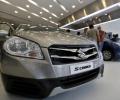
The carmaker has sought 1,292 acres at Industrial Model Township, Sohna, 25km from Gurugram.
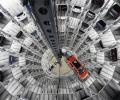
Volkswagen can pay $18 billion, over time, and retain its credit rating.

The company, which already has around 66 per cent market share in the hatchback segment and about 50 per cent in the overall domestic passenger vehicle segment, currently sells Vitara Brezza and S-Cross in the SUV segment. In an interaction with PTI, MSI managing director and CEO Kenichi Ayukawa acknowledged that there was some lag in launching new products due to the pandemic but the company is now on track regarding new model launches.
From Alto to Audi, get car discounts of up to Rs 900,000

With growing revenues, a spreading business empire, and surging aspirations, companies are seeing a strong demand for luxury products from Tier 2 and Tier 3 cities.
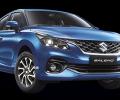
Maruti Suzuki India (MSI) will keep consolidating its existing product line-up, including hatchbacks, while bolstering presence in the fast growing SUV segment to power its way back to 50 per cent market share in the domestic passenger vehicle market, as per a senior company official. The country's largest carmaker, which has seen its market share drop to 43.38 per cent in FY22 from 47.7 per cent in FY21, aims to bring in multiple SUV products with focus on new technologies like hybrid powertrains in order to enhance fuel efficiency, making them comparable or better than diesel-powered models that are currently being sold in the market, especially by its Korean rivals. With no intention of making a comeback in the diesel segment, MSI is also focusing on increasing its play in the CNG segment to bring in additional volumes.
The company will utilise this time to carry out maintenance work at its manufacturing plants.

The country's largest carmaker Maruti Suzuki India (MSI) on Thursday reported a 30.8 per cent increase in total sales at 1,60,442 units in September. The company had sold 1,22,640 units in September last year, MSI said in a statement.

The government has mandated that from October 2017, all new car models will have to be equipped with airbags to meet crash test norms.

Facing capacity constraint, firm is yet to take a call on setting up a new manufacturing unit in India.

Reeling under severe slowdown, the auto major had reduced its production by 33.99 per cent in August, making it the seventh straight month of reduction.

'Some of the launches may get deferred due to the semiconductor shortage, which is unlikely to get resolved before the second half of 2022.'

Passenger vehicle majors like Hyundai, Tata Motors, M&M, Toyota Kirloskar and Honda on Wednesday reported growth in domestic sales in August riding on festive sentiments, although market leader Maruti Suzuki posted a decline amid a semiconductor shortage affecting the industry. The country's largest carmaker Maruti Suzuki India Ltd (MSIL) reported domestic sales at 110,080 units, as compared to 116,704 units in the same month last year, down 6 per cent. "Sales volume of the company in August 2021 was affected due to electronic components shortage.

Several carmakers, including car market leader Maruti Suzuki India pulled the plug on diesel models citing higher costs for BSVI variants leaving buyers with limited options.
