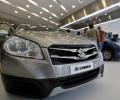
The carmaker has sought 1,292 acres at Industrial Model Township, Sohna, 25km from Gurugram.

The government has mandated that from October 2017, all new car models will have to be equipped with airbags to meet crash test norms.
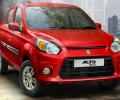
The company cut production of its mini cars comprising Alto, and S-Presso by 98.32 per cent at 401 units as against 23,874 units in the year-ago month.

Facing capacity constraint, firm is yet to take a call on setting up a new manufacturing unit in India.

JLR is the UK's largest carmaker, which has witnessed a complete turnaround in its fortunes since Tata Motors acquired the traditional British brands from Ford 10 years ago.

The country's largest carmaker Maruti Suzuki India (MSI) on Thursday reported a 30.8 per cent increase in total sales at 1,60,442 units in September. The company had sold 1,22,640 units in September last year, MSI said in a statement.

MSI sells a range of models from entry-level hatchback Alto to S-CROSS, priced between Rs 2.99 lakh and Rs 12.39 (ex-showroom prices Delhi) lakh, respectively.

The April-June quarter of 2018 happens to be the weakest for the Jeep since the launch, making it evident that it is not easy for a carmaker to sustain growth with a single product.
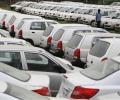
Reeling under severe slowdown, the auto major had reduced its production by 33.99 per cent in August, making it the seventh straight month of reduction.

Having established its presence in the country, luxury carmaker Lexus is now looking to chart its next phase of growth in India as it looks to consolidate sales network and drive in new models, including fully electric cars in the country, according to a top company official. The company, which is the luxury car arm of Japanese auto major Toyota, initiated operations in India in 2017 and currently sells seven models in the country, including the locally-produced ES 300h sedan. Known for its self charging hybrid cars, the company is now gearing up to drive in battery electric vehicles, besides ramping up its existing product portfolio in the market.
The company will utilise this time to carry out maintenance work at its manufacturing plants.

Net sales, however, rose marginally to Rs 21,551.9 crore for the quarter under review

The two-acre office complex under construction on the outskirts of Delhi will be home to about eight hundred company executives. Special care is being given to air purification and the building will be equipped with a three-stage air filter system.

Several carmakers, including car market leader Maruti Suzuki India pulled the plug on diesel models citing higher costs for BSVI variants leaving buyers with limited options.

With growing revenues, a spreading business empire, and surging aspirations, companies are seeing a strong demand for luxury products from Tier 2 and Tier 3 cities.

While the Q5 is a light driving car that feels like you can easily fling it over and around brooks and brushes and hills and plains, it's also versatile in that its rear seat is as comfy and spacious as you'd expect, says Pavan Lall.

The company, which already has around 66 per cent market share in the hatchback segment and about 50 per cent in the overall domestic passenger vehicle segment, currently sells Vitara Brezza and S-Cross in the SUV segment. In an interaction with PTI, MSI managing director and CEO Kenichi Ayukawa acknowledged that there was some lag in launching new products due to the pandemic but the company is now on track regarding new model launches.

The country's largest carmaker, Maruti Suzuki India (MSI) on Friday reported a 4.5 per cent increase in total sales at 1,53,435 units in October.
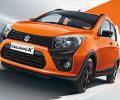
The country's largest carmaker Maruti Suzuki India (MSI) on Tuesday reported 6.14 per cent decline in consolidated net profit at Rs 1,241.1 crore for the fourth quarter ended March 31, 2021. The auto major had posted a net profit of Rs 1,322.3 crore in January-March quarter of 2019-20, MSI said in a regulatory filing. However, revenue from sale of products stood at Rs 22,959.8 crore as compared with Rs 17,187.3 crore earlier, up 33.58 per cent.

Passenger vehicle majors like Hyundai, Tata Motors, M&M, Toyota Kirloskar and Honda on Wednesday reported growth in domestic sales in August riding on festive sentiments, although market leader Maruti Suzuki posted a decline amid a semiconductor shortage affecting the industry. The country's largest carmaker Maruti Suzuki India Ltd (MSIL) reported domestic sales at 110,080 units, as compared to 116,704 units in the same month last year, down 6 per cent. "Sales volume of the company in August 2021 was affected due to electronic components shortage.

The month of October saw the sales graphs of carmakers go through the roof.

Recently, Suzuki Motor Corp (SMC) in an investor presentation expressed strong intent to enter the electric vehicle (EV) space. This is part of a larger strategy the Hamamatsu-based firm has drawn up in developing electrification of technologies as it seeks to achieve carbon neutrality. The significance of this presentation is that it marked the first time that the Japanese carmaker spelt out its EV strategy with well-defined timelines. SMC plans to develop electrification technologies by 2025, fully implement them in products from the same year, and make a full-scale quantitative increase from 2030.
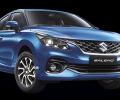
Maruti Suzuki India (MSI) will keep consolidating its existing product line-up, including hatchbacks, while bolstering presence in the fast growing SUV segment to power its way back to 50 per cent market share in the domestic passenger vehicle market, as per a senior company official. The country's largest carmaker, which has seen its market share drop to 43.38 per cent in FY22 from 47.7 per cent in FY21, aims to bring in multiple SUV products with focus on new technologies like hybrid powertrains in order to enhance fuel efficiency, making them comparable or better than diesel-powered models that are currently being sold in the market, especially by its Korean rivals. With no intention of making a comeback in the diesel segment, MSI is also focusing on increasing its play in the CNG segment to bring in additional volumes.

Some new EU cars, including Mercedes, BMW and Peugeot vehicles, were using around 50 percent more fuel than manufacturers claimed.

It isn't yet clear whether Martin Winterkorn knew about the "defeat devices" in certain U.S. cars, notes Olaf Storbeck.

The Tata Nexon and Mahindra Marazzo ace the safety ratings, but what about other Made in India cars? How safe is the car you drive?
Maruti would conceptualise a car that would be totally developed in India.

'Some of the launches may get deferred due to the semiconductor shortage, which is unlikely to get resolved before the second half of 2022.'

German luxury carmaker Mercedes-Benz India on Thursday launched the imported version of its new generation flagship sedan S-Class with a price starting at Rs 2.17 crore while it prepares to introduce a locally-produced variety of the model in the fourth quarter this year. The new 7th generation S-Class comes in two variants -- diesel S 400d 4MATIC priced at Rs 2.17 crore and petrol S 450 4MATIC tagged at Rs 2.19 crore.

The figures are encouraging for the auto industry amid apprehension that due to higher cost and lack of fuel availability, cars with stricter emission standards may not be popular in initial stages. Automakers had even cited this confusion as one of the reasons for dwindling car sales in India, reports Arindam Majumder.

What explains India's love affair with SUVs? They are not exactly "value for money" -- the watchword for brands across segments -- nor always practical. Is it for the badge value? Or the butch imagery associated with SUVs? Maybe both, says Alokananda Chakraborty.

The Czech carmaker said the assessment of the locks will be done in 12 minutes only

First-time buyers of cars and sport utility vehicles (SUVs) have made a comeback, shows last year's data from top passenger vehicle (PV) makers. If the trend persists, it may move the needle on the overall car penetration ratio. India's car penetration ratio is 32 per 1,000 people - one of the lowest, compared to mature car markets like the US and Europe.
Fiat has revised its India strategy. The car maker, which was among the first western auto companies to enter India, is betting big on SUVs and sporty cars. It no longer wants to compete in the small car segment.

On a standalone basis, the company reported a net loss of Rs 249.4 crore for the first quarter ended June 30. Net sales declined to Rs 3,679 crore in the first quarter as against Rs 18,738.8 crore in the year-ago period.

Audi enters North East India, eyes 200 units in first year.
Indian carmaker Tata Motors gave the world its cheapest car in the form of Nano.
World over, BMW cars are considered to be royal, pristine and very refined.

The country's top carmaker Maruti Suzuki India (MSI) on Wednesday said it has decided to advance maintenance shutdown at its two Haryana-based manufacturing plants by a month amid a surge in the COVID-19 cases across the country. The auto major was supposed to take the shutdown at its two plants in Gurugram and Manesar in June, but due to the tsunami of COVID-19 cases, it decided to take it one month earlier to save oxygen for medical needs. MSI noted that as part of the car manufacturing process, it uses a small amount of oxygen in its factories, while relatively much larger quantities are used by the manufacturers of components.

Automobile companies are worried about challenges from electric mobility, automation and connected vehicles.
